















Analysis for EU policy on bio-based plastic packaging under PPWR

nova-Institute, a leading research and consultancy organization in the field of renewable carbon, has been commissioned by the European Commission to provide a comprehensive analysis on the role of bio-based feedstocks in plastic packaging under the Packaging and Packaging Waste Regulation (PPWR).
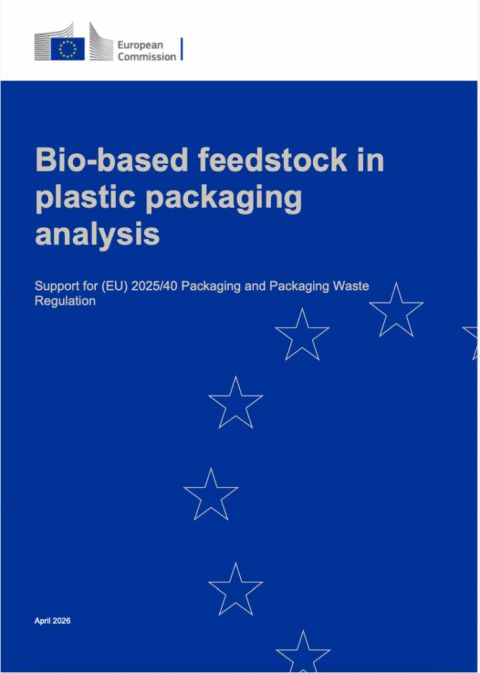
nova-Institute’s report for the European Commission on bio-based feedstock in plastic packaging.
Download the free report here.
Bridging the Gap: Bio-based Content in EU Packaging Policy
The PPWR sets ambitious targets for recycled content in plastic packaging, but the role of bio-based feedstocks is not yet fully defined. This creates a critical gap in the policy framework: while recycling is essential, it alone cannot provide sufficient non-fossil carbon as a feedstock to meet demand and long-term climate targets.
The report emphasizes the importance of recognizing the equivalence and complementarity of bio-based and recycled content. Both approaches contribute to defossilization, but in different ways: recycling keeps existing carbon in use, while bio-based feedstocks bring in additional renewable carbon.
A balanced policy framework that supports both is therefore key to ensuring a resilient and circular carbon system in the European packaging sector.
Performance and Scalability of Bio-based Plastics
Although plastics remain over 99% fossil-based and bio-based polymers account for only ~1% of the global market, they are technologically mature. The study shows that there are no fundamental technical barriers to their use in packaging, with 17 bio-based polymers commercially available today.
In addition, many of these materials offer significant greenhouse gas emission reductions compared to fossil-based alternatives, making them a valuable tool for achieving the EU’s climate targets.
However, scaling up production remains a key challenge. Higher production costs, limited infrastructure and uneven policy support compared to biofuels slow down market uptake. The report therefore calls for targeted measures such as binding bio-based content targets, harmonized sustainability criteria and investments in recycling and processing infrastructure.
Addressing these barriers will be essential to unlock the full potential of bio-based plastics and accelerate their role in a climate-neutral packaging system.
From Insight to Implementation
With its long-standing expertise in renewable carbon, nova-Institute supports companies, policymakers and investors in navigating the transition from fossil to sustainable carbon sources.
Through in-depth studies, market data, strategic consulting and widely accessible resources such as free reports and the Renewable Carbon Initiative, nova provides guidance on technologies, markets, sustainability and regulatory developments.
By combining scientific analysis with practical implementation support, nova-Institute actively contributes to advancing the renewable carbon economy and enabling stakeholders to turn ambitious climate targets into actionable strategies.