
















KraussMaffei all-electric PX injection molding machine supports healthcare manufacturing

High-volume medical projects for global healthcare markets demand speed, repeatability and high quality for every part produced. Multiple all-electric PX injection molding machines from KraussMaffei have supported the full value chain of US-based healthcare manufacturer, from the first drawing to the packaged component.
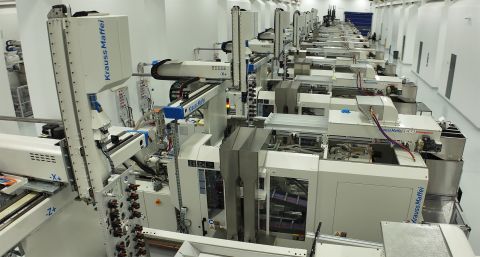
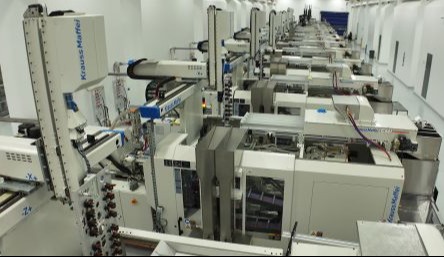
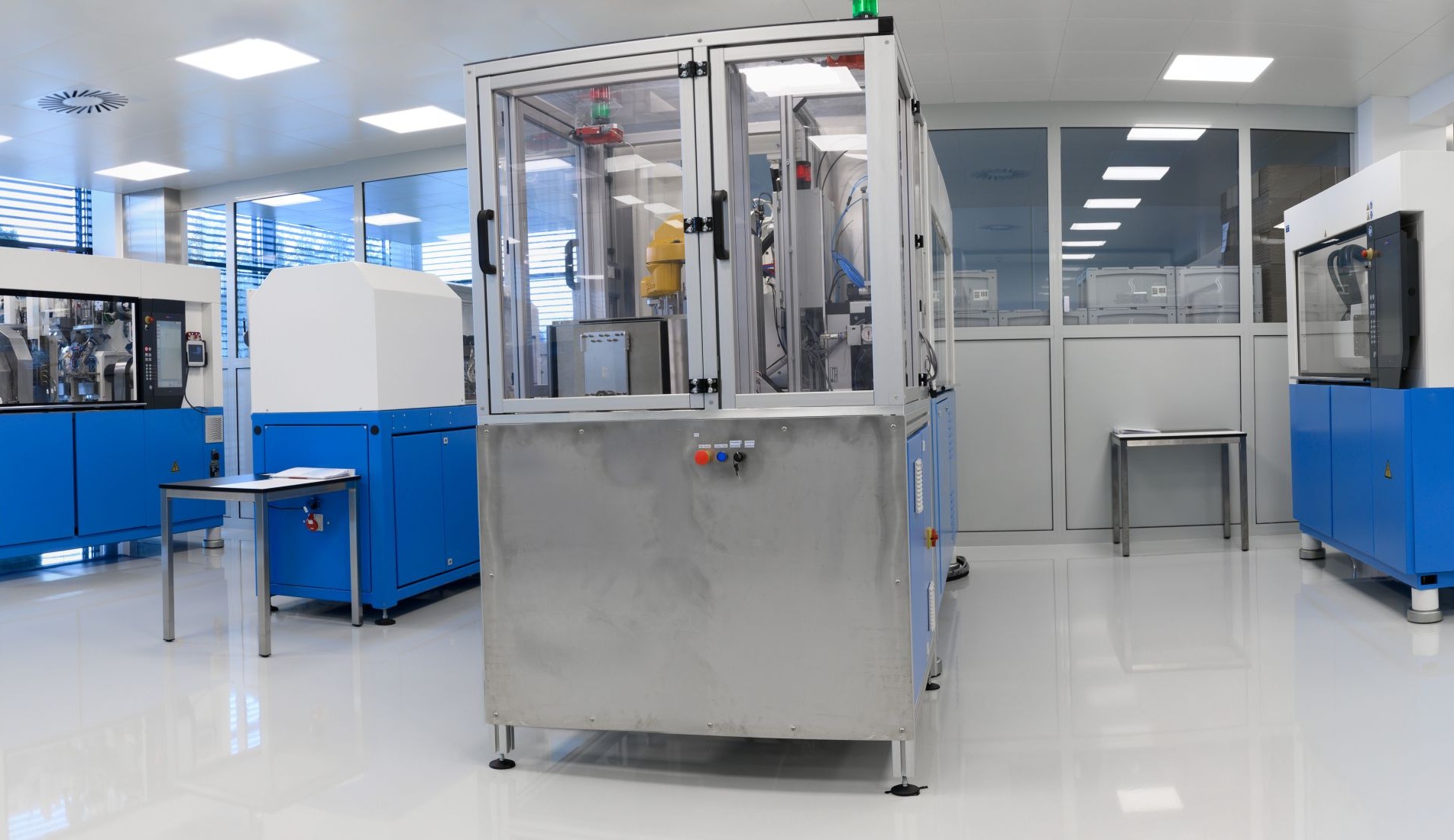
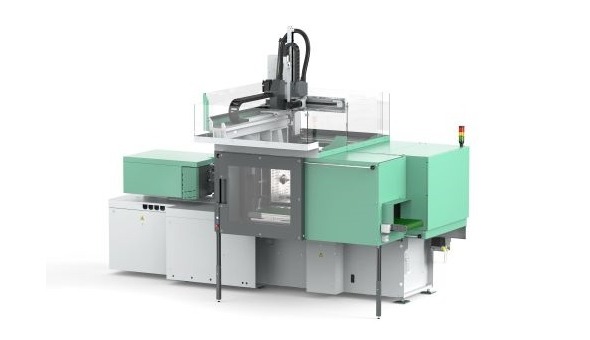
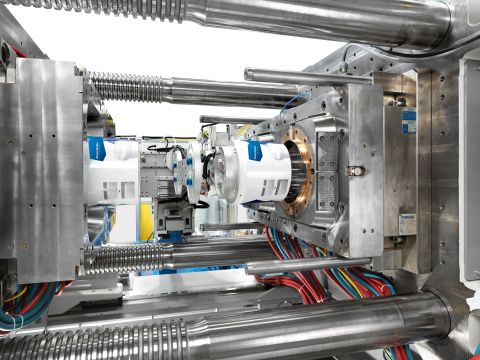
All-electric PX injection molding machines from KraussMaffei equipped with LRX linear robots in production at MGS in Richfield, Wisconsin, US. (Source: MGS)
Cleanroom manufacturing
KraussMaffei machines meet the high standards of pharma, diagnostics, and medtech for MGS.
A cornerstone is the all-electric PX with LRX linear robots in its medical configuration – featuring automatic centralized lubrication in a closed circuit. The platform is ideally suited for ISO Class 8 cleanroom manufacturing, which MGS operates across sites in the United States, Costa Rica, Mexico, Ireland, Sweden, Germany, Belgium, Denmark, and Slovakia.
Multi-cavity, fast cycle times, high repeatability
Many MGS programs run multi-cavity molds at demanding cycle times, making repeatability across every cavity essential. Since MGS projects typically involve multi-cavity molds running at fast cycle times, process repeatability across all cavities is critical.
For low part weights, such as those of laboratory materials, not only is precise hot runner technology required, but also machines that guarantee a completely constant shot weight.
KraussMaffei’s APCplus function offers the ideal digital solution for this. It optimally adjusts the switching point and holding pressure from shot to shot to match the respective melt viscosity.
Future growth driver: A.i.r. Platform
One innovation poised to drive further growth is the proprietary A.i.r. Platform (Auto-injector reimagined).
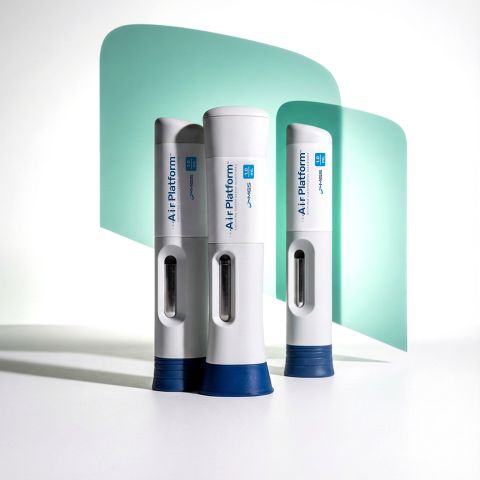
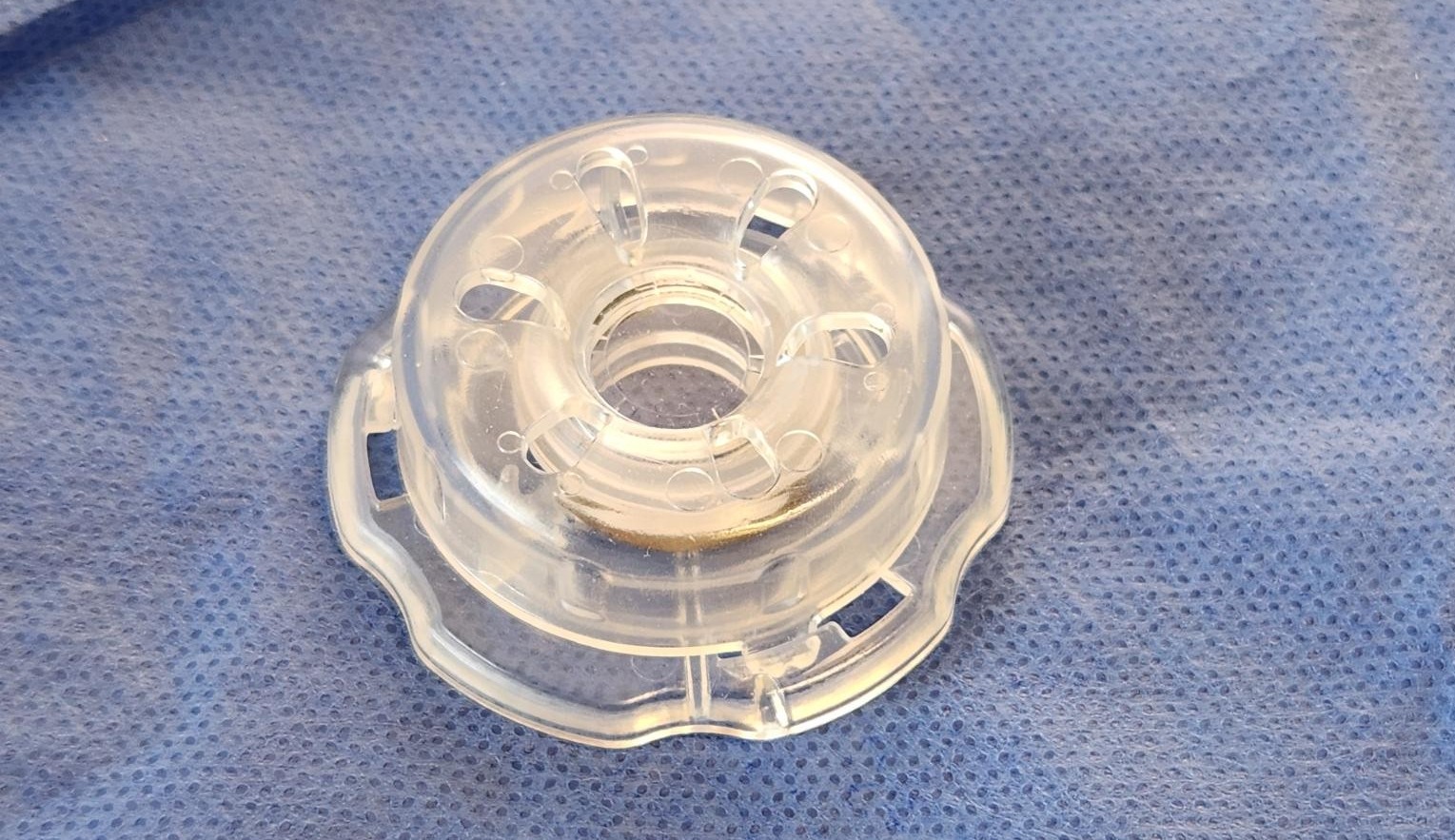
A.i.r. Platform (Auto-injector reimagined) from MGS. (Source: MGS)
KraussMaffei injection molding technologies allow the external design and user interface to be customized to brand, therapy and patient needs. The result is shorter development timelines, lower technical risk, and a more efficient path through regulatory requirements toward market launch.