














A deep dive into China’s 15th Five-Year Plan for Circular Economy Development

The National Development and Reform Commission of China (NDRC) recently released the 15th Five-Year Plan for Circular Economy Development. The Plan outlines several key milestones.
By 2030, China aims to refine its closed-loop circular economy system across production, consumption, recovery, and recycling. Key targets include:
- a 16% increase in major resource productivity compared to 2025
- an annual utilization of approximately 4.5 billion tons of bulk solid waste,
- and a recycled volume of 510 million tons for major renewable resources.
This is projected to drive the total output value of the resources recycling industry to RMB 8 trillion. By 2035, a robust circular economy framework will elevate the country’s resource efficiency to leading global standards.
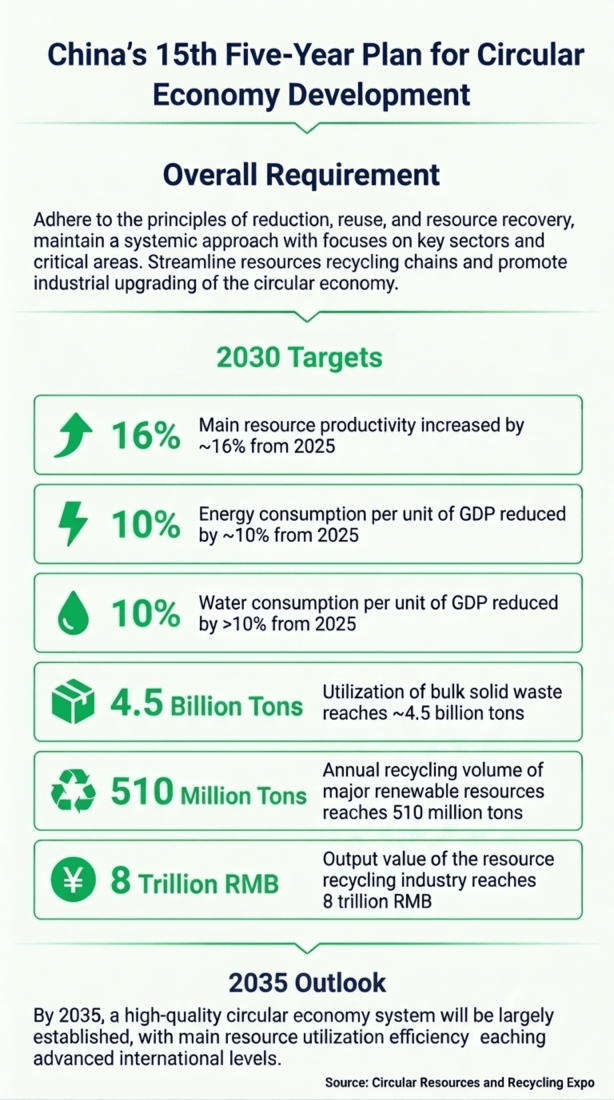
(Source: Circular Resources and Recycling Expo, CRRE)
This marks China’s fourth national Five-Year Plan dedicated to the circular economy since 2010. While the previous three iterations built the foundation and scaled the sector, the new plan shifts the focus toward systemic upgrades. It will bolster resource security, bridge existing supply-chain gaps, and transform the resources recycling industry from a basic “end-of-pipe” waste management model into a mature, high-value industrial chain.
This article outlines the new Plan's four main pillars and analyzes its strategic focus.
1. Resource security: Why double down in the 15th Five-Year Period?
The Plan highlights the urgent need to leverage the circular economy to secure resources and fast-track low-carbon development. Safeguarding strategic resources remains a core objective, and this new policy framework elevates its strategic priority.
As the world's largest resource consumer, China relies heavily on imports for critical commodities and strategic materials, including iron ore, copper, bauxite, nickel, and cobalt. Amid rising global supply chain volatilities, the circular economy serves as a vital secondary supply channel. Every ton of metal, plastic, or fiber reclaimed from waste directly reduces foreign import dependencies.
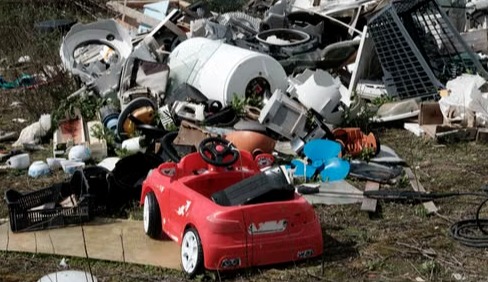
This concept is best illustrated by “urban mining”—extracting recyclable resources from end-of-life machinery, cables, electronics, automobiles, home appliances, and packaging. Under the new guidelines, China will fully unlock the potential of traditional “urban mines” and upgrade them for high-value utilization. This will shift the recycling industry's business model from a basic “collect-dismantle-process” routine toward an advanced “refine-premium materials-closed-loop application” value chain.
2. Integrating recycling networks, while enhancing standards and traceability
The main bottlenecks in achieving the circular economy have been operational rather than technological, specifically fragmented recycling networks, inconsistent quality standards for recycled materials, and untraceable waste streams. The Plan directly tackles these three major challenges.
Recycling networks
The Plan emphasizes standardized and precise waste collection across both industrial and social sectors. On the industrial front, it aims to optimize recycling networks and cultivate specialized third-party operators. On the social front, cities at the prefectural level and above must establish sorting hubs and promote "Internet + Recycling" models, leveraging digital platforms to streamline consumer-facing collection and sorting.
Evaluation standards
The Plan highlights the importance of optimizing certification and labeling systems. Recycled materials have struggled to gain traction in production due to inconsistent quality. Over the next five years, China will standardize evaluation frameworks for recycled materials and pursue mutual recognition with international standards to grant these materials full market legitimacy.
Traceability management
The Plan also emphasizes building data-driven regulatory platforms. Achieving end-to-end digitalization across waste generation, collection, logistics, processing, and the distribution of final recycled goods is identified as the definitive solution for comprehensive traceability and auditing.
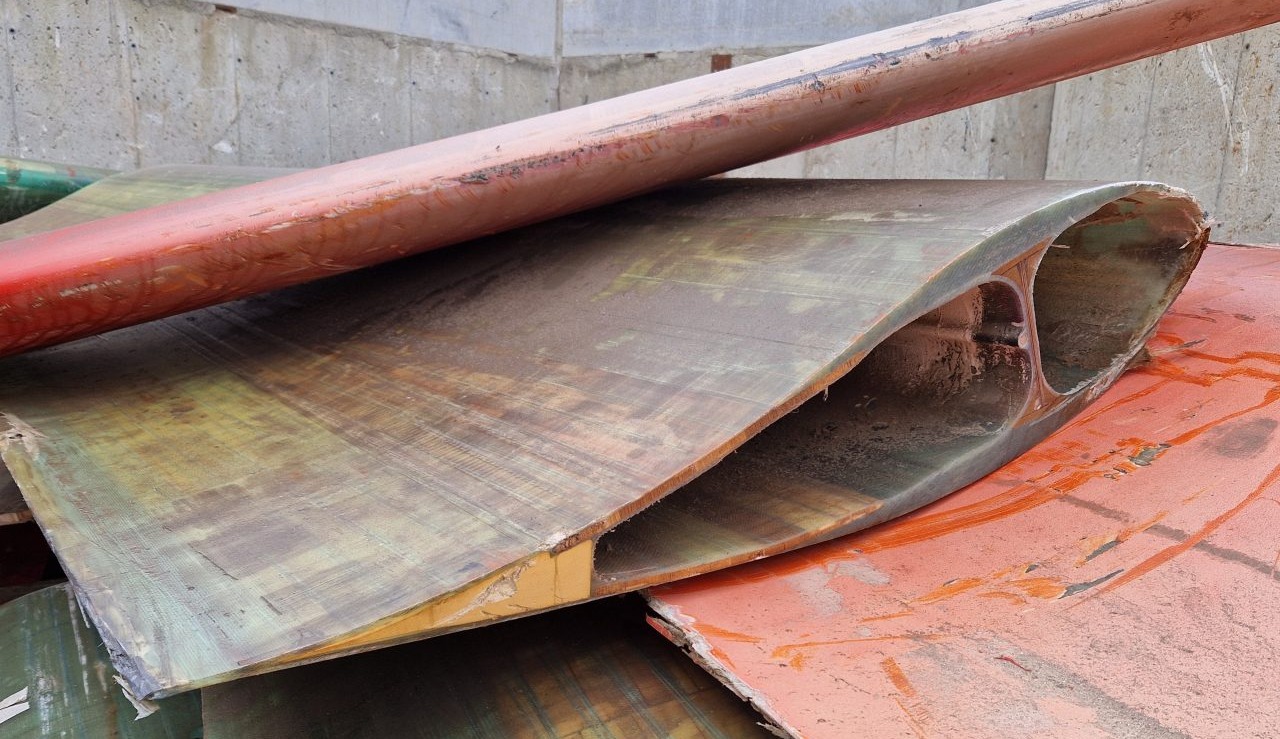
Beyond traditional waste streams, the policy explicitly addresses critical gaps in recycling discarded power batteries, decommissioned photovoltaic modules, and end-of-life wind turbine blades. Because these products will hit their first wave of mass retirement during this Five-Year Period, they represent both a massive emerging market and an unprecedented regulatory test.
3. Global collaboration: Facilitating structured imports of waste feedstock
A strategic pivot in the 15th Five-Year Plan for Circular Economy Development is the formal initiative to promote the import and utilization of high-quality waste feedstock.
While China possesses world-class recycling and processing capacities, domestic waste collection growth cannot keep pace with factory demand. Opening structured import channels for high-quality waste feedstock will bridge the raw material deficit and optimize the utilization rates of China's advanced processing infrastructure.
Executing this strategy requires a dual approach: first, defining strict quality and assessment criteria to clearly differentiate high-quality feedstock from “foreign garbage”; second, deepening global supply chain partnerships to fully integrate China's recycling sector into international trade networks.
4. Driving consumer engagement: Green consumption and re-commerce
Another focal point of the Plan is driving the circular economy from the demand side by scaling up reuse initiatives and fostering a mainstream culture of sustainable consumption.
The consumer strategy has two primary focuses:
- Combating excessive product packaging by promoting minimalist, eco-friendly product designs. Since over-packaging causes resource waste, the Plan requires companies to reduce resource consumption at the product design phase. This push for eco-design will ultimately restructure the product development pipelines of consumer brands nationwide.
- Upgrading the second-hand market infrastructure is another critical priority. The Plan explicitly calls for standardizing the trade of pre-owned goods, a focus that lacked standalone emphasis in previous policies. Regulating this marketplace through standardized quality grading, transparent information disclosure, robust after-sales warranties, and streamlined cross-border trade will unlock a multi-trillion-dollar re-commerce market.
The significance of the 15th Five-Year Plan for Circular Economy Development lies in its capacity to synthesize two decades of policy initiatives, pilot programs, and operational experience into an actionable industrial blueprint.
Driven by aggressive benchmarks—including RMB 8 trillion market valuation, 4.5 billion tons of bulk solid waste utilization, and 510 million tons of recycled material flows—these targets signal a structural transformation across the Chinese recycling industry.
About the Circular Resources and Recycling Expo (CRRE)
The specific challenges outlined in the 15th Five-Year Plan for Circular Economy Development directly mirror the Chinese recycling industry’s current pain points. These include optimizing recycling efficiency, managing the upcoming retirement wave of power batteries, solar panels, and wind turbine blades, and establishing comprehensive quality standards for recycled materials.
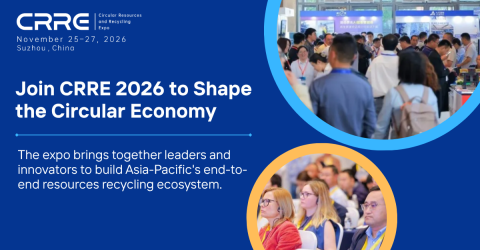
CRRE 2026 will be held from November 25–27 at the Suzhou International Expo Center, China.
Co-organized by the China National Resources Recycling Association (CRRA) and Adsale Exhibition Services Ltd, the Circular Resources and Recycling Expo (CRRE) 2026 will host over 10 thematic forums that align with government initiatives, offering dedicated platforms to discuss the core pillars of the Plan. The Expo will take place from November 25–27 at the Suzhou International Expo Center, China.
Positioned as a national-level platform featuring deep value-chain integration and extensive international engagement, CRRE adopts a dual format that combines high-level summit conferences and forums with an on-site trade exhibition. The event aims to establish the Asia-Pacific’s premier super-hub for the resource recycling industry, encompassing five integrated pillars: collection and recycling, reprocessing, high-value applications, green finance, and international standards and regulations.
The official agenda for the CRRE 2026 thematic forums will be released shortly. Please stay tuned.