














New possibilities for high-temperature plastics analysis

The SKZ Plastics Center and the Fraunhofer Institute for Integrated Circuits IIS have successfully developed a novel analytical method for high-temperature plastics – using High-Temperature Nuclear Magnetic Resonance (HT NMR).
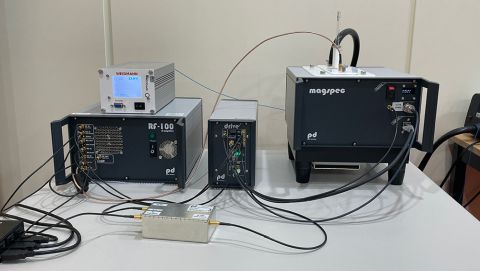
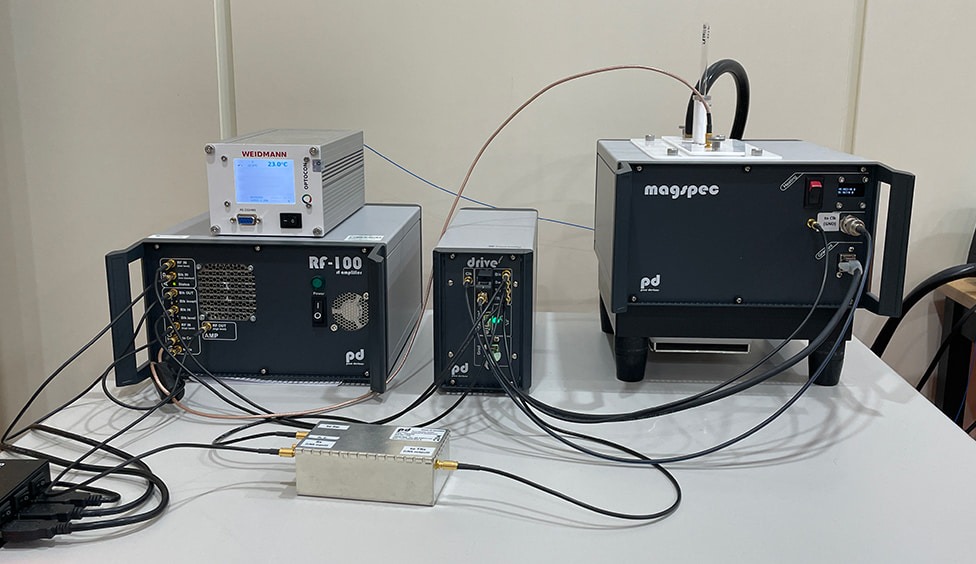
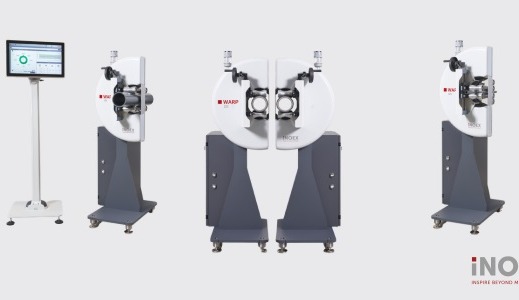
The method developed in the project is based on a benchtop device for measuring magnetic resonance (NMR), which, when coupled with a heating unit, outputs a time-resolved signal during the heating process. (Source: Fraunhofer IIS)
In the research project “Use of High-Temperature Nuclear Magnetic Resonance for Improved Plastics Analysis (HT NMR)”, the high-temperature NMR system enables fast and precise analysis of plastics at temperatures up to 300 °C, without the need for time-consuming sample preparation.
This provides the plastics industry with a significantly more efficient approach to material characterization, quality control, and process optimization.
HT-NMR makes material changes directly visible
When coupled with a heating unit, the magnetic nuclear spin resonance (NMR) outputs a time-resolved signal revealing the molecular structure during the heating process. Through a specially developed method for evaluating this signal, thermal influences on the molecular structure within the material can be directly investigated.
In particular, softening effects such as glass transitions and melting effects in plastics, as well as curing mechanisms in adhesives, are analyzed. Temperature-induced changes in plastics can thus be detected directly, quickly, and efficiently.
At the same time, the technology enables the analysis of larger sample quantities in the gram range without complex preparation steps.
Raising temperature restriction to 300°C
A major limitation of previous systems was the temperature restriction of commercially available benchtop NMR instruments to approximately 200°C. The HT NMR system developed in the project closes this gap and enables measurements at temperatures up to 300°C.
Practical application scenarios validated
To validate the system, seven practical application scenarios in the field of plastics were investigated. The results showed that both material mixtures can be reliably identified and melting processes can be precisely characterized.
The method also demonstrates the potential for directly determining key material parameters, such as the degree of cross-linking in PEX and the moisture content of thermoplastics.
The analysis of curing processes for adhesives with different curing mechanisms (sometimes over a period of several days) was also successfully carried out.
Initial investigations into the crystallinity of plastics further underscore the technology’s broad range of applications. The results demonstrate significant potential for industrial use.