














Teijin develops new CFRP with self-healing function and recyclability

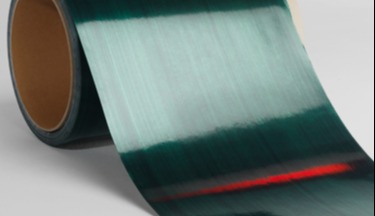
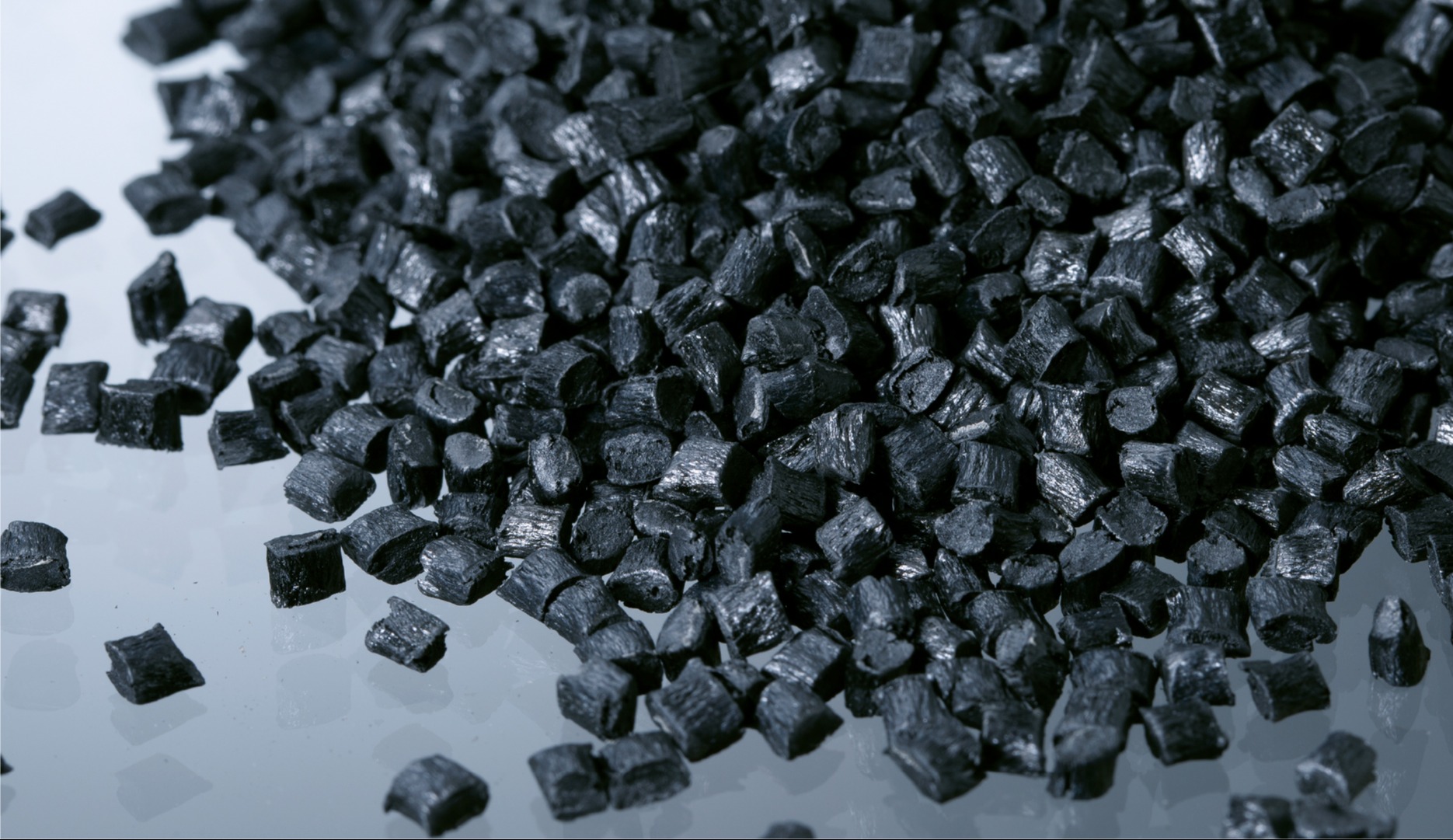
Teijin Limited has developed a thermosetting, long carbon fiber-reinforced plastic (CFRP) that combines a heat-activated self-healing function with high recyclability, while offering mechanical properties equivalent to those of conventional CFRPs.
Feature highlights:
- Self-healing through heating
- Recyclable through remolding
- Carbon fiber retrieval through resin decomposition
Self-healing through heating
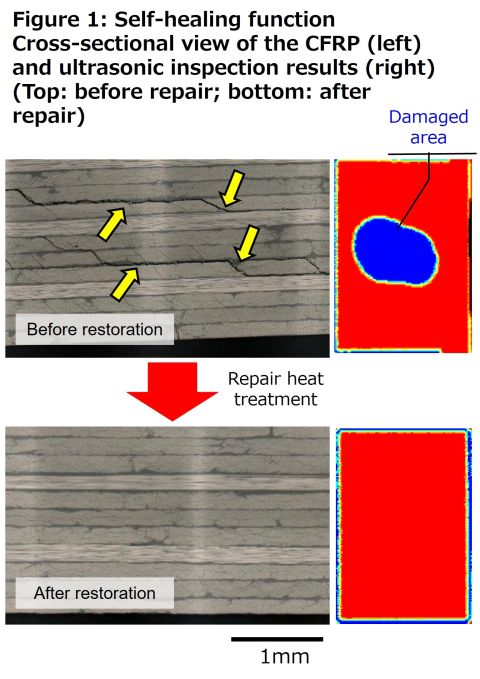
If the resin layer of the CFRP becomes damaged, it can easily be repaired by heating it at a prescribed temperature for a short time. Thanks to this capability, CFRP material that has deteriorated can continue to be used, extending product lifetime and reducing resource consumption.
Recyclability through remolding
Once molded, conventional CFRP materials cannot be remolded because the impregnated thermoset resin does not melt or flow, even when heated.
In contrast, Teijin’s new CFRP product exhibits flowability after molding when exposed to heat within a specified temperature range, making it possible to recycle the material through compression molding and other methods.
Carbon fiber retrieval through resin decomposition
Conventionally, separating carbon fiber from recovered thermosetting CFRP requires thermally decomposing the resin by combustion in a high-temperature furnace exceeding 400°C over a long period. This energy-intensive method imposes a significant environmental burden.
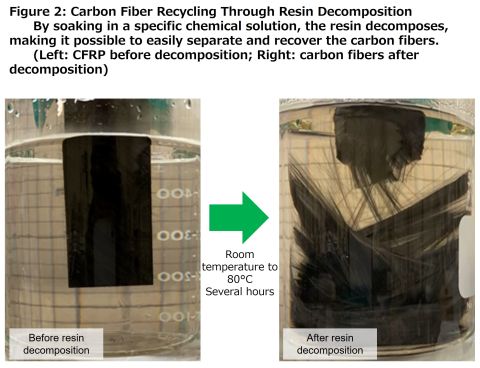
Teijin’s newly developed CFRP can be decomposed by soaking it in a specific chemical solution, making it possible to easily separate the long carbon fibers from the thermoset resin. This simpler, shorter method enables the carbon fiber to be reclaimed with low environmental impact and excellent efficiency.
This contributes to circularity. A wide range of applications can benefit from the strength and light weight of this CFRP material, including aircraft, automobiles and sporting goods.
Future: Advanced R&D and application expansion
Teijin aims to begin providing samples of this developmental CFRP product in the course of 2028, and will continue to advance research and development in collaboration with universities and research institutions.
The company will seek to expand the use of this CFRP in a wide range of applications, focusing primarily on aircraft, automobiles, industrial machinery and others where there is strong demand for weight reduction, improved durability and reduced environmental impact.
Furthermore, with an eye toward future mass production and social implementation of the new CFRP product, Teijin will promote development that optimizes every aspect, from material formulation and component design to recycling processes, while advancing application development and building a supply chain in collaboration with partner companies.