

















eSUN launches PLA-Coffee filament for 3D printing

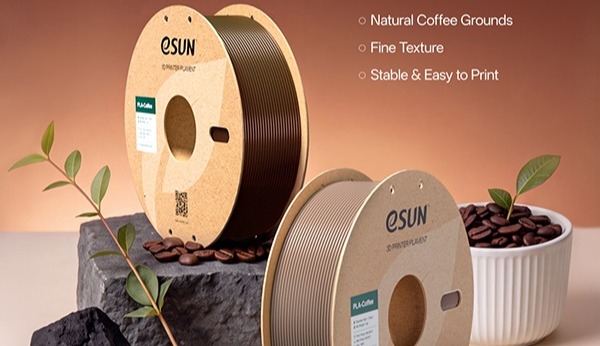
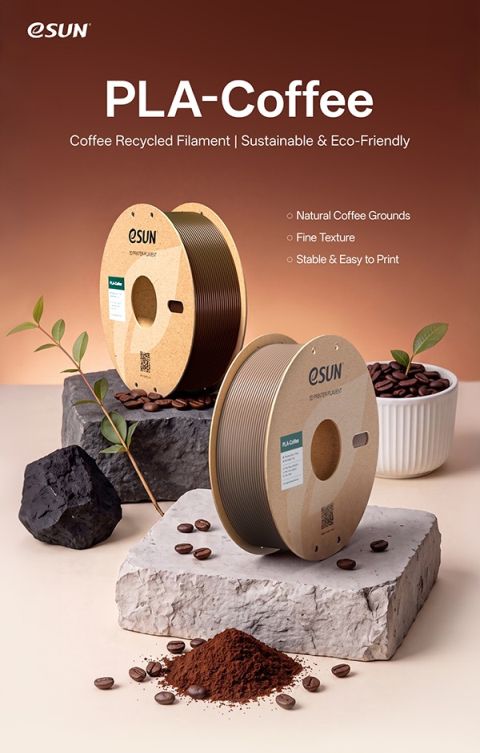
eSUN commercially launched its PLA-Coffee, an innovative bio-based filament for 3D printing integrating repurposed coffee grounds. The PLA-Coffee is now officially available for global market.
Cirularity: From organic waste to functional, creative material
The production of PLA-Coffee involves a specialized process of dehydrating, grinding, and modifying daily coffee waste before compounding it with biodegradable PLA.
This material innovation facilitates a circular economy, transforming organic waste into a functional creative medium. By utilizing bio-composites, the product is designed to help reduce the carbon footprint associated with conventional plastic manufacturing.
Enhanced aesthetics in FDM 3D printing
Beyond its environmental benefits, PLA-Coffee addresses a common aesthetic challenge in Fused Deposition Modeling (FDM) 3D printing: visible layer lines.
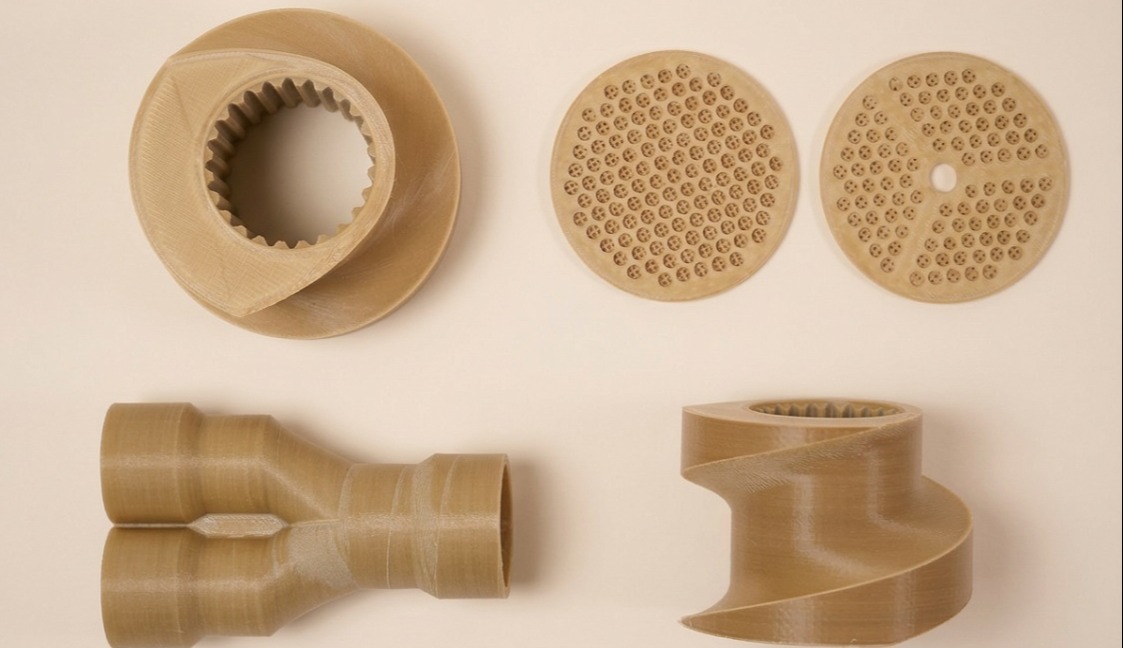
The inclusion of organic coffee particles alters the material's light refraction properties, creating a diffuse reflection effect. This results in a micro-particle matte finish that eliminates typical plastic glare.
Consequently, the non-reflective surface effectively conceals printing traces, allowing viewers to focus on the geometric accuracy and surface curvature of the printed models.
Despite the addition of organic matter, the filament retains the reliability and ease of printing associated with standard PLA, ensuring seamless compatibility with most conventional FDM 3D printers.
Aesthetically, the filament yields a natural earth tone without the need for artificial dyes. This organic coloration aligns with contemporary design trends, such as biophilic aesthetics.
The material is optimized for producing home decor, plant planters, customized pour-over coffee equipment, and desktop ornaments that integrate easily into wooden or warm-toned interior spaces.