
















Recycled plastics market forecast to grow despite EU capacity shrink

The global recycled plastics market is estimated at US$76.6 billion in 2026 and is projected to reach US$117.9 billion by 2031, growing at a CAGR of 9% over the forecast period, according to a new report from Wissen Research.
"The emergence of the recycled plastic industry corresponds to the increasing strides made in curtailing plastic waste and recycling, as well as improving resource efficiency and circular economy processes," said Mayur Jain, Research Consultant at Wissen Research.
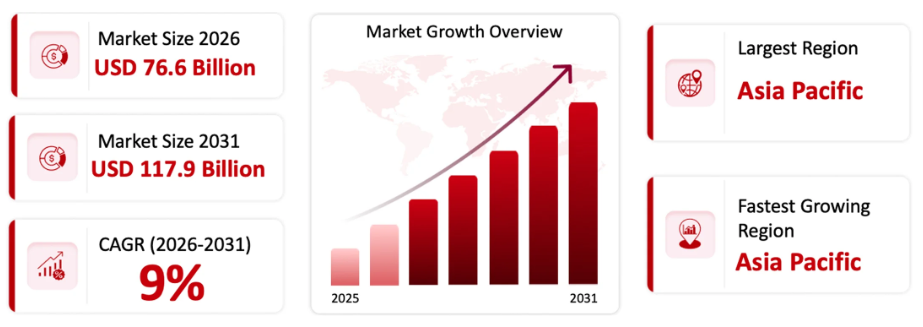
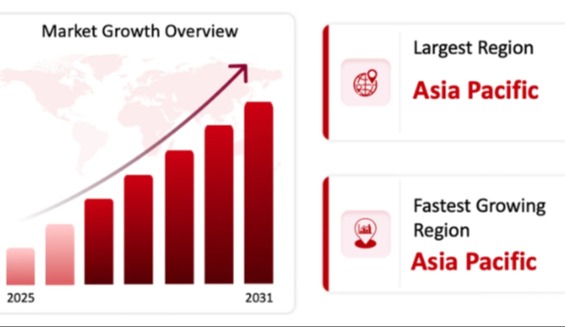
Recycled plastics market key highlights. (Source: Wissen Research)
Regulation sets the floor for demand
Recycled-content mandates anchor the demand case. The EU Packaging and Packaging Waste Regulation, applying from 12 August 2026, sets minimum recycled-content targets from 2030 of 30% for single-use plastic beverage bottles and 35% for other plastic packaging, rising to 65% for both by 2040. India requires 30% recycled content in rigid packaging in 2025–26, rising to 60% by 2028–29, while flexible packaging targets rise from 10% to 20%.
Corporate purchasing runs alongside. The Ellen MacArthur Foundation's November 2025 Global Commitment report covers companies representing approximately 20% of global plastic packaging production, and its signatories have tripled their use of recycled content.
Demand is outrunning supply
The report documents a structural gap. Republic Services estimates that U.S. rPET demand will reach 5 billion lb by 2030, against current supply capacity of only 2.5 billion lb. In Europe, Plastics Recyclers Europe estimates 16 million tons of installed recycling capacity are needed to meet recycled-content targets, versus approximately 13.2 million tons available.
Price is the second constraint. In mid-2025, virgin PET traded at approximately EUR 1,000 per ton, compared with up to EUR 1,800 per ton for rPET, prompting some European bottlers to revert to the 25% legal minimum. Coca-Cola cut its recycled-content target from 50% by 2030 to 35–40% by 2035, and PepsiCo from 50% by 2030 to 40% by 2035.
"Regulatory mandates establish baseline demand, but further market growth depends on narrowing the price gap, expanding reliable recycling capacity, and securing consistent feedstock supplies," the report states.
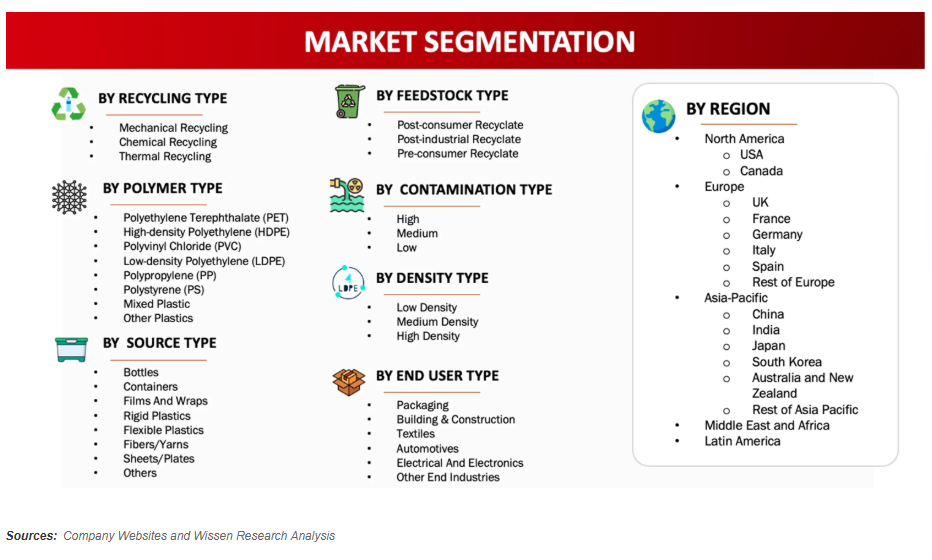
Recycled plastics market segmentation. (Source: Wissen Research)
Chemical recycling draws the investment
The interest in chemical recycling is rising. Fraunhofer UMSICHT identified 65 chemical recycling projects in Europe representing approximately 2.8 million tons per year of announced or under-construction capacity, with pyrolysis dominating at 1.68 million tons planned; the European plastics industry plans to invest up to EUR 8 billion, according to the European Commission.
In June 2026 the Commission adopted updated rules for calculating, verifying and reporting recycled plastic in single-use beverage bottles, including provisions allowing additional recycling technologies to contribute under mass-balance accounting.
Yet, "high capital costs, feedstock availability, and uncertainty regarding demand and pricing for recycled outputs continue to influence project execution and investment decisions," the report notes.
PET and Asia Pacific lead
PET held the leading position by polymer type in 2025. Indorama processed 458,500 tons of post-consumer PET bales against installed bale-input capacity of 837,000 tons; Far Eastern New Century began rPET production at two facilities; NAPCOR recorded a North American PET bottle collection rate of 39.2% for 2024.
Asia Pacific led by region. The China Plastics Recycling Association reported China recovered 20 million tons of waste plastics in 2025, up 2.56% year over year, producing 16.8 million tons of recycled plastics, up 2.4%, and generating RMB 103.5 billion. PET bottles, packaging films and plastics from appliances and end-of-life vehicles made up more than 60% of the country's recovery mix.