










Search History
Clear History
{{item.search_key}}
Hot Searches
Change
{{item.name}}
{{item.english_name}}
Subscribe eNews
Once A Week Once Every Two Weeks
{{sum}}
Login Register

Applications

Franplast introduces biocompatible TPEs for medical sector

MAS launches flagship platform for food-grade PET recycling

3D-printed sculptural coffee table with bio-based transparent polyamide

Products

EuCIA launches Carbon Fiber Europe alliance

Gurit inaugurates Advanced Composites R&D Center in Tianjin, China

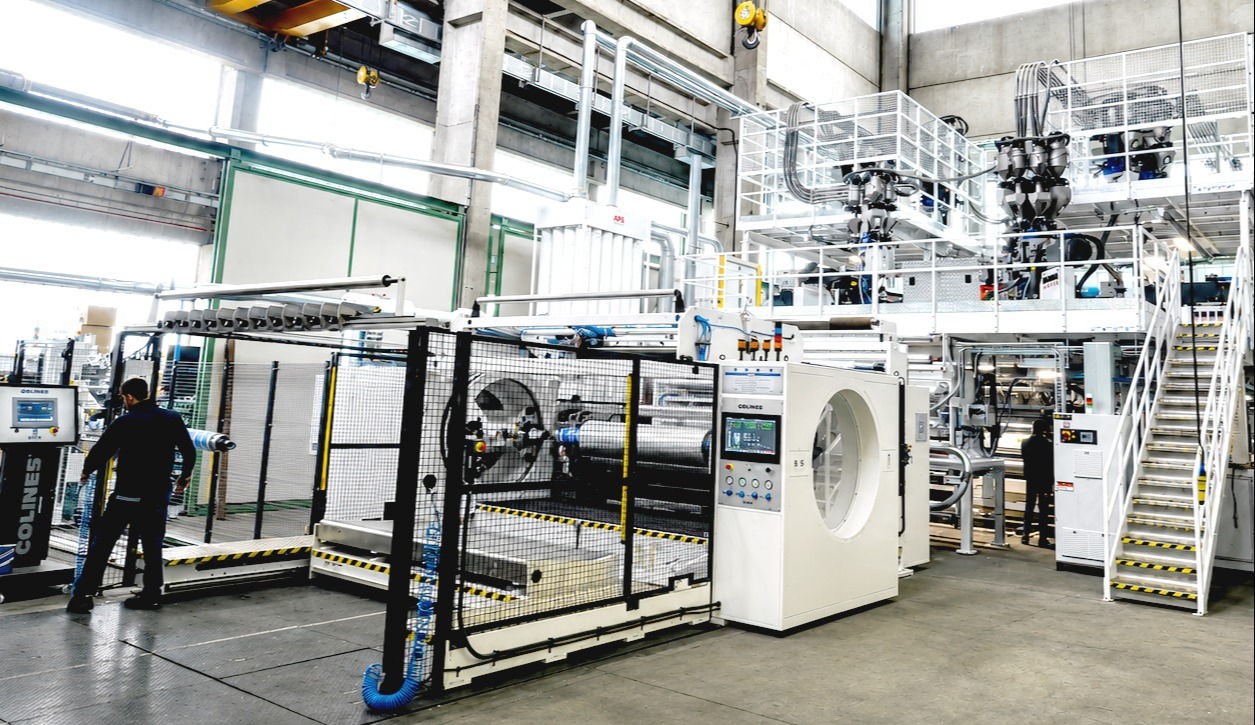
COLINES cast film line installed at LyondellBasell’s Cincinnati Technology Center

Activities

  • Fakuma to celebrate 30th anniversary edition in October 2026

  • Italy pavilion at Plast Eurasia proves its rising presence in Turkish market

  • CHINAPLAS 2026: Grand stage for new material, smart manufacturing and green solutions

Pictorial

Industry Topic

ASEAN: The Next Manufacturing Hub

Innovative and Sustainable Packaging

Green Plastics: News & Insights

CHINAPLAS

CHINAPLAS 2025 Focus

CHINAPLAS 2024 Focus

CHINAPLAS 2023 Focus

Exhibition Topic

K 2025 FOCUS

CHINA INSIGHT

Fakuma 2024 Highlights

News Videos

Magnetic mold changing system developed in-house by Shanghai Qiaotian

Xiamen LFT Composite's plastic solutions as alternative to steel

Ausell highlights car-to-car closed-loop recycling technology

Conference Videos

【Mandarin session:Webinar playback】HUSKY: Molding the Future of Drug Delivery: Solutions for the Evolving Autoinjector

[Live Replay] Star Plastics: A Global Solution Provider of Sustainable Material for Your Circular Economy.

[Live Replay] Wanhua Chemical: Green Horizons, Health Guardians - Advancing ESG and Low-Carbon Transition, Innovating Medical Material Solutions

Corporate/Product Videos

ARBURG new electric machine – ALLROUNDER TREND will start mass production in Pinghu, Zhejiang in 2026.

Jiangsu Liside New Material Co., Ltd.

Dow 45 years in China

Exhibition

Playback TECHHUB 2025@CPRJ Live Streaming for CHINAPLAS

Playback TECHHUB@CPRJ Live Streaming for CHINAPLAS

Events

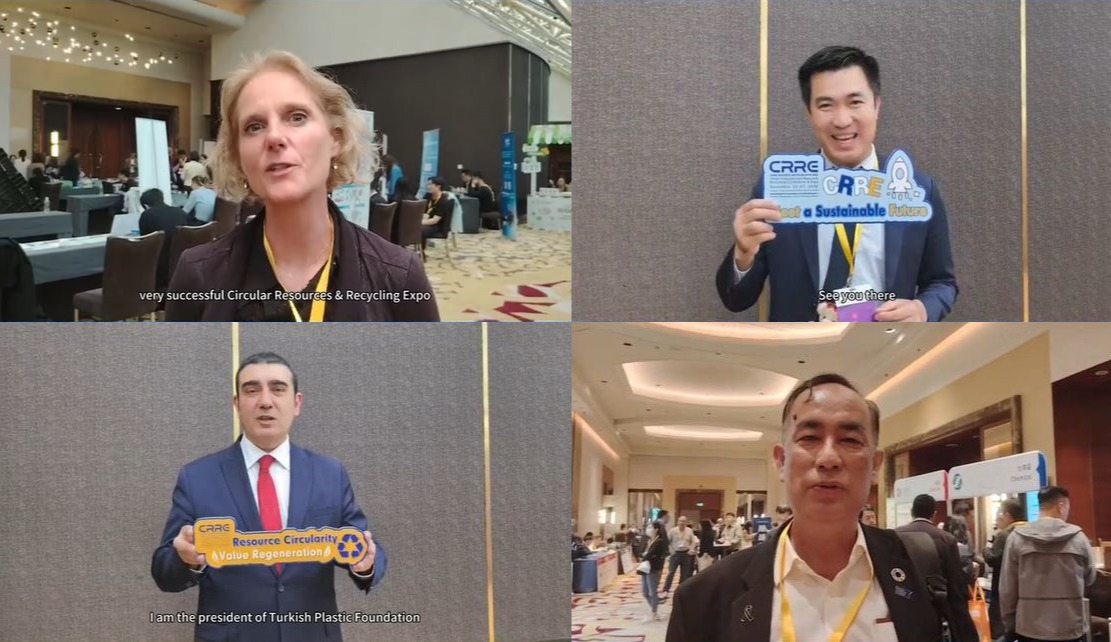
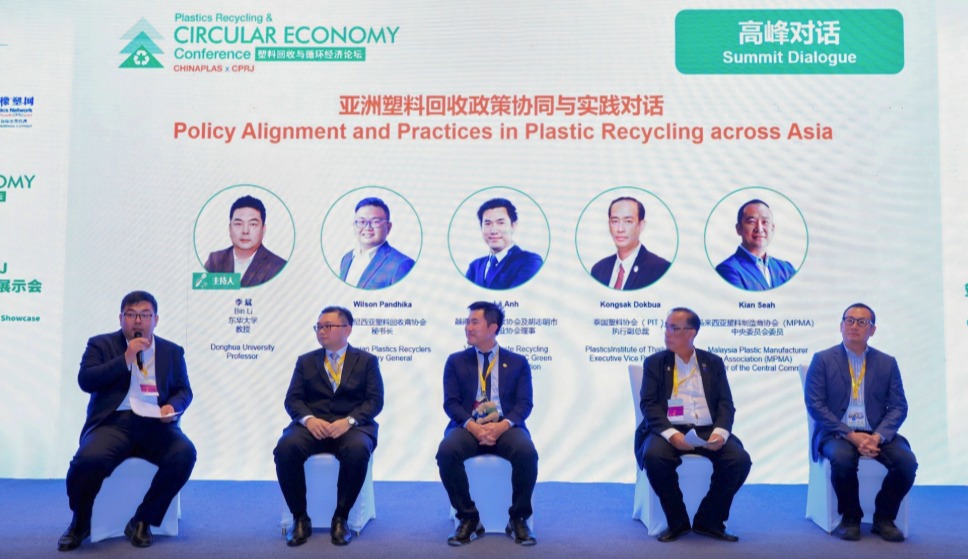
Playback On April 14, the "6th Edition CHINAPLAS x CPRJ Plastics Recycling and Circular Economy Conference and Showcase" at the Crowne Plaza Shenzhen Nanshan is currently being livestreamed!

Playback 5th Edition CHINAPLAS x CPRJ Plastics Recycling and Circular Economy Conference and Showcase

Home > News > Packaging

AkzoNobel and partners on verge of sealing revolution in packaging coatings

Source:Adsale Plastics Network Date :2021-06-28 Editor :VC

Thanks to a major breakthrough in ongoing research involving AkzoNobel, more sustainable food packaging, which no longer contains aluminum, has moved a step closer.


The crucial discovery has been made by PhD student Jiaying Li, who is working with the Dutch Advanced Research Center Chemical Building Blocks Consortium (ARC CBBC), in collaboration with the University of Twente, Wageningen University, BASF and AkzoNobel.


The research is focused on a new, recyclable coating to replace the type of “metallized” packaging (which blocks out oxygen) that is typically used for products such as crisps and coffee.


Currently, this sort of packaging consists of several layers, each with its own function. As well as requiring a lot of energy to produce, it is also difficult to recycle. A process has now been devised which involves the smart combination of two water-soluble polymers (polyelectrolytes), resulting in all the functionality being delivered by one recyclable layer.
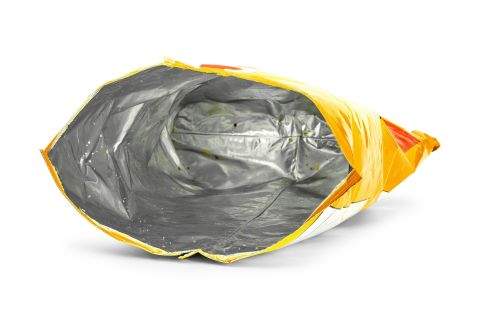

20210615_AkzoNobel_packaging_coatings_web.jpg

A research focused on a new, recyclable coating to replace the type of “metallized” packaging is being developed.


“The use of polyelectrolytes in the coatings industry is not new,” explains Andre van Linden, AkzoNobel’s Director of Coatings Technology. “But these coatings are normally built up step by step, so industrialization of this method would be too complex, time consuming, expensive and impractical. However, the new one-step approach that is being developed through the ARC CBBC means the use of polyelectrolytes is much closer to becoming industrialized.”


Adds Li, a PhD student at the University of Twente: “Our initial results show that the coating has great potential for future use in packaging to protect food from oxidation. We are also focusing on improving other properties, such as water resistance and strength.”


No organic solvents are used and the packaging would be easy to recycle. As one of the world’s leading suppliers of packaging coatings, the research is of obvious interest to AkzoNobel, especially the sustainability and customer benefits that the new coating could offer.


The next step in the research is to use bio-derived polyelectrolytes. These polyelectrolytes are 100% natural, extracted, for example, from shrimp shells or waste from the wood processing industry.


“With the versatility of natural polyelectrolytes, we are entering the era of becoming less dependent on synthesized polymers,” continues Li. “In the end, the polyelectrolyte coating we are developing might be less shiny, but it will serve the same purpose and make recycling much easier.”

 Like 丨  {{details_info.likes_count}}
Packaging
BASF
 FCS-Group      
 HAITIAN INTERNATIONAL HOLDINGS LIMITED      
 MOTAN TAICANG CO., LTD.      

The content you're trying to view is for members only. If you are currently a member, Please login to access this content.   Login

Source:Adsale Plastics Network Date :2021-06-28 Editor :VC

Thanks to a major breakthrough in ongoing research involving AkzoNobel, more sustainable food packaging, which no longer contains aluminum, has moved a step closer.


The crucial discovery has been made by PhD student Jiaying Li, who is working with the Dutch Advanced Research Center Chemical Building Blocks Consortium (ARC CBBC), in collaboration with the University of Twente, Wageningen University, BASF and AkzoNobel.


The research is focused on a new, recyclable coating to replace the type of “metallized” packaging (which blocks out oxygen) that is typically used for products such as crisps and coffee.


Currently, this sort of packaging consists of several layers, each with its own function. As well as requiring a lot of energy to produce, it is also difficult to recycle. A process has now been devised which involves the smart combination of two water-soluble polymers (polyelectrolytes), resulting in all the functionality being delivered by one recyclable layer.


20210615_AkzoNobel_packaging_coatings_web.jpg

A research focused on a new, recyclable coating to replace the type of “metallized” packaging is being developed.


“The use of polyelectrolytes in the coatings industry is not new,” explains Andre van Linden, AkzoNobel’s Director of Coatings Technology. “But these coatings are normally built up step by step, so industrialization of this method would be too complex, time consuming, expensive and impractical. However, the new one-step approach that is being developed through the ARC CBBC means the use of polyelectrolytes is much closer to becoming industrialized.”


Adds Li, a PhD student at the University of Twente: “Our initial results show that the coating has great potential for future use in packaging to protect food from oxidation. We are also focusing on improving other properties, such as water resistance and strength.”


No organic solvents are used and the packaging would be easy to recycle. As one of the world’s leading suppliers of packaging coatings, the research is of obvious interest to AkzoNobel, especially the sustainability and customer benefits that the new coating could offer.


The next step in the research is to use bio-derived polyelectrolytes. These polyelectrolytes are 100% natural, extracted, for example, from shrimp shells or waste from the wood processing industry.


“With the versatility of natural polyelectrolytes, we are entering the era of becoming less dependent on synthesized polymers,” continues Li. “In the end, the polyelectrolyte coating we are developing might be less shiny, but it will serve the same purpose and make recycling much easier.”
全文内容需要订阅后才能阅读哦~
立即订阅

Recommended Articles

Packaging
The bio-based reusable cups can be chemically recycled
 2025-11-27
Packaging
Chanel's sustainable cosmetic closures manufactured on KraussMaffei machines
 2025-11-24
Packaging
Corvaglia and Wisecap partner to produce beverage closures in Europe
 2025-11-21
Packaging
SACMI’s digital production lines for caps and preforms at Drink Japan
 2025-11-19
Packaging
Amcor introduces roll-ons with new lightweight design and PCR content
 2025-11-17
Packaging
Henkel Packaging RecycLab launches in China to drive recycling
 2025-11-05

You May Be Interested In

Change

  • People
  • Company
loading... No Content
{{[item.truename,item.truename_english][lang]}} {{[item.company_name,item.company_name_english][lang]}} {{[item.job_name,item.name_english][lang]}}
{{[item.company_name,item.company_name_english][lang]}} Company Name    {{[item.display_name,item.display_name_english][lang]}}  

Polyurethane Investment Medical Carbon neutral Reduce cost and increase efficiency CHINAPLAS Financial reports rPET INEOS Styrolution Evonik Borouge Polystyrene (PS) mono-material Sustainability Circular economy BASF SABIC Multi-component injection molding machine All-electric injection molding machine Thermoforming machine

AkzoNobel and partners on verge of sealing revolution in packaging coatings

识别右侧二维码,进入阅读全文
下载
x 关闭
订阅
亲爱的用户,请填写一下信息
I have read and agree to the 《Terms of Use》 and 《Privacy Policy》
立即订阅
Top
Feedback
Chat
News
Market News
Applications
Products
Video
In Pictures
Specials
Activities
eBook
Front Line
Plastics Applications
Chemicals and Raw Material
Processing Technologies
Products
Injection
Extrusion
Auxiliary
Blow Molding
Mold
Hot Runner
Screw
Applications
Packaging
Automotive
Medical
Recycling
E&E
LED
Construction
Others
Events
Conference
Webinar
CHINAPLAS
CPS+ eMarketplace
Official Publications
CPS eNews
Media Kit
Social Media
Facebook
Linkedin