



















EU agrees on new rules to combat greenwashing

Parliament and Council of EU have reached a provisional agreement on new rules to ban misleading greenwashing advertisements and provide consumers with better product information.
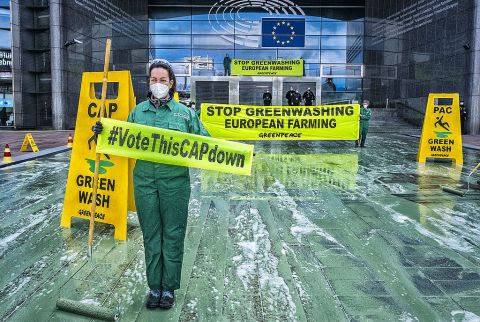
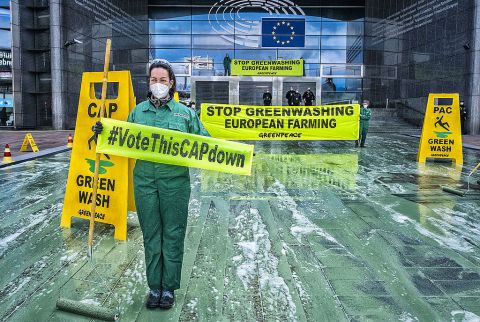
Environmental organization Greenpeace has warned against efforts by countries and companies to “greenwash” their pollution. (Photo: Tim Dirven/Greenpeace)
The agreement updates the existing EU list of banned commercial practices and adds several problematic marketing habits related to greenwashing and early obsolescence of goods.
The aim of new rules is to protect consumers from misleading practices and help them make better purchasing choices.
Negotiators from Parliament and Council agreed to ban the following:
Generic environmental claims, such as “environmentally friendly”, “natural”, “biodegradable”, “climate neutral” or “eco”, without proof of recognized excellent environmental performance relevant to the claim;
Commercial communications about a good with feature that limits its durability if information is available on the feature and its effects on the durability;
Emissions offsetting claims that a product has neutral, reduced or positive impact on the environment;
Sustainability labels not based on approved certification schemes or established by public authorities;
Unproven durability claims in terms of usage time or intensity under normal conditions
Prompting consumers to replace consumables, such as printer ink cartridges, earlier than strictly necessary;
Presenting software updates as necessary even if they only enhance functionality features; and
Presenting good as repairable when they are not.
Members of the European Parliament (MEPs) successfully insisted on making guarantee information more visible, as many as 60% European consumers are not aware that all goods enjoy at least two-year guarantee in the EU.
The Commission is also tasked with designing a new label for producers willing to emphasize goods’ quality by prolonging the guarantee period free of charge.
In order to become law, the provisional deal will have to get the final approval from both the Parliament and the Council. The vote by MEPs is expected to take place in November. When the directive comes into force, member states will have 24 months to incorporate the new rules into their law.