















Viewpoint: What the Ratcliffe letter reveals about global chemical crossroads

The recent letter sent by INEOS founder and Chairman Sir Jim Ratcliffe to European Commission President Ursula von der Leyen serves as a critical diagnostic tool for the global chemical sector.
While explicitly warning about China’s aggressive expansion and its direct threat to European chemical industry, the letter underscores structural vulnerabilities that both European and Chinese producers must urgently confront.
This is far more than a simple narrative of Western decline versus Eastern triumph. Instead, a deeper analysis reveals a highly complex, interdependent market scenario that mirrors the immense pressures of global overcapacity, shifting trade barriers, and a costly, turbulent race toward decarbonization.

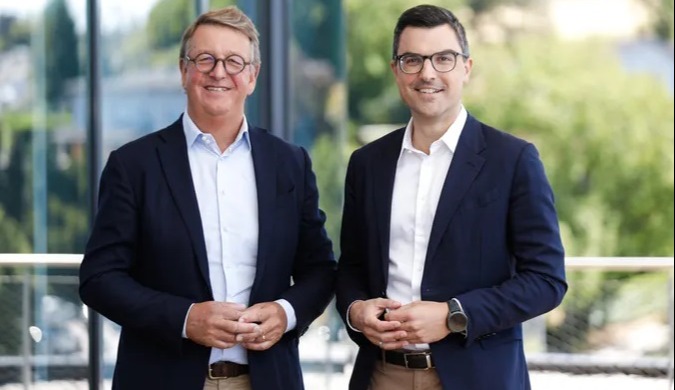
Sir Jim Ratcliffe, founder and Chairman, INEOS. (Source: INEOS)
Read the original letter, click here.
The divergent trajectories shifting global supply
The letter does not merely sound the alarm over the “accelerating closure phase” of the European chemical industry, which has seen nearly 200 plant shutdowns over the last five years. It also highlights a stark divergence in industrial trends that has undeniably shifted the global supply equilibrium.
Ratcliffe effectively reframes the industry narrative from pure economics to national security. From his perspective, Beijing views chemical manufacturing as a core national security pillar, intentionally overbuilding massive excess capacity to aggressively “dump” products into European markets.
Conversely, Europe’s response to this structural crisis has been sluggish, bogged down in overly complex and unrealistic regulatory frameworks that offer local producers little shield against external market shocks.
Squeezed margins and protectionist walls: The view for Chinese producers
However, the Western characterization of this market landscape as a purely predatory state maneuver oversimplifies a much more volatile reality inside China.
For Chinese chemical producers, the current environment is defined by industrial overcapacity and squeezed profit margins. Ratcliffe's letter brings a sobering realization: the era of unhindered, export-led growth is hitting a wall.
● The impending wall of domestic saturation: Massive capital injections into Chinese refining and chemical plants have resulted in domestic saturation. As local consumption softens, Chinese firms have increasingly relied on exports to sustain revenue growth and keep their massive facilities running.
Yet, as Ratcliffe's public outcry demonstrates, this strategy is triggering an inevitable protectionist backlash. The INEOS Chairman’s explicit call to extend Europe’s newly minted Industrial Accelerator Act (IAA) to the chemical sector signals that Brussels could move closer to adopting aggressive, US-style trade defenses.
China must realize that endless capacity expansion without domestic demand optimization will only create paralyzing geopolitical friction and domestic financial strain.
● The carbon disparity liability: Furthermore, the letter exposes a critical environmental challenge that Chinese producers can no longer ignore.
Ratcliffe claims that many chemical imports from China carry up to double the carbon footprint of those manufactured under Europe’s strict environmental mandates. As global supply chains increasingly demand stringent ESG compliance, carbon disparity represents a major commercial liability.
The price of regulatory idealism: The lesson for European producers
Ratcliffe's letter exposes the glaring gaps in the strategy of IAA. While the IAA aims to protect sectors like automotive and construction, upstream chemicals have been left exposed.
At the same time, Europe must face the reality that it cannot sacrifice its foundational industrial sovereignty in the pursuit of rigid regulatory idealism. Driven by an obsession with lowering emissions, the EU has wrapped its local industries in complex bureaucratic processes and high carbon taxes.
The fact that some pioneering domestic projects—such as INEOS’s own mega-investment, Project ONE in Antwerp, Belgium—have failed to receive meaningful EU funding exposes a form of environmental hypocrisy that actively compromises European economic security.
If Brussels genuinely wishes to retain an economy that can defend and sustain itself, it must actively fund strategic, economically viable, and environmentally sound domestic infrastructure.
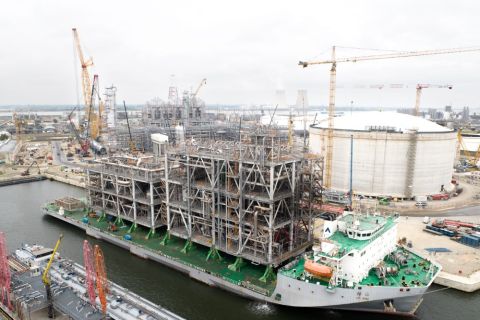
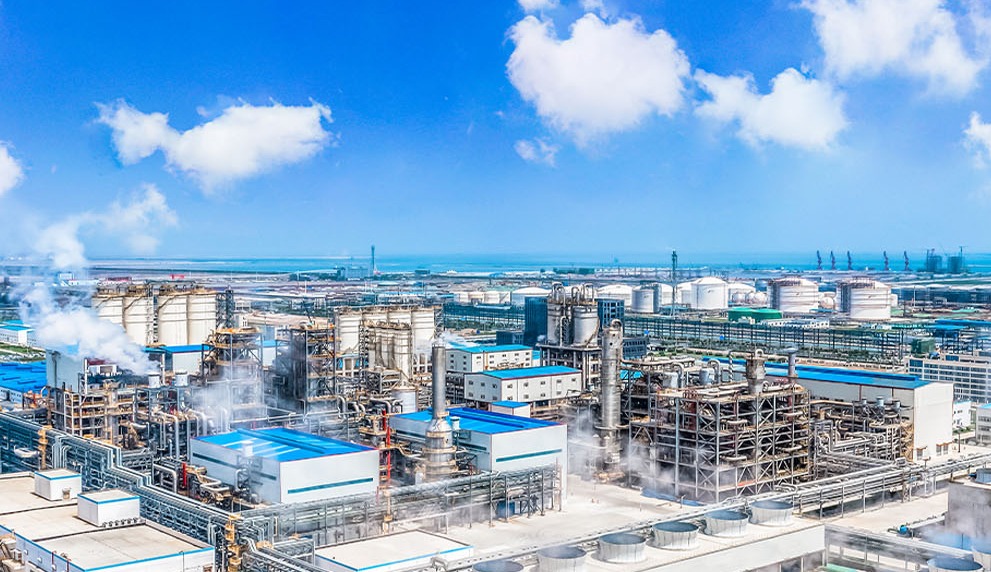
INEOS Project ONE is a massive €5 billion petrochemical investment in Antwerp, Belgium. (Source: INEOS)
Navigating the new geopolitical equilibrium
Ultimately, the global chemical industry is at a crossroads. China cannot expand its way out of soft domestic demand without breaking global trade relations, and Europe cannot regulate its way to green prosperity by shutting down its own factories.
Facing potential shrinking foreign market access, forward-thinking Chinese producers must aggressively reallocate capital away from standard commodity plastics and into high-margin specialty chemicals and advanced engineering materials, capturing the booming global demand for high-tech manufacturing.
Furthermore, by accelerating the integration of renewable energy into their massive mega-complexes, Chinese producers can lower the carbon footprint of their products, proactively defusing environmental trade barriers.
For its part, Europe must match this strategic agility. If Brussels continues to prioritize rigid regulatory ideals over hard industrial realities, it will soon find itself ruling over an economic wasteland—completely dependent on imports for the very materials required to keep European society alive.
What is the Industrial Accelerator Act?
Launched by the European Commission in March 2026, the Industrial Accelerator Act (IAA) was designed to revitalize Europe’s industrial base, improve economic security, and accelerate decarbonization.
The Act sets an ambitious target to lift manufacturing's share of EU GDP from 14.3% in 2024 to 20% by 2035. It introduces "Made in EU" and low-carbon preferences in public procurement for strategic sectors like automotive, construction, batteries, and photovoltaic.
It also enforces strict protective screening on large foreign direct investments (FDI) in critical technology areas like photovoltaics and batteries to protect European intellectual property and ensure foreign capital creates localized value.