





















Hungary launches new deposit return system for recycling drink container

Hungary started the new year off with the launch of new deposit return system (DRS) for recycling single-use drink containers on January 1, 2023. TOMRA, a global reverse vending leader, partnered with MOHU (MOL Hulladékgazdálkodási Zrt.), a central system administrator for the DRS, to arrange collection infrastructure to allow convenient return of drink containers.

Hungary launched new deposit return system for recycling drink containers.
How it works?
The DRS covers ready-to-drink or concentrated beverages, except milk and milk-based beverages, in single-use aluminum cans, glass and plastic bottles, with size ranges 0.1-3L.
When purchasing an eligible drink, consumers have to pay a deposit of HUF 50 (about EUR 0.13), which will be refunded when they return the empty drink container for recycling.
Efficient and secure return is guaranteed with TOMRA’s reverse vending machine (RVM). When drink containers are inserted into an RVM, it automatically identifies and sorts the containers, and pays out the correct refund. Drink containers of over 400m2 in size can be returned to grocery retailers.
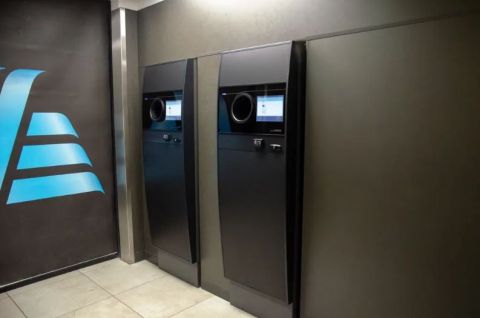
TOMRA’s reverse vending machines.
TOMRA has installed more than 1000 high-volume RVMs across Hungary, with further installation to continue in 2024.
Commitment to circularity
TOMRA has over 50 years’ experience working in deposit return systems around the world, across all parts of the value chain, including material pick-up, PET processing and data management.
It has installed approximately 82,000 RVMs, in over 60 markets, collect over 45 billion drink containers for recycling each year.
With Hungary’s new DRS, MOHU’s goals to promote a circular economy and reduce litter are fulfilled. The DRS also introduces Extended Producer Responsibility and strives to meet the European Union’s Single-Use Plastics Directive targets, requiring member countries to separately collect 90% of plastic beverage bottles by 2029.
Hungary’s DRS launched closely after new DRS implemented in the Australian state of Victoria on November 1, 2023 and in Romania on November 30, 2023, followed by Ireland’s launch on February 1, 2024.