














How JINGDONG unlocks savings in packaging procurement

When cost reduction goes beyond simply lowering unit prices, where else can packaging procurement uncover savings?
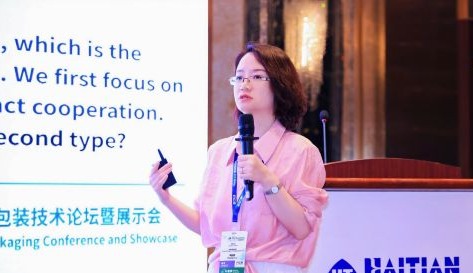
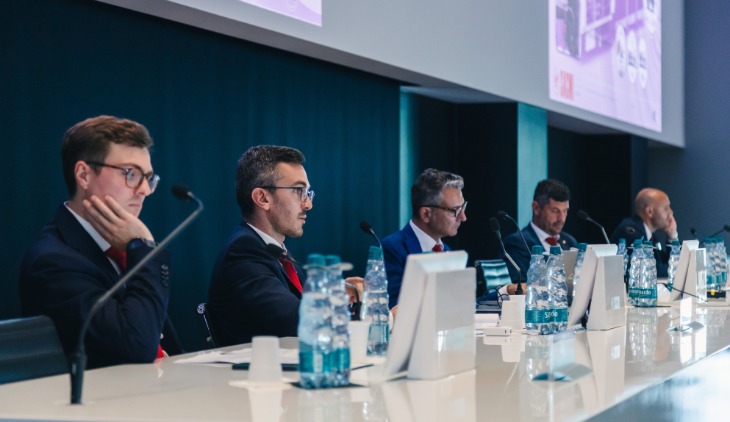
At the 14th Edition CPRJ Plastics in Packaging Conference and Showcase, Chaoqun Li, General Manager of the Packaging Business at JINGDONG Industrials, shared the company’s latest strategic explorations in packaging materials.
Packaging procurement: The challenges behind the price
JINGDONG Industrials currently offers a comprehensive range of packaging materials, including stretch films, adhesive tapes, labels, and thermal transfer ribbons, spanning inner, outer, and premium product packaging as well as folding and color cartons.
Faced with increasingly complex procurement demands, Li noted that customers are under mounting pressure to drive down costs. For businesses operating multiple manufacturing facilities and production bases nationwide, decentralized purchasing structures create significant hurdles in vendor management, operational efficiency, and fulfillment logistics.
Traditional, fragmented procurement methods are inherently inefficient. Furthermore, the absence of end-to-end, integrated solutions frequently compromises quality management. Consequently, packaging procurement performance cannot be evaluated solely on upfront unit prices. Organizations must holistically assess vendor management overhead, fulfillment and delivery logistics, and overall operational efficiency to uncover true savings.
Digitalization: Enhancing procurement transparency
Beyond upfront pricing, the first critical hurdle to overcome is the information gap in the procurement process.
To address this, JINGDONG Industrials leverages its digital platform to seamlessly connect packaging material suppliers with corporate buyers. By displaying transparent pricing online, the platform enables customers to easily compare options, effectively eliminating the inflated costs caused by information asymmetry.
Furthermore, JINGDONG Industrials breaks down packaging, logistics, and manufacturing costs to build advanced cost-control models, integrating them with customer demand and market data for deep analysis.
As a result, a product's price is no longer just a rigid, final figure; it is broken down into its component parts, such as material, transport, and production costs. This precise cost calculation serves as the foundational step toward driving meaningful packaging procurement savings.
However, for enterprises operating multiple manufacturing facilities and production bases, solving the pricing issue is only half the battle. It does not eliminate the operational challenges of downstream fulfillment.
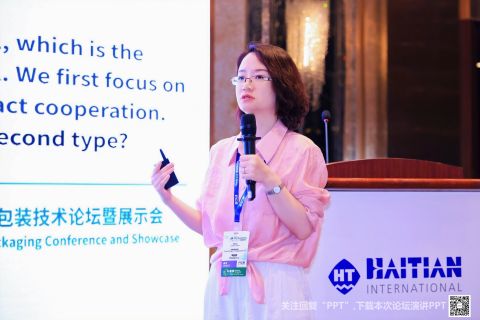
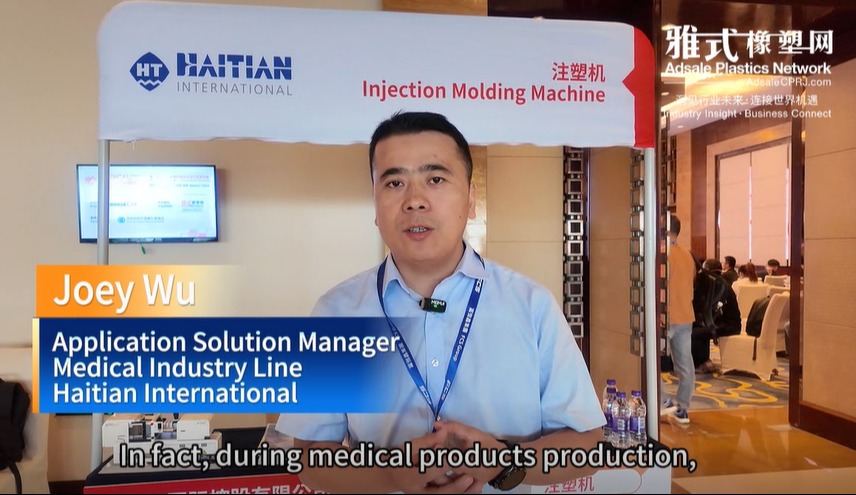
Chaoqun Li, General Manager of the Packaging Business at JINGDONG Industrials.
Reliable fulfillment: The crucial counterpart to lower pricing
Moving packaging materials from suppliers to manufacturing facilities involves a complex network of inventory management, warehousing, and distribution.
Li explained that JINGDONG Industrials seamlessly leverages JD Logistics’ warehousing and distribution network. Concurrently, the company deploys advanced digital tools to align partner factory inventory directly with customer demand, effectively optimizing fulfillment routes and reducing transit costs.
For customers pursuing lean or zero-inventory operations, JINGDONG Industrials provides tailored solutions like line-side and forward-deployed warehouses. These strategic facilities alleviate the heavy warehousing and delivery burdens typically placed on upstream suppliers.
Ultimately, while reducing unit prices is a vital first step, management teams must recognize that delivery lead times, inventory control, and downstream distribution remain the practical, daily challenges that packaging procurement must actively solve.
Next horizon: Connecting demand across entire value chain
The journey from initial demand identification and material selection to structural design, testing, solution confirmation, prototyping, and small-batch delivery involves a highly intricate series of interconnected steps.
Li noted that many of these processes are still managed offline. JINGDONG Industrials is actively pioneering ways to transition this entire end-to-end workflow online through its digital platform.
While digitalization has already been widely implemented across key supply-side processes, the company plans to deepen its integration over the next three years by strengthening direct connections between upstream manufacturers and downstream customers.
This strategic shift highlights that JINGDONG Industrials is doing far more than simply listing packaging products online for sale. Success in modern procurement requires progressively stitching together every single phase of the lifecycle—from initial demand forecasting straight through to supply, inventory management, and final fulfillment.
Reshaping the industrial packaging ecosystem
By introducing price transparency, component cost breakdowns, and inventory optimization alongside a digitally integrated demand cycle, JINGDONG Industrials is leveraging digitalization to fundamentally reshape the industrial packaging procurement chain.
This transformation goes far beyond merely shifting packaging procurement online. By seamlessly connecting production capacity, inventory, and demand through its proprietary platform, JINGDONG Industrials is expanding the scope of cost reduction from isolated product unit prices to end-to-end supply chain efficiency.
For the industrial packaging industry, digitalization delivers value that transcends simple cost cutting. As customers shift their focus from merely “buying packaging materials” to strategically “managing the packaging supply chain”, market competition is pivoting away from basic unit-price quotations toward holistic, end-to-end coordination and service capabilities.
As Chaoqun Li emphasized, the true value of industrial packaging extends well beyond supplying physical products. It lies in unifying the supply chain and driving highly efficient, frictionless matching between supply and demand.