


















PFAS removed from water with 3D-printed monoliths

Researchers from the University of Bath invented a method to remove perfluorooctanoic acid (PFOA), one of the most common perfluoroalkyl and polyfluoroalkyl substance (PFAS), from water, with use of 3D printing and ceramic-infused lattices (or “monoliths”).
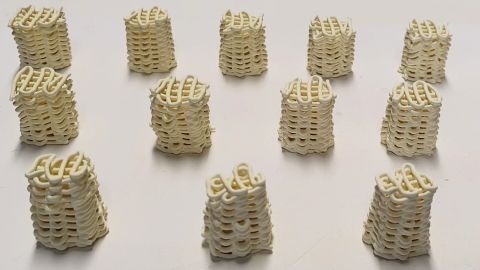
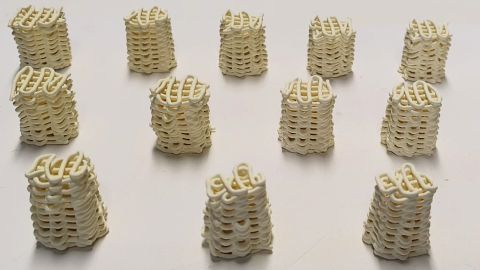
The 3D-printed lattices with ceramic-infused ink.
The research was funded by the Engineering and Physical Sciences Research Council, and its findings were published in The Chemical Engineering Journal titled “3D-Printed In2O3 Monoliths for PFAS Removal”.
PFAS: Health threat in water
PFAS are man-made and known to take incredibly long time to break down. This “forever chemicals” can cause health issues including harms to reproductive, developmental, cardiovascular systems, and in increasing likelihood of diabetes.
Sources of PFAS include domestic products, often with water-repellent properties, such as non-stick pans, raincoats, paints, fabrics and firefighting foams.
Dr Liana Zoumpouli, a Research Associate in Bath’s Department of Chemical Engineering and a member of the Centre for Digital, Manufacturing and Design, pointed out that PFAS are a major focus in water treatment and public health.
In this case, the researcher team have created an efficient way to remove PFAS from water without using lots of energy.
3D-printed monoliths with ceramic indium oxide ink
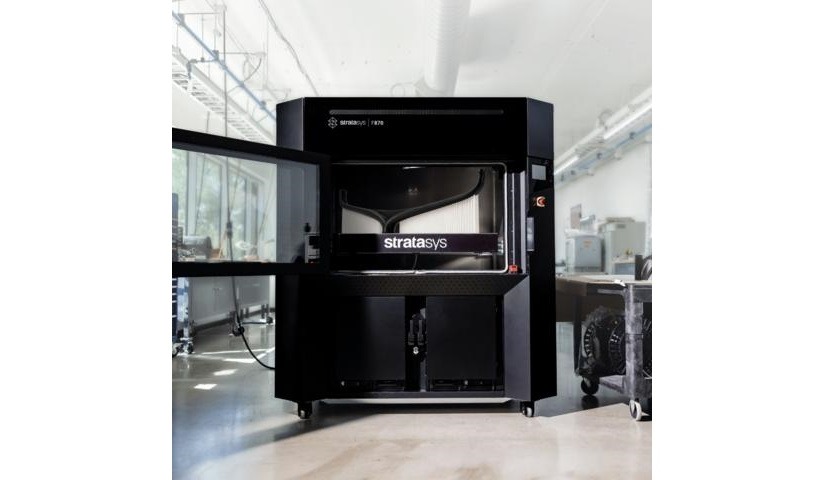
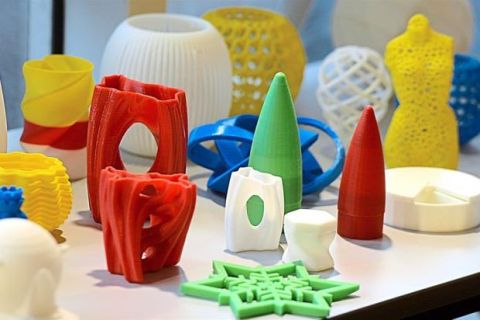
The 4cm monoliths are created by extruding ink, infused with ceramic indium oxide, from a 3D printer. The process is like squeezing toothpaste from a tube, forming it into a lattice shape.
“Using 3D printing to create the monoliths is relatively simple, and it also means the process should be scalable. 3D printing allows us to create objects with a high surface area, which is key to the process,” explained Dr Zoumpouli.
Effective solution to be used repeatedly
When the monoliths are ready, simply drop them into the water and they will work themselves.
As indium oxide bonds with PFAS, the chemicals immediately stick to the monoliths and can be removed from water in under three hours, which is compatible with current water treatment plants in the UK and abroad.
Testing has found that the monoliths remove 75% of PFAS from water. The team also surprisingly found that the monoliths have become more effective under repeated use as they undergo high-temperature thermal “regeneration” treatment after each use.
The team is keen to further their research in increasing the efficiency of the process with further refinement, as well as to explore more on the thermal “regeneration” treatment after each use of monoliths with further experimentation.