















BASF and research partners collaborate to optimize mechanical recycling of plastics

BASF, Endress+Hauser, TechnoCompound, the University of Bayreuth and Friedrich Schiller University Jena have collaborated in the SpecReK project to study how the mechanical recycling of plastics can be improved.
The project aims to reliably and precisely identify the composition of plastic waste during the recycling process and thus improve the quality of recycled plastics. This will be achieved by combining state-of-the-art measuring techniques with artificial intelligence (AI).
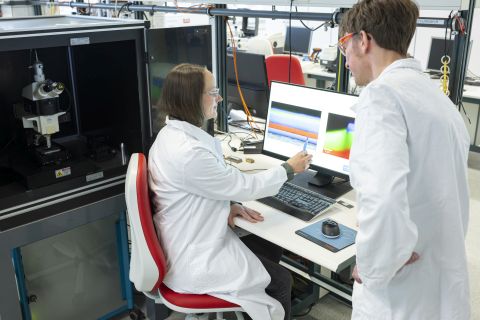
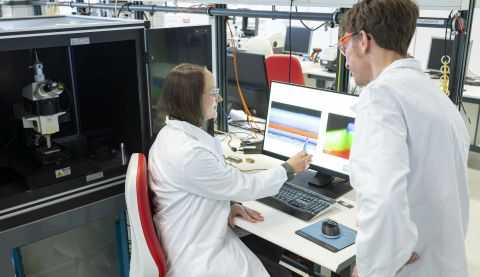
Spectroscopic analysis of a plastic in a BASF laboratory in Ludwigshafen.
The total project volume is EUR 2.2 million, with two-thirds financed by German Federal Ministry of Education and Research (BMBF) funds from its quantum systems research program and one-third financed by the project partners.
Methodology
Spectroscopic methods are used to interpret how the material interacts with light to gain information about the chemical structure of the recycled plastics.
The resulted data can help determine in real time during processing which plastic grades, additives and contaminants are contained in the material.
In a subsequent step, an AI algorithm will recognize patterns in the measurement data and recommend which additional components should be added or how the recycling process should be adapted to improve the quality of the recycled plastic output.
“This will enable us to use more mechanically recycled plastics to produce high-quality products and to make recycling processes more efficient and sustainable,” said Dr Bernhard von Vacano, head of the Plastics Circularity research program at BASF.