










ENGEL: It is still important for humans to operate machines

In this VDMA interview on the way to K 2025, Dr. Stefan Engleder, CEO of ENGEL Group, discussed the inevitable innovation on AI in operation and sustainability in mechanical engineering.
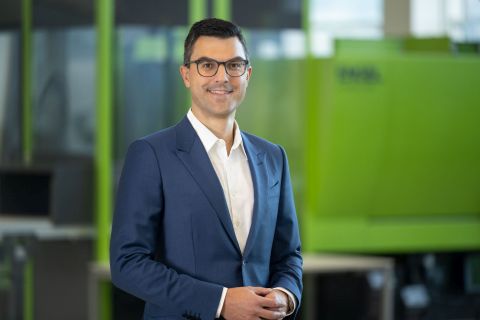
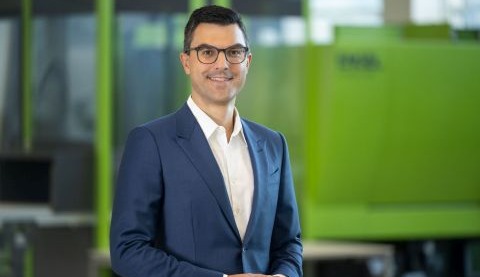
Dr. Stefan Engleder, CEO ENGEL Group.
Dr. Engleder, how important is innovation in difficult economic times?
Dr. Engleder: Innovation is extremely important – especially in the current climate. Our customers need innovative solutions to launch new plastic products in a competitive and sustainable manner, and at ENGEL, we are also investing specifically in innovation to support our customers in becoming and remaining leaders in their field. That is why, despite this crisis, which has been ongoing for the past three years, we are investing in research and development in the areas of products, processes and digitalization, as not innovating would mean standing still, and that ultimately means taking a step backwards.
How do you achieve this?
Dr. Engleder: The advantage of injection molding is its enormous versatility – from micro-applications to large-volume applications. We develop new or alternative ways of manufacturing plastic products efficiently, cost-effectively, and reliably, in close cooperation with our customers – in some cases even in molds that have never existed before. At the same time, we are making long-term investments in research and development, in basic research, digitalization and our assistance systems. Development cycles of four to five years are not uncommon. It often takes six, seven or eight years before marketable innovations emerge and we start earning money with them. This kind of staying power is necessary to create sustainable solutions that are also economically viable.
What role does AI play in your innovation efforts?
Dr. Engleder: Using the iQ process observer – the latest addition to our iQ assistance series – we support customers by means of AI to improve process stability in injection molding. The iQ process observer monitors the production process and provides suggestions on how to adjust the machine. The control system analyses a wide range of process parameters and uses this information to forecast how the production process will develop under the current conditions. As soon as critical deviations become apparent, the machine operator receives feedback via a traffic light system. In addition, the system also makes specific propositions for optimizing the machine settings. The next step would, of course, be for the machine to adjust itself. However, we believe that it is still important for a human to operate the machine.
Does AI help alleviate your customers' skills or even labor shortages?
Dr. Engleder: Through utilizing suggestions made by the assistance system, a new machine operator does not need to be a process engineer, but basically follows clearly structured instructions. We have identified the shortage of skilled workers as a key issue at ENGEL because this topic is also actively reflected back to us by our customers. We therefore also offer straightforward set-up assistants, such as tool change assistants; that helps the machine control system to guide the operator through the process step by step. This means that the training phase no longer takes several months, but can be completed in one to two days. Thirdly, we also offer remote access options. Experts, whether from the customer or from ENGEL, can connect remotely via our e-connect portal and support the machine operator, for example with maintenance, optimization or service. This renders savings in terms of skilled workers, and, above all, time. However, it does not help with the general labor shortage – machine operation will still be necessary.
So unmanned machines are still a thing of the future?
Dr. Engleder: No, I wouldn't say so. We are already relatively close, due to our expert system. I would compare it to autonomous driving in cars: they are already on the roads, not necessarily on every continent and in every city, but the technology is actually relatively mature. However, it is not enough to just develop the technology and create the conditions: you also need a well-thought-out overall concept and, above all, customer acceptance. And that raises the question of whether a completely unmanned machine is even necessary – and whether our customers actually want it in this form.
At K 2025, we will be presenting an industrial solution for a self-regulating injection molding cell for the first time. Supported by AI, the machine is capable of autonomous production, and can optimize quality and processes independently. This is a significant milestone on the road to further digitalization in injection molding. Technologically, we are therefore very far ahead. At the same time, one thing remains clear to us: responsibility still lies with humans, as even the best assistance ultimately requires a conscious decision by the user.
What trends do you currently see within mechanical engineering?
Dr. Engleder: Electrification and energy efficiency are still continuing trends. This is currently a concern for almost everyone, because on the one hand energy consumption is a clear cost factor, and on the other hand, energy is not available without restrictions in many places. We will also be presenting new solutions in this area at K. We have already discussed the second major topic: AI; in particular the further development of our assistance and digital systems, plus we are continuing to see a trend towards sustainability. Even though the discussion is currently somewhat less prominent due to postponed deadlines at EU level, the industry is nevertheless consistently preparing for it. After all, regardless of regulatory requirements, we have no choice but continue to promote the circular economy. The motto of K is "The Power of Plastics! Green – Smart – Responsible." The fact that "green" is explicitly included underlines the importance of this topic.