












Search History
Clear History
{{item.search_key}}
Hot Searches
Change
{{item.name}}
{{item.english_name}}
Subscribe eNews
Once A Week Once Every Two Weeks
{{sum}}
Log in Register

Applications

Report: Innovative Plastics Technologies Propel Medical Device Advancement

Vianode and Ateios Systems to jointly develop next generation graphite electrodes

Indorama Ventures supports Brazilian project on ocean plastic recycling

Products

Toray sets to commercialize award-winning advanced photosensitive PI patterning technology

Haitian Plastics Machinery delivers injection molding turnkey project to XPENG’s Zhaoqing base

Orinko to unveil three high-performance specialty materials at CHINAPLAS 2026

Activities

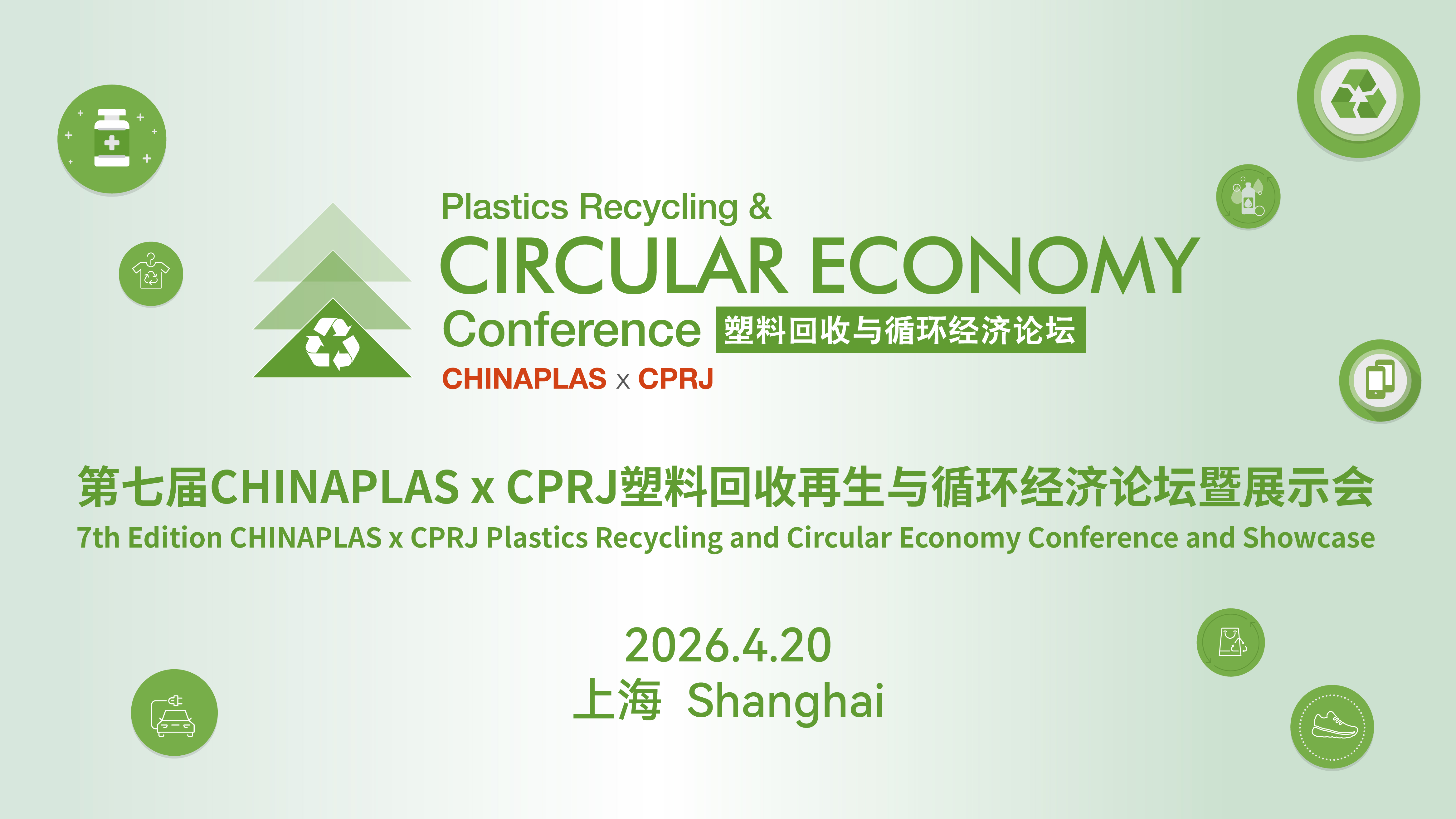
  • Must-attend: CHINAPLAS x CPRJ Plastics Recycling and Circular Economy Conference in Shanghai

  • Beyond procurement: Exploring the concurrent events at CHINAPLAS 2026

  • Chinaplas2026 Preview Webinars | Smart Blow Moulding & AI Inspection (FREE)

Pictorial

News Videos

ALPLA: Global packaging, empowering China

Evonik: Going beyond chemical boundary, innovations for limit-less future

Jwell Machinery: Plastic machinery hard power in six major areas

Conference Videos

【Mandarin session: Webinar playback】HUSKY:From Injection Molding Machines to Temperature Controllers – Diversified Product Portfolio Breaks Through Molding Challenges and Empowers Advanced Applications in End-Use Segmented Markets – Pre-Show Analysis for Chinaplas

[Live Replay] ST BlowMoulding Group: How Smart, Energy-Efficient Blow Moulding Technology Drives Sustainability

【Mandarin session: Webinar playback】SACMI: Your Digitalized Manufacturing, Your Future Today

Corporate/Product Videos

Tool Sheds Extrusion Die for PP Furniture Extrusion Line Tooling TianRui Mould

Mingsanfeng professional cap mould, Working together to pave the way for the growth of bottle cap molds.

QINGDAO BOUNI introduction video

Home > News > Injection

First fully automated series production of thermoplastic composite rotor blades for drones

Source:Adsale Plastics Network Date :2026-03-04 Editor :RC
Copyright: This article was originally written/edited by Adsale Plastics Network (AdsaleCPRJ.com), republishing and excerpting are not allowed without permission. For any copyright infringement, we will pursue legal liability in accordance with the law.

At JEC World 2026 on March 10-12 in Paris, ENGEL will demonstrate how thermoplastic composite rotor blades for drones can be manufactured efficiently, with consistent quality and fully automated in series production.

ENGEL_JEC 2026_drone blades.jpg

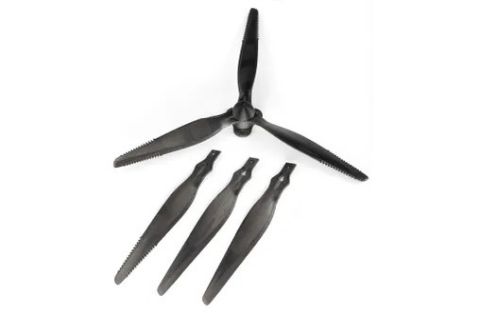
Drone propeller with carbon-fiber reinforced composite rotor blades manufactured using tape-sandwich injection molding.


This scalable production solution combines high component performance, integrated noise reduction and sustainability in one seamless process.


Tape-sandwich injection molding as core technology


The central element is a structural sandwich design consisting of carbon-fiber-reinforced thermoplastic tapes and an injection-molded short-fiber compound. The tapes form the load-bearing outer layers of the rotor blade and are positioned precisely in the mold and secured using vacuum fixation. This allows the reinforcements to be aligned exactly along the load paths – material is used only where it is needed for structural performance.

ENGEL_JEC 2026_drone blades closeup.jpg

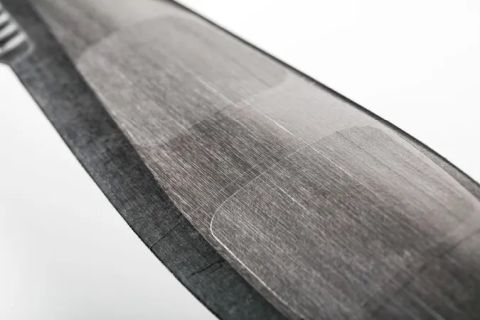
Detail view of a carbon-fiber reinforced composite rotor blade, manufactured near-net-shape using tape-sandwich injection molding.


In the next step, the core material made of a short-fiber thermoplastic is injected between the pre-positioned tapes and bonded to the outer layers to form a near-net-shape component structure. To further increase the lightweight potential, the core is foamed chemically, reducing component weight while maintaining structural performance.


The result is a lightweight yet highly durable rotor blade in which shaping, structural function and material bonding are realized in an automated cycle. After a defined final trim, the component is ready for use.


Functional integration and design freedom


One of the key advantages of injection molding is the high level of design freedom it offers. Noise-reducing features such as serrated trailing edges can be integrated directly into the component geometry using interchangeable mold inserts, without additional machining steps. This makes it possible to address the acoustic requirements of modern drone applications – particularly in urban environments – and reduce noise emissions.


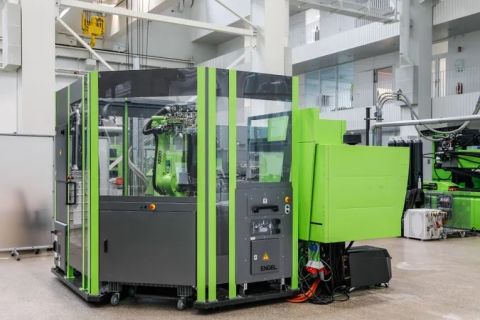
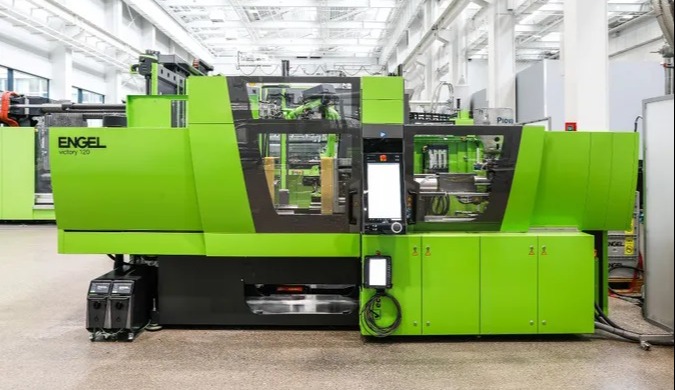
ENGEL will demonstrate the process live on a tie-bar-less ENGEL victory 120 injection molding machine equipped with an easix six-axis robot. The tie-bar-less design provides the space required to fully automate material feeding, handling and part removal. This enables cycle times of less than 60 seconds per rotor blade.
ENGEL_JEC 2026_victory 120_01.jpg

ENGEL_JEC 2026_victory 120_02.jpg

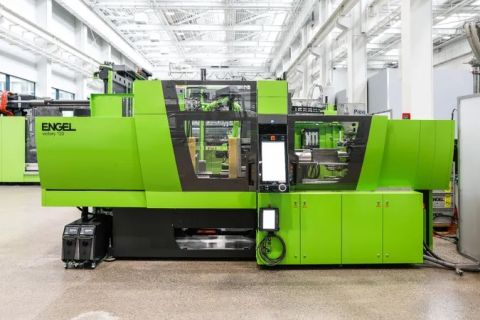
Tie-bar-less ENGEL victory 120 injection molding machine equipped with an easix six-axis robot.
ENGEL_JEC 2026_victory 120_03.jpg

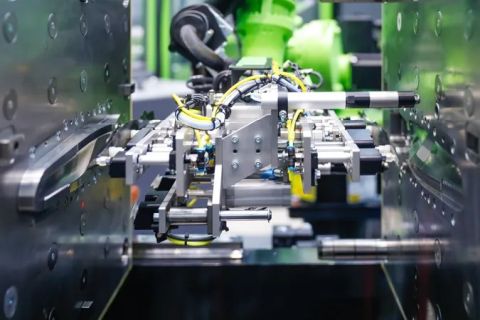
Automated handling in the mold area allows precise process steps directly in the injection mold.


NeoBlade: Interdisciplinary research project across entire value chain


NeoBlade was designed as an interdisciplinary research project spanning the entire value chain. Project partners include ALPEX Technologies, the Energy Institute at JKU Linz, FACC Operations, Plastic Innovation and TU Wien (Aircraft Systems Research Group).


The aim was to link aeroacoustic design, material and tool development, process automation and sustainability assessment at an early stage and translate them into an industrially viable overall solution.


The project evaluated different thermoplastic systems – from high-temperature-resistant materials to cost-efficient alternatives. Compounds with recycled carbon fibers were also used.


Scalable from rotor blades to high-voltage battery covers


Alongside the rotor blade, ENGEL will present another exhibit at JEC based on the thermoplastic tape-sandwich injection molding technology: a high-voltage battery cover made of flame-retardant thermoplastic, measuring 1.3 x 1.8 meters.


The component was named a finalist for the JEC World Innovation Awards 2026 and underlines the scalability of the process – from rotor blades around 30 centimeters long to large-format structural components.


The battery cover combines low weight, high stiffness and full recyclability. Features such as spacers or fastening points can be integrated directly in the process.

 Like 丨  {{details_info.likes_count}}
Low-altitude economy
Injection molding machines
JEC
ENGEL
 Ningbo Xinbaile Intelligent Machinery Manufacturing Co., Ltd.      
 HENAN HENGFEI BIOLOGICAL TECHNOLOGY CO.,LTD      
 GUANGDONG HALFON MACHINERY EQUIPMENT TECHNOLOGY CO.,LTD      
 ZHOUSHAN DEMAJI INDUSTRIAL CO., LTD.      
 YUYAO KAWAGUCHI Manufacturing Co., Ltd.      
 NINGBO UNION POWER MACHINERY CO., LTD.      
 BRUECKNER MASCHINENBAU GMBH      

The content you're trying to view is for members only. If you are currently a member, Please login to access this content.   Log in

Source:Adsale Plastics Network Date :2026-03-04 Editor :RC
Copyright: This article was originally written/edited by Adsale Plastics Network (AdsaleCPRJ.com), republishing and excerpting are not allowed without permission. For any copyright infringement, we will pursue legal liability in accordance with the law.

At JEC World 2026 on March 10-12 in Paris, ENGEL will demonstrate how thermoplastic composite rotor blades for drones can be manufactured efficiently, with consistent quality and fully automated in series production.


ENGEL_JEC 2026_drone blades.jpg

Drone propeller with carbon-fiber reinforced composite rotor blades manufactured using tape-sandwich injection molding.


This scalable production solution combines high component performance, integrated noise reduction and sustainability in one seamless process.


Tape-sandwich injection molding as core technology


The central element is a structural sandwich design consisting of carbon-fiber-reinforced thermoplastic tapes and an injection-molded short-fiber compound. The tapes form the load-bearing outer layers of the rotor blade and are positioned precisely in the mold and secured using vacuum fixation. This allows the reinforcements to be aligned exactly along the load paths – material is used only where it is needed for structural performance.


ENGEL_JEC 2026_drone blades closeup.jpg

Detail view of a carbon-fiber reinforced composite rotor blade, manufactured near-net-shape using tape-sandwich injection molding.


In the next step, the core material made of a short-fiber thermoplastic is injected between the pre-positioned tapes and bonded to the outer layers to form a near-net-shape component structure. To further increase the lightweight potential, the core is foamed chemically, reducing component weight while maintaining structural performance.


The result is a lightweight yet highly durable rotor blade in which shaping, structural function and material bonding are realized in an automated cycle. After a defined final trim, the component is ready for use.


Functional integration and design freedom


One of the key advantages of injection molding is the high level of design freedom it offers. Noise-reducing features such as serrated trailing edges can be integrated directly into the component geometry using interchangeable mold inserts, without additional machining steps. This makes it possible to address the acoustic requirements of modern drone applications – particularly in urban environments – and reduce noise emissions.


ENGEL will demonstrate the process live on a tie-bar-less ENGEL victory 120 injection molding machine equipped with an easix six-axis robot. The tie-bar-less design provides the space required to fully automate material feeding, handling and part removal. This enables cycle times of less than 60 seconds per rotor blade.


ENGEL_JEC 2026_victory 120_01.jpg

ENGEL_JEC 2026_victory 120_02.jpg

Tie-bar-less ENGEL victory 120 injection molding machine equipped with an easix six-axis robot.

ENGEL_JEC 2026_victory 120_03.jpg

Automated handling in the mold area allows precise process steps directly in the injection mold.


NeoBlade: Interdisciplinary research project across entire value chain


NeoBlade was designed as an interdisciplinary research project spanning the entire value chain. Project partners include ALPEX Technologies, the Energy Institute at JKU Linz, FACC Operations, Plastic Innovation and TU Wien (Aircraft Systems Research Group).


The aim was to link aeroacoustic design, material and tool development, process automation and sustainability assessment at an early stage and translate them into an industrially viable overall solution.


The project evaluated different thermoplastic systems – from high-temperature-resistant materials to cost-efficient alternatives. Compounds with recycled carbon fibers were also used.


Scalable from rotor blades to high-voltage battery covers


Alongside the rotor blade, ENGEL will present another exhibit at JEC based on the thermoplastic tape-sandwich injection molding technology: a high-voltage battery cover made of flame-retardant thermoplastic, measuring 1.3 x 1.8 meters.


The component was named a finalist for the JEC World Innovation Awards 2026 and underlines the scalability of the process – from rotor blades around 30 centimeters long to large-format structural components.


The battery cover combines low weight, high stiffness and full recyclability. Features such as spacers or fastening points can be integrated directly in the process.


全文内容需要订阅后才能阅读哦~
立即订阅

Recommended Articles

Injection
Haitian Plastics Machinery delivers injection molding turnkey project to XPENG’s Zhaoqing base
 2026-03-25
Injection
Tederic to show food packaging and medical consumable solutions at CHINAPLAS 2026
 2026-03-23
Injection
Shorter Footprint, Greater Strength: FCS to debut compact innovation at CHINAPLAS 2026
 2026-03-19
Injection
ENGEL builds world-largest injection molding machine
 2026-03-19
Injection
Arburg wins four “Product of the Year 2026” prizes
 2026-03-12
Injection
WITTMANN vertical machine supports efficient automation for complex metal-plastic assemblies
 2026-03-06

You May Be Interested In

Change

  • People
  • Company
loading... No Content
{{[item.truename,item.truename_english][lang]}} {{[item.company_name,item.company_name_english][lang]}} {{[item.job_name,item.name_english][lang]}}
{{[item.company_name,item.company_name_english][lang]}} Company Name    {{[item.display_name,item.display_name_english][lang]}}  

Polyurethane Investment Medical Carbon neutral Reduce cost and increase efficiency CHINAPLAS Financial reports rPET INEOS Styrolution Evonik Borouge Polystyrene (PS) mono-material Sustainability Circular economy BASF SABIC Multi-component injection molding machine All-electric injection molding machine Thermoforming machine

First fully automated series production of thermoplastic composite rotor blades for drones

识别右侧二维码,进入阅读全文
下载
x 关闭
订阅
亲爱的用户,请填写一下信息
I have read and agree to the 《Terms of Use》 and 《Privacy Policy》
立即订阅
Top
Feedback
Chat
News
Market News
Applications
Products
Video
In Pictures
Specials
Activities
eBook
Front Line
Plastics Applications
Chemicals and Raw Material
Processing Technologies
Products
Injection
Extrusion
Auxiliary
Blow Molding
Mold
Hot Runner
Screw
Applications
Packaging
Automotive
Medical
Recycling
E&E
LED
Construction
Others
Events
Conference
Webinar
CHINAPLAS
CPS+ eMarketplace
Official Publications
CPS eNews
Media Kit
Social Media
Facebook
Linkedin