





Interview with Haitian: Why is industrialization of in-mold coating so difficult?

The value of in-mold coating (IMC) is not limited to just skipping a single coating step.
For automotive exteriors, adopting this technology requires integration between equipment, materials, molds, and processing conditions. Especially for large exterior parts, the key challenge is how to reduce the difficulty for customers when adopting a new process.
This also changes the role of equipment suppliers; beyond supplying machines, they need to take part in material matching, process development, and project execution, providing customers with a complete solution.
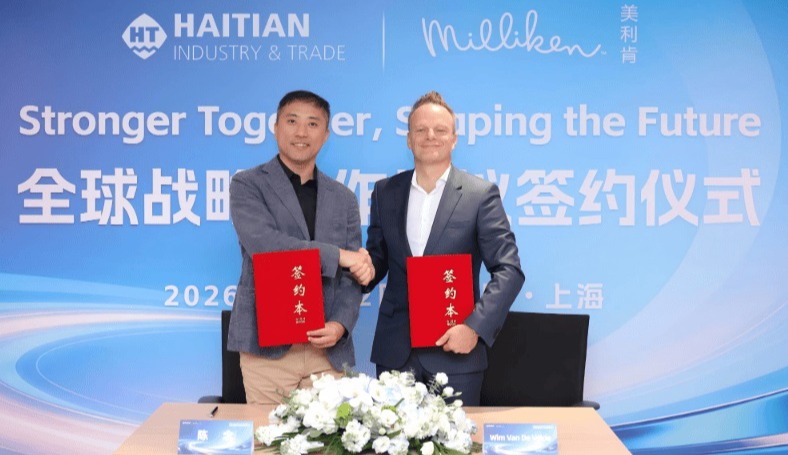
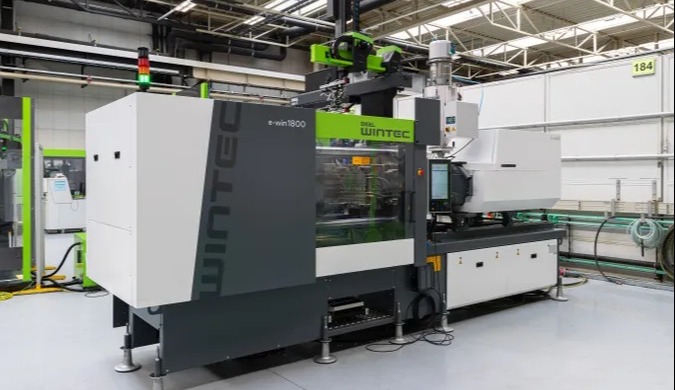
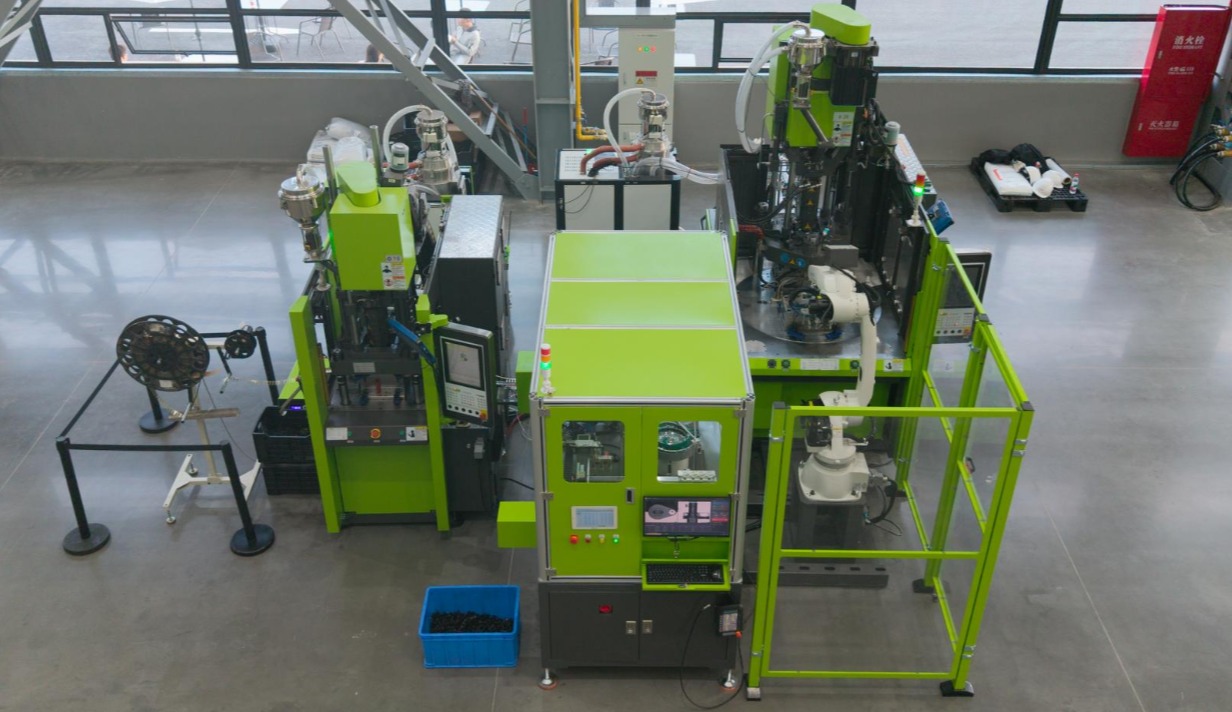
As one of the world’s major injection-molding equipment manufacturers, Haitian International began developing IMC technology early and launched a polyurethane (PUR) spray-free turnkey solution. In May, Haitian entered into a strategic cooperation with German PUR specialist Hennecke to further advance the integration of injection molding and PUR technology.
James Xu, Deputy Director of Automotive Industry Division at Haitian International, discussed why in-mold coating requires system-level solutions, how the supply chain should coordinate, and what changes are expected in future automotive exterior manufacturing, in an interview with Adsale Plastics Network (APN).

James Xu, Deputy Director of Automotive Industry Division, Haitian International
[Register for Webinar] HAITIAN: PUR In-Mold Coating for the Automotive Industry: The Future of Coating & Painting Molded Components
Why are exterior manufacturers seeking new solutions?
APN: In the past two years, why have more companies started eyeing IMC technology?
Xu: I believe it mainly comes from the combined forces of market demand and policy compliance.
In recent years, cost reduction and efficiency improvement have become key strategies for automakers. For large exterior parts such as bumpers and fenders, compared with conventional coating processes, IMC integrates coating into the injection molding step. It can achieve a production cycle time about four times faster than traditional methods, with coating utilization close to 100%. The manufacturing cost benefit is very clear.
At the same time, environmental regulations continue to tighten, pushing the automotive industry to look for new manufacturing approaches. IMC uses a solvent-free system and completes coating inside a sealed mold. This can reduce VOC emissions by more than 99% and cut carbon emissions by about 60%, aligning well with the industry’s direction toward greener manufacturing.
Therefore, IMC has started moving from niche applications toward industrialization.
APN: Compared with the traditional “injection molding + post-coating” approach, what exactly has in-mold coating changed?
Xu: The biggest change is that IMC integrates injection molding and spraying into a single production process, enabling one-step molding.
Compared with conventional processing, it eliminates multiple steps such as part transfer, surface pretreatment, spraying, and drying. This not only reduces investment in equipment and plant space, but also significantly improves production efficiency. Furthermore, because spraying takes place inside a sealed mold, it prevents transfer-related scratches and contamination, thereby increasing yield and consistency.
IMC can also produce various visual effects, such as high-gloss, matte, and metallic textures. Additionally, the PUR material possesses self-healing capability; for example, minor scratches from small stone impacts during high-speed driving can naturally recover under certain conditions.
Moreover, the solvent-free system and sealed process significantly reduce VOC emissions, making it easier to meet increasingly stringent environmental requirements.
APN: In the past, IMC was used mostly for automotive interiors. Why is the technology now expanding its application into exteriors?
Xu: Early interior applications were driven mainly by PUR’s capability to deliver high-gloss aesthetic and self-healing performance, along with the capability to accurately replicate mold textures. As a result, IMC was mainly used for premium interior components such as glove boxes and center armrests to enhance perceived quality and durability.
Compared with interiors, exterior parts typically involve more complex and longer traditional manufacturing processes, meaning the cost and efficiency benefits offered by IMC become even more significant.
As competition in the automotive industry intensifies, automakers are increasingly focused on manufacturing efficiency and total cost, which has helped drive the adoption of IMC for large exterior components such as bumpers and fenders.
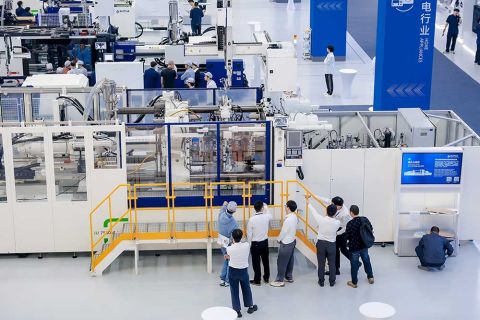
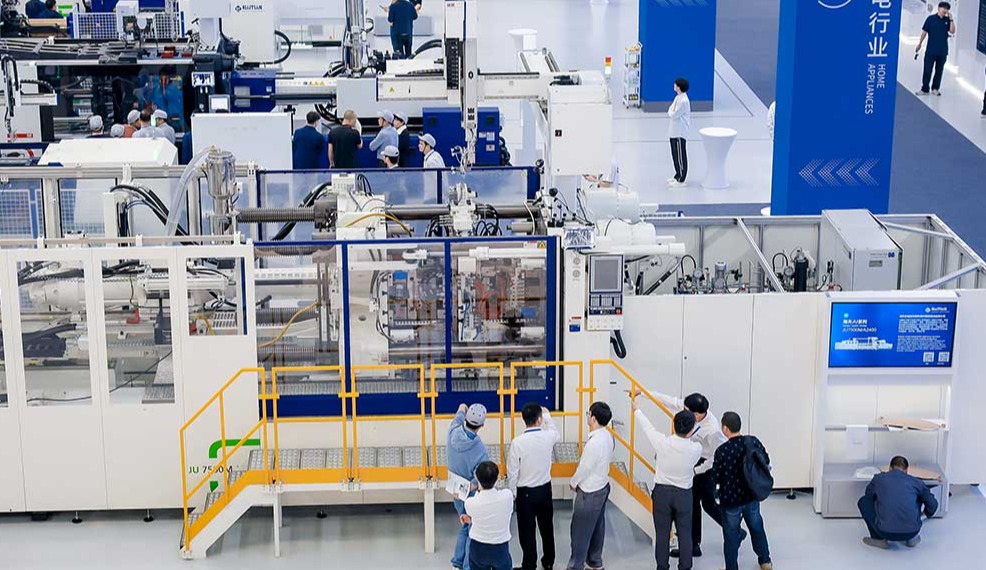
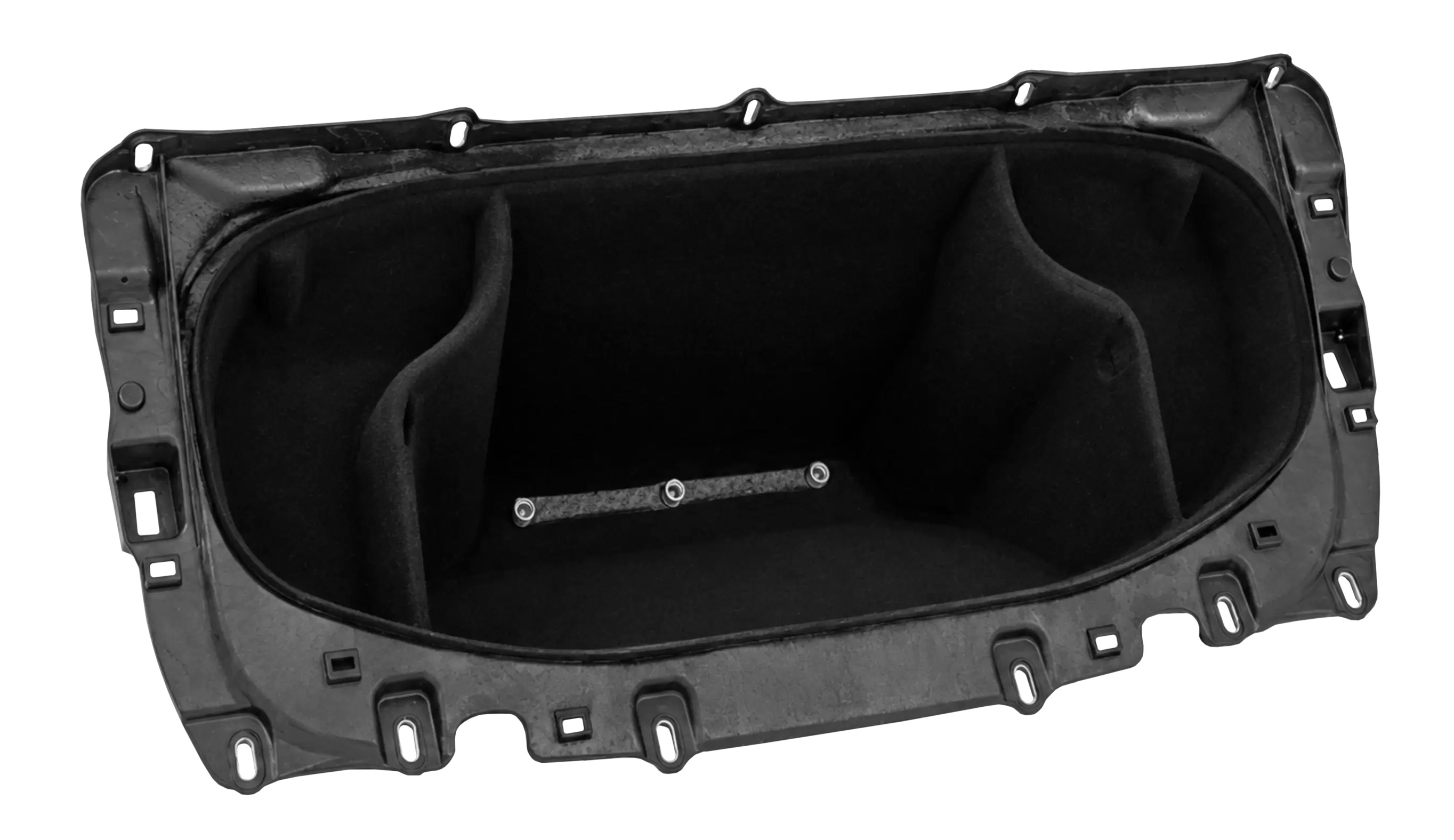
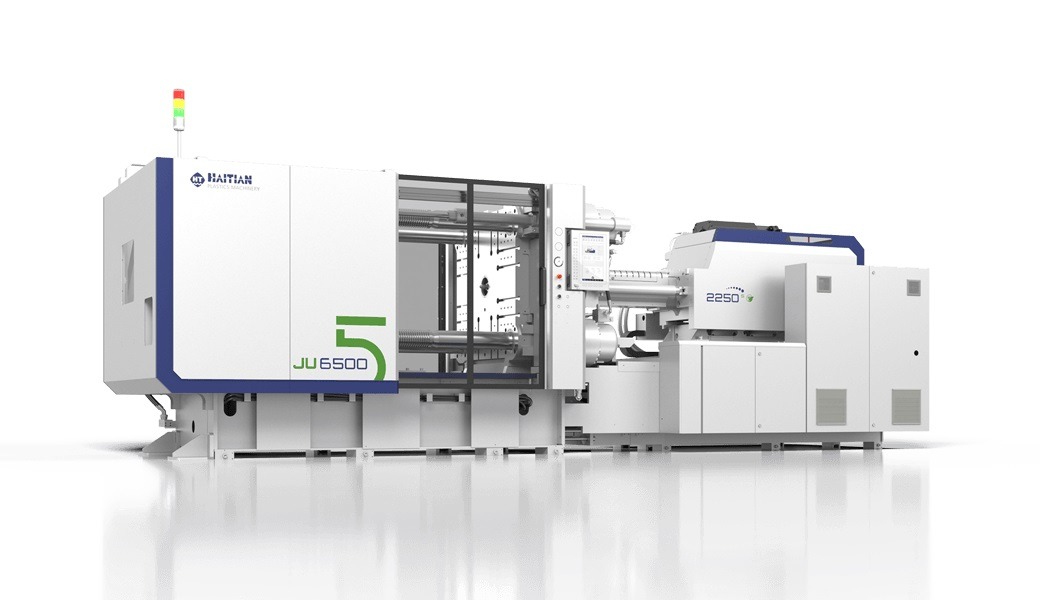
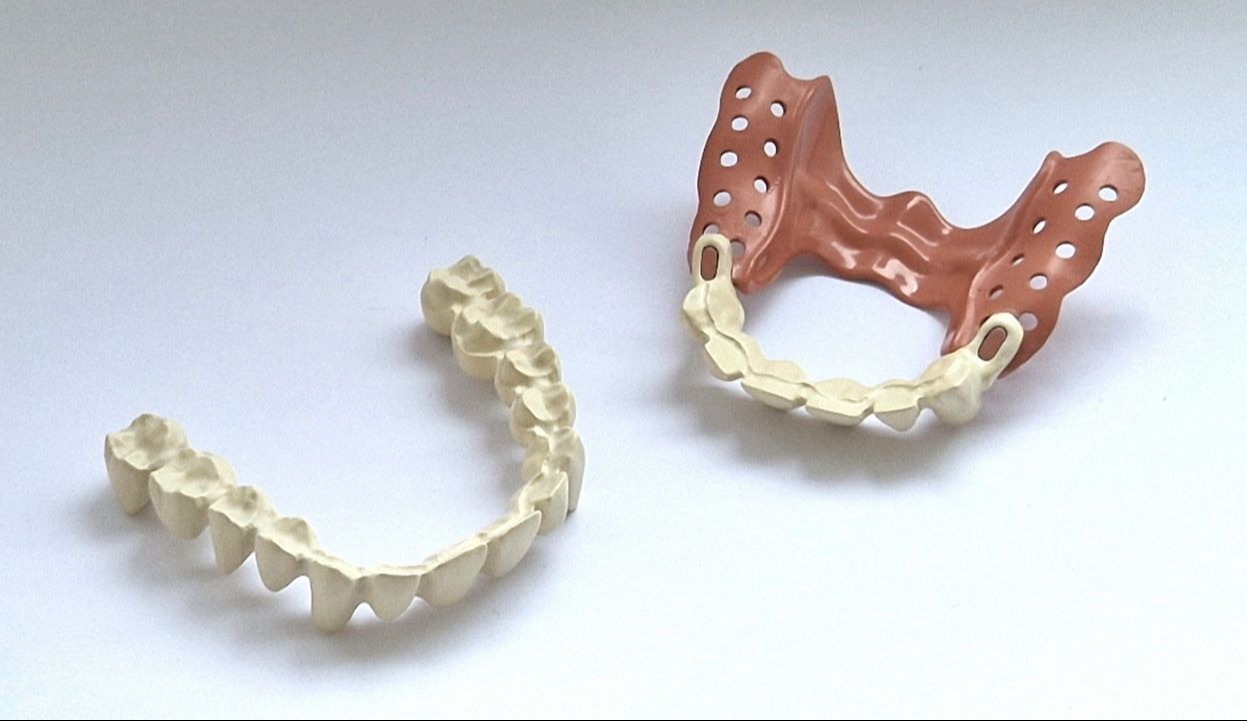
Haitian’s JU7500M/2400 automotive grille solution is built on a PC/ABS + PUR material system and optimized for front grille applications.
Implementing IMC not only about technical difficulty
APN: What conditions are needed to enable scaled adoption of IMC?
Xu: The industrialization of IMC involves not just a single technology, but an upgrade of an entire manufacturing ecosystem.
Successful implementation requires the seamless integration of materials, equipment, molds, process parameters, and end-customer specifications. In short, all five manufacturing pillars of people, machines, materials, methodology, and environment play a vital role.
Only when upstream and downstream players in the supply chain align around a common goal of lowering cost, improving quality, and increasing efficiency can IMC evolve from a trendy technology into a mature manufacturing process.
APN: What is the biggest challenge during current industrialization?
Xu: The biggest challenge still comes from system integration.
IMC involves many areas, including injection molding equipment, PUR feed systems, mold design, material systems, and process control. The system is highly integrated, requiring an understanding of equipment, molds, materials, and process conditions at the same time. This places high demands on multi-disciplinary talent.
In addition, the mold design differs significantly from conventional injection molding, and industry experience is still being accumulated.
PUR material costs are still high, and adhesion issues for non-polar materials such as PP also need further breakthroughs.
For large parts, higher requirements are placed on sealing, coating flow, and dosing accuracy. Downstream processing for complex structural components also needs continuous optimization.
Therefore, a considerable amount of effort is still required before IMC can achieve truly large-scale application.
Why is just a standalone machine no longer enough for customers?
APN: Why did Haitian plan the R&D of IMC technology early?
Xu: The primary reason was customer demand. Over the past few years, through discussions with numerous automotive customers, we have found that more and more companies are looking for a new process that balances cost, efficiency, and environmental impact. In-mold coating fits this direction perfectly.
At the same time, we also realized that this technology places higher demands on system integration capabilities. That is why Haitian began early to build around IMC a complete solutions approach.
APN: Compared with traditional equipment-supply models, what is the biggest value of Haitian’s PUR spray-free turnkey solution?
Xu: For many customers, the real challenge is not buying equipment but integrating resources to ensure stable system operations.
Haitian’s turnkey offering is intended to help customers solve this problem. Customers do not need to coordinate multiple suppliers. Instead, Haitian is responsible for the system integration to reduce the technical and implementation risks, enabling faster mass production.
APN: Haitian has recently signed a strategic cooperation agreement with Germany’s Hennecke. Why is this collaboration significant?
Xu: Haitian has strong expertise in injection molding equipment, while Hennecke has focused on PUR technology for many years. Their strengths complement each other perfectly.
IMC is a cross-domain technology, and it is difficult for one company to independently build the entire industrial chain. Through this collaboration, we aim to truly integrate injection molding and PUR processes, and provide customers with a more mature and stable integrated solution.
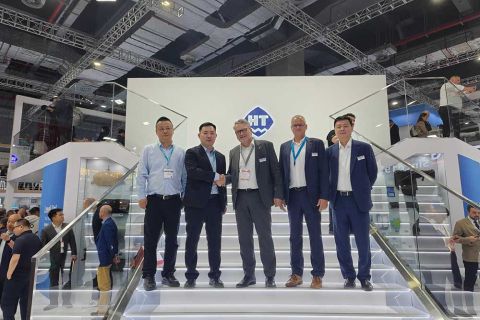
Haitian International partners with Hennecke on IMC solutions.
Which products are next in line for in-mold coating?
APN: In the next 3-5 years, which products are most likely to achieve scaled adoption first?
Xu: ABC pillars are relatively small and have simplified structure, facilitating easier industrialization. They are expected to be among the first to achieve large-scale adoption.
The true value, however, lies in large exterior body panels, such as the side doors, fenders, and quarter panels. Although this area still faces technical hurdles in color consistency, coating uniformity, and process stability, it offers the greatest potential for cost reduction. Consequently, this remains the primary focus of R&D investment for both automakers and Tier 1 suppliers.
Furthermore, automotive headlights hold significant potential for future application, although further refinement is required to meet stringent standards for high light transmittance, weatherability, and abrasion resistance.
APN: Moving forward, what key shifts should the companies across the automotive supply chain focus on?
Xu: As IMC technology gains widespread adoption, supplier competition will shift from pure manufacturing capability to the ability to engage early in product development.
Suppliers need capabilities in material understanding, mold development, process control, and design-for-manufacturability (DFM). They should be able to optimize structure, materials, and processes together with automakers at the product design stage.
Moving forward, suppliers will transition from build-to-print (BTP) vendors into technical partners for automakers, establishing early-stage collaboration as a distinct competitive advantage.