














Search History
Clear History
{{item.search_key}}
Hot Searches
Change
{{item.name}}
{{item.english_name}}
Subscribe eNews
Once A Week Once Every Two Weeks
{{sum}}
Login Register

Applications

CHINAPLAS 2026: An array of cutting-edge solutions for medical device production

Interview: Uniting the chemical industry to pioneer net-zero and circularity

CHINAPLAS x CPRJ Conference: Key insights for the global recycling industry

Products

Invitation: Meet BOUNI at CHINAPLAS 2026 Shanghai (Booth 1.2A58)

TK Group: One-stop molding solutions fuels precision manufacturing upgrades

CHINAPLAS 2026: LCY transforms into innovator to meet demanding applications

Activities

  • CHINAPLAS 2026: Discover the must-attend concurrent event lineup

  • CHINAPLAS 2026:VDMA “The Power of Plastics” forum highlights digitalization and circularity

  • Must-attend: CHINAPLAS x CPRJ Plastics Recycling and Circular Economy Conference in Shanghai

Pictorial

News Videos

MAAG x SIKORA: Smart pelletizing + precise inspection - More stable, carbon-reduced

CAI Machine: New visual inspection technology debut! More efficient, greener, colorful printing

Ready for CHINAPLAS 2026? Two tools for your visit

Conference Videos

[Mandarin session: Highlights] Covestro: Innovative thermal conductive material solution for new-generation network devices

[Mandarin session: Highlights] Covestro: The Material Effect: Empowering Innovations in Solar-Storage-Charging Smart Energy and Data Center Applications

[Mandarin session: Highlights] Covestro: In-mold Coating (DC/IMC) Technology - Facilitating Personalized Design for Automotive Interior and Exterior Components

Corporate/Product Videos

About Dow

B Series brush machine

Innovative PVC Compounds for Global Manufacturing | Visit Us Booth 6.2A 39 at CHINAPLAS

Home > News > Corporate News

Executive Dialogue: Molding the future in uncertainty: Insights from Bekum's Managing Director

Source:Adsale Plastics Network Date :2026-04-21 Editor :Victor
Copyright: This article was originally written/edited by Adsale Plastics Network (AdsaleCPRJ.com), republishing and excerpting are not allowed without permission. For any copyright infringement, we will pursue legal liability in accordance with the law.

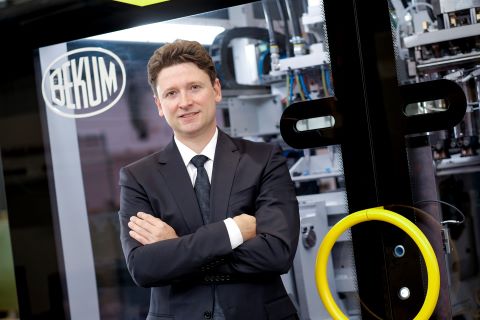
Show Daily recently interviewed Michael Mehnert, Managing Director of Bekum Group, to gain insights into the market and technology from this leading German blow molding machine manufacturer. Mehnert discussed the current fluctuating global landscape and Bekum's distinctive approach to the Chinese market. He also shared perspectives on process optimization, the circular economy, and the impact of AI.


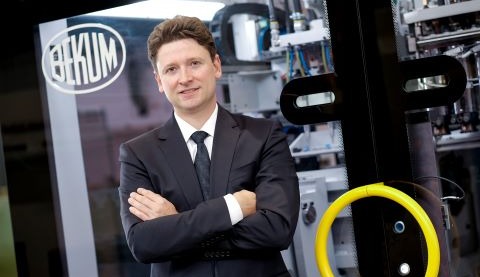
Michael Mehnert

Managing Director, Bekum Group


Michael Mehnert is CEO and sole shareholder of the Bekum Group. He studied mechanical engineering at RWTH Aachen before joining the family business, founded in 1959 in Berlin by his father, Gottfried Mehnert. Since 2016, he has served as managing director, overseeing the company's generational transition and strategic development.

_DSF9175.jpg

Michael Mehnert


Remain competitive amid external forces at play


In your opinion, what are the major challenges facing the global plastics industry in 2026?


Mehnert: In 2026, the global plastics industry is increasingly shaped by geopolitical and economic factors rather than specific machine technologies. Ongoing geopolitical tensions, trade conflicts, and military disputes are affecting international supply chains and investment confidence.


Tariff policies, fluctuating oil prices, and the resulting volatility in resin costs significantly impact the economics of plastics processing worldwide. A significant challenge is the high level of economic uncertainty. Many regions face stagnating consumer demand and limited economic growth. Consequently, investment decisions are often postponed.


What critical factors must machine manufacturers focus on to remain competitive in such an unpredictable environment?


Mehnert: For machine manufacturers, competitiveness today is primarily defined by the ability to deliver the most economical production solutions. While the purchase price of a machine is one part of the equation, overall production economics—such as resin efficiency, energy consumption, cycle time performance, machine uptime, long-term durability, and after-sales service quality—are much more important. Process stability and reliable long-term production are essential in determining the true value of a machine investment.

EBLOW1208D.jpg

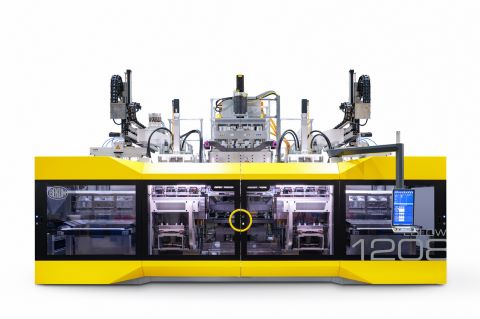
Bekum blow molding machines excel at manufacturing containers with short cycle times and exceptional process stability.


Regarding opportunities, which application sectors are likely to demonstrate higher demand for blow molding machines?


Mehnert: At the moment, global consumption trends are relatively stagnant in many regions, limiting strong growth expectations for the blow molding sector. In consumer packaging, several product categories that traditionally relied on extrusion blow molding are increasingly shifting to PET 2-stage processing technologies.


Additionally, certain established applications like automotive fuel tanks are gradually declining due to the transformation of the automotive industry, diminishing the significance of traditional growth drivers in extrusion blow molding.


Future growth opportunities are therefore more likely to arise from new material developments and innovative applications. For example, the rising use of PET in extrusion blow molded handleware containers is opening new application fields.


Overall, innovations in resin development and new product concepts have the potential to drive demand for advanced blow molding technologies in the coming years.


Deliberate differentiation to navigate the Chinese market


Is the Chinese market a priority for Bekum? Why has Bekum not established production facilities in China?


Mehnert: China is an important market for Bekum, but our strategic focus diverges from the large-volume consumer packaging segment. Standard applications, such as shampoo and household bottles, face intense local competition and extreme price sensitivity, with many Chinese manufacturers offering highly competitive solutions.


Instead, Bekum concentrates on areas where advanced engineering, process stability, and technological expertise are crucial. In China, this primarily includes applications like cleanroom production for pharmaceutical packaging, solutions for the semiconductor industry, demanding automotive components, and specialized multilayer applications, such as six-layer containers.


While establishing a production facility in China makes sense for serving the broader local market with standard machines, as I mentioned, this environment poses challenges for European manufacturers competing on price. Therefore, Bekum does not plan to set up its own production facilities in China.


We have deliberately chosen a different strategic approach by forming strong local partnerships. This allows us to leverage local products and resources for our new SmartLine series while maintaining our technological standards and know-how.


Could you share more about the SmartLine machine program?


Mehnert: With our new SmartLine concept, Bekum offers a machine platform that reduces investment costs by approximately 30%, lowers energy consumption by around 20%, and enables material savings of up to 10% through optimized processing technology.


Importantly, it maintains the key technological advantages of Bekum systems, particularly in extrusion performance, machine control technology, and overall process reliability. Coupled with strong local service and spare parts availability, this makes Bekum's solution highly competitive, even in increasingly price-sensitive markets.

Smartline.jpg

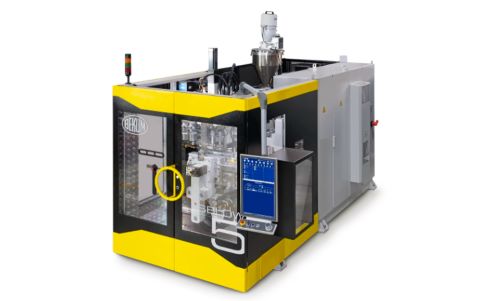
The SmartLine series is engineered for efficiency and cost-effectiveness.


On process optimization and energy efficiency


Let's talk about technology. What are the latest advancements in blow molding solutions?


Mehnert: Current advancements are primarily centered on improved process intelligence, enhanced simulation capabilities, and greater precision in material distribution.


A key example is the ongoing development of spiral-flow extrusion heads. With advanced flow simulation and optimized design, these systems achieve highly precise layer distribution and stable melt flow conditions, leading to improved repeatability, tighter tolerances, and more stable production processes.


This precision allows for further optimization of wall thickness distribution and material usage reduction without compromising product performance. As a result, processors can produce lighter articles while maintaining consistent quality. Meanwhile, machine developments continue to prioritize increased energy efficiency and improved process stability.


How can Bekum and other manufacturers enhance the energy efficiency of their equipment?


Mehnert: In extrusion blow molding, the majority of energy consumption occurs during the extrusion process rather than from the blow molding machine's movements. Typically, about 70 to 80 percent of total energy is needed just to melt the plastic resin.


To enhance energy efficiency, the focus should primarily be on extruder design. Bekum's latest generation of HiPEx extruders has been specifically developed to deliver very high performance while minimizing energy consumption. Features such as optimized screw geometry, improved heat management, and highly efficient drive systems enable excellent melt quality with reduced energy input.


It is important to recognize that there are physical limits to energy savings. A specific amount of energy is fundamentally required to melt one kilogram of polymer, and modern extruder technology is approaching this theoretical limit.


Claims of machines reducing energy consumption by 50 percent often refer only to individual machine movements and not the overall process. Although fully electric drive concepts have improved the efficiency of certain machine functions in recent years, the primary energy demand in blow molding still lies in the melting process during the extrusion stage.


On circular economy and PCR


What solutions does Bekum offer to promote the circular economy and sustainable development? 


Mehnert: One key solution Bekum offers is Tri-Ex technology, which enables the production of three-layer containers featuring defined recycled material content in the middle layer. In this configuration, high-quality virgin material is used for the inner and outer layers, while PCR material is processed in the core. This structure allows manufacturers to significantly increase the recycled content of their products while maintaining essential properties, surface quality, and regulatory compliance.


Another important aspect is the possibility to upgrade existing mono-layer machines. Many Bekum systems in the field can be retrofitted with multilayer extrusion technology, enabling customers to convert their current equipment into machines that can process PCR materials in multilayer structures. This approach enables processors to incorporate recycled content without having to replace their entire machine infrastructure.


In addition to multilayer solutions, Bekum machines are designed for precise parison control and highly stable extrusion processes, ensuring reliable processing even when recycled materials exhibit greater variability.


What technological challenges arise in processing recycled materials in blow molding?


Mehnert: Compared with processes like injection molding, extrusion blow molding imposes stricter requirements on material consistency. Parameters such as intrinsic viscosity (IV), melt strength, and overall material homogeneity play a critical role in stable parison formation and consistent container quality.


Recycled materials often exhibit greater variability in these parameters, resulting in narrower operating windows during processing. Consequently, maintaining tight process tolerances becomes more challenging. Reliable extrusion technology, stable temperature control, and precise process management are essential to ensure consistent product quality when using recycled materials in blow molding applications.
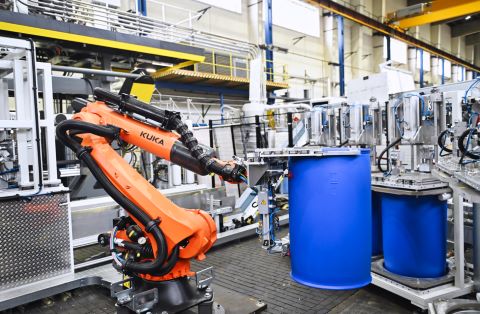

Automation.jpg

Bekum's automation systems optimize processing and ensure quality, even with challenging material combinations.


On digitalization and AI


Can you provide updates on Bekum's developments in digitalization?


Mehnert: Digitalization is an integral part of Bekum's machine development strategy. Our Bekum Control 8.0 platform is continuously enhanced with new features and performance improvements. Regular software updates ensure that customers benefit from ongoing technological advancements throughout their machines' lifecycle.


The control system incorporates various Industry 4.0 functionalities, including advanced remote service capabilities, improved cybersecurity, and enhanced machine diagnostics. Intelligent monitoring functions enable operators to quickly identify process deviations or potential machine issues, supporting predictive maintenance strategies and reducing unplanned downtime.


In addition, important documentation such as electrical schematics, operating manuals, and spare parts catalogs can be accessed directly through the machine interface. Bekum is also working on further service innovations, including augmented reality support.


What are your thoughts on the impact of AI on machinery? 


Mehnert: In practice, the distinction between advanced machine logic and AI is sometimes difficult to define clearly. Bekum machines already incorporate sophisticated control logic and intelligent algorithms that enhance process stability, fault detection, and efficient operation.


Looking ahead, we expect further integration of AI-based technologies. These advancements will enable more in-depth analysis of machine data, improved process optimization, and additional automation features that will assist operators in daily production.


What impact do you think AI will have on the workforce? Does it help with labor shortages or risk unemployment?


Mehnert: In plastics processing, a major challenge in many regions is the growing shortage of skilled machine operators and technicians.


In this context, AI-supported systems can be beneficial. Intelligent assistance functions can simplify machine operation, shorten training times, and support less experienced operators maintain stable production processes. Rather than replacing the workforce, these technologies are likely to address labor shortages and improve overall production efficiency in the coming years.


Presence at CHINAPLAS 2026


Could you share highlights of Bekum's presence at CHINAPLAS 2026?


Mehnert: At CHINAPLAS, Bekum positions itself as a packaging specialist for technically demanding markets. Our focus is on applications where product protection, process stability, and material performance are mission critical—ranging from pharmaceutical cleanroom applications to PET handle bottles and large industrial packaging for sensitive, high-purity media.


At CHINAPLAS, Bekum highlights demanding applications from pharmaceutical packaging to PET handle bottles and large industrial packaging for sensitive media.


In the pharmaceutical sector, Bekum machines are designed for operation in controlled production environments, including cleanroom conditions. Electromechanical axes ensure precise, reproducible motion sequences and stable cycle times. Both monolayer and multilayer technologies enable defined barrier properties for packaging liquid pharmaceuticals, diagnostic solutions, or disinfectants.


For demanding PET extrusion blow molding applications, Bekum offers crystal-clear handle bottles made from 100% recyclable PET, where transparency, ergonomics, and design flexibility are key performance factors.


In the field of industrial packaging, Bekum provides a broad portfolio, including jerrycans, drums, and IBC components. Specific requirements arise when dealing with chemicals, hazardous goods, specialty additives, and high-purity media.


For example, in semiconductor environments, ultra-pure process chemicals are used that cannot tolerate contamination from packaging materials. Multilayer technologies with integrated barrier layers provide permeation resistance, reduce emissions, and enhance safety during storage and transportation.


Bekum


Since 1959, the Bekum Group has established itself as a leader in automation, process reliability, and energy efficiency for blow molding machines. Through strong in-house technology development, Bekum stands for durable and high-ROI solutions.


Bekum develops and manufactures advanced modular fully electric, hybrid, and hydraulic extrusion blow molding machines, featuring award-winning industrial design for hollow plastic packaging, including bottles and canisters.


This family-owned German manufacturer employs approximately 300 people across its facilities in Germany, Austria, and the USA. With over 18,000 Bekum machines installed in more than 100 countries, the company boasts a strong global presence.


Booth: 2.1G45
 Like 丨  {{details_info.likes_count}}
Sustainability
Packaging
plastic
 KunRun Machinery(Shanghai) Co.,Ltd.      
 Guangdong Yilong Advanced Materials Technology Co Ltd      
 DONGGUAN DEHUA PRECISION MOLD CO., LTD      
 HENAN TENGYUE MACHINERY TECHNOLOGY CO.,LTD.      
 ZHONGSHAN SAMPROMOLD MAKING CO.,LTD      
 ZHANGJIAGANG XINRONG MACHINERY CO.,LTD      
 NANJING SAGE ADVANCED MATERIALS CO.,LTD      
 GOOD VISION & MOTION(SHENZHEN)CO,. LTD.      
 ANHUI LITUO ENVIRONMENTAL PROTECTION NEW MATERIAL TECHNOLOGY CO.. LTD.      
 HEFEI TAIHE INTELLIGENT TECHNOLOGY GROUP CO.,LTD.      
 OQ Marketing (Shanghai) Co., Ltd.      
 HANGZHOU BOSOM NEW MATERIALS TECHNOLOGY CO.,LTD.      
 Puyang Comaler Plastic Co., Ltd      
 JIANGSU SHENLONG ZINC INDUSTRY CO., LTD.      
 FCS-Group      
 GREENWICH (CHINA) TECHNOLOGY DEVELOPMENT LIMITED      
 TIANJIN PENGFEI PACKAGING PRODUCTS CO., LTD      
 NINGBO YUFINE PRECISION INDUSTRY CO., LTD.      
 WUHAN CHANGXIN PLASTIC MACHINERY CO.,LTD.      
 GREENCORE RESOURCES LIMITED      
 HAITIAN INTERNATIONAL HOLDINGS LIMITED      
 QINGZHOU MACRO SECCO PACKAGING MATERIALS CO., LTD.      
 LINKER NEW MATERIALS CO., LTD      
 DSP CHEMICAL CO.,LTD      
 Coperion GmbH      
 WENZHOU CHAOXU MACHINERY CO.,LTD.      
 GUANGXI HENGYI NEW MATERIALS CO., LTD.      
 ZHEJIANG ROTOUN PLASTIC TECHNOLOGY CORP.      
 GUANGDONG GUOHENG YOUHE ADVANCED MATERIALS CO., LTD.      
 ZHEJIANG HFLON NEW MATERIAL CO.,LTD      
 FOSHAN AILE PLASTIC MOULD CO., LTD      
 KADIDE      
 GUANGXI WUZHOU GUOLONG RECYCLABE RESOURCES DEVELOPMENT CO., LTD.      
 Shantou Bond Machinery Co., Ltd.      
 HUIZHOU LITUO ADVANCED MATERIALS CO.,LTD.      
 TAIZHOU HAIHUI MOULD CO.,LTD.      
 Jiangsu Hanguang Industrial Co., Ltd.      
 INTERNATIONAL STANDARD MACHINERY (SHANTOU) CO.,LTD      
 SUZHOU BECHTON PLASTIC MACHINERY CO., LTD      
 WUHAN YINFENG PLASTIC MACHINE CO., LTD.      
 LINYI HUASU ELECTRONIC TECHNOLOGY CO., LTD.      
 GUANGDONG ENMEI CHEMICAL TECHNOLOGY CO., LTD      
 XIAMEN XINWANCAI POLYMER TECHNOLOGY CO.,LTD      
 SOJITZ(SHANGHAI)CO.,LTD.      
 HUBEI TIANQIAO MACHINE CO., LTD      
 GUANGZHOU PULISI TECHNOLOGY CO.,LTD.      
 SHANXI YONGDONG CHEMICAL INDUSTRY CO.,LTD      
 Wuxi Jiahong Plastics Technology CO.,Ltd      
 TAIZHOU HUANGYAN TAIXIANG PLASTIC MACHINERY CO.,LTD.      
 Kelong Micro-powder Co., Ltd.      
 BRUECKNER MASCHINENBAU GMBH      
 JIANGSU GROUPSMART NEW MATERIAL CO.,LTD      
 FUJIAN YANGZHU NEW MATERIAL SCIENCE & TECHNOLOGY CO., LTD      
 HUBEI XINJIANSHI MACHINERY TECHNOLOGY CO.,LTD      
 Wudi Haoye Plastic Co. , Ltd.      
 HEBEI GELIA PLASTIC MACHINERY SALES COMPANY      
 WENZHOU DETAI PLASTICS CO., LTD      

The content you're trying to view is for members only. If you are currently a member, Please login to access this content.   Login

Source:Adsale Plastics Network Date :2026-04-21 Editor :Victor
Copyright: This article was originally written/edited by Adsale Plastics Network (AdsaleCPRJ.com), republishing and excerpting are not allowed without permission. For any copyright infringement, we will pursue legal liability in accordance with the law.

Show Daily recently interviewed Michael Mehnert, Managing Director of Bekum Group, to gain insights into the market and technology from this leading German blow molding machine manufacturer. Mehnert discussed the current fluctuating global landscape and Bekum's distinctive approach to the Chinese market. He also shared perspectives on process optimization, the circular economy, and the impact of AI.


Michael Mehnert

Managing Director, Bekum Group


Michael Mehnert is CEO and sole shareholder of the Bekum Group. He studied mechanical engineering at RWTH Aachen before joining the family business, founded in 1959 in Berlin by his father, Gottfried Mehnert. Since 2016, he has served as managing director, overseeing the company's generational transition and strategic development.


_DSF9175.jpg

Michael Mehnert


Remain competitive amid external forces at play


In your opinion, what are the major challenges facing the global plastics industry in 2026?


Mehnert: In 2026, the global plastics industry is increasingly shaped by geopolitical and economic factors rather than specific machine technologies. Ongoing geopolitical tensions, trade conflicts, and military disputes are affecting international supply chains and investment confidence.


Tariff policies, fluctuating oil prices, and the resulting volatility in resin costs significantly impact the economics of plastics processing worldwide. A significant challenge is the high level of economic uncertainty. Many regions face stagnating consumer demand and limited economic growth. Consequently, investment decisions are often postponed.


What critical factors must machine manufacturers focus on to remain competitive in such an unpredictable environment?


Mehnert: For machine manufacturers, competitiveness today is primarily defined by the ability to deliver the most economical production solutions. While the purchase price of a machine is one part of the equation, overall production economics—such as resin efficiency, energy consumption, cycle time performance, machine uptime, long-term durability, and after-sales service quality—are much more important. Process stability and reliable long-term production are essential in determining the true value of a machine investment.


EBLOW1208D.jpg

Bekum blow molding machines excel at manufacturing containers with short cycle times and exceptional process stability.


Regarding opportunities, which application sectors are likely to demonstrate higher demand for blow molding machines?


Mehnert: At the moment, global consumption trends are relatively stagnant in many regions, limiting strong growth expectations for the blow molding sector. In consumer packaging, several product categories that traditionally relied on extrusion blow molding are increasingly shifting to PET 2-stage processing technologies.


Additionally, certain established applications like automotive fuel tanks are gradually declining due to the transformation of the automotive industry, diminishing the significance of traditional growth drivers in extrusion blow molding.


Future growth opportunities are therefore more likely to arise from new material developments and innovative applications. For example, the rising use of PET in extrusion blow molded handleware containers is opening new application fields.


Overall, innovations in resin development and new product concepts have the potential to drive demand for advanced blow molding technologies in the coming years.


Deliberate differentiation to navigate the Chinese market


Is the Chinese market a priority for Bekum? Why has Bekum not established production facilities in China?


Mehnert: China is an important market for Bekum, but our strategic focus diverges from the large-volume consumer packaging segment. Standard applications, such as shampoo and household bottles, face intense local competition and extreme price sensitivity, with many Chinese manufacturers offering highly competitive solutions.


Instead, Bekum concentrates on areas where advanced engineering, process stability, and technological expertise are crucial. In China, this primarily includes applications like cleanroom production for pharmaceutical packaging, solutions for the semiconductor industry, demanding automotive components, and specialized multilayer applications, such as six-layer containers.


While establishing a production facility in China makes sense for serving the broader local market with standard machines, as I mentioned, this environment poses challenges for European manufacturers competing on price. Therefore, Bekum does not plan to set up its own production facilities in China.


We have deliberately chosen a different strategic approach by forming strong local partnerships. This allows us to leverage local products and resources for our new SmartLine series while maintaining our technological standards and know-how.


Could you share more about the SmartLine machine program?


Mehnert: With our new SmartLine concept, Bekum offers a machine platform that reduces investment costs by approximately 30%, lowers energy consumption by around 20%, and enables material savings of up to 10% through optimized processing technology.


Importantly, it maintains the key technological advantages of Bekum systems, particularly in extrusion performance, machine control technology, and overall process reliability. Coupled with strong local service and spare parts availability, this makes Bekum's solution highly competitive, even in increasingly price-sensitive markets.


Smartline.jpg

The SmartLine series is engineered for efficiency and cost-effectiveness.


On process optimization and energy efficiency


Let's talk about technology. What are the latest advancements in blow molding solutions?


Mehnert: Current advancements are primarily centered on improved process intelligence, enhanced simulation capabilities, and greater precision in material distribution.


A key example is the ongoing development of spiral-flow extrusion heads. With advanced flow simulation and optimized design, these systems achieve highly precise layer distribution and stable melt flow conditions, leading to improved repeatability, tighter tolerances, and more stable production processes.


This precision allows for further optimization of wall thickness distribution and material usage reduction without compromising product performance. As a result, processors can produce lighter articles while maintaining consistent quality. Meanwhile, machine developments continue to prioritize increased energy efficiency and improved process stability.


How can Bekum and other manufacturers enhance the energy efficiency of their equipment?


Mehnert: In extrusion blow molding, the majority of energy consumption occurs during the extrusion process rather than from the blow molding machine's movements. Typically, about 70 to 80 percent of total energy is needed just to melt the plastic resin.


To enhance energy efficiency, the focus should primarily be on extruder design. Bekum's latest generation of HiPEx extruders has been specifically developed to deliver very high performance while minimizing energy consumption. Features such as optimized screw geometry, improved heat management, and highly efficient drive systems enable excellent melt quality with reduced energy input.


It is important to recognize that there are physical limits to energy savings. A specific amount of energy is fundamentally required to melt one kilogram of polymer, and modern extruder technology is approaching this theoretical limit.


Claims of machines reducing energy consumption by 50 percent often refer only to individual machine movements and not the overall process. Although fully electric drive concepts have improved the efficiency of certain machine functions in recent years, the primary energy demand in blow molding still lies in the melting process during the extrusion stage.


On circular economy and PCR


What solutions does Bekum offer to promote the circular economy and sustainable development? 


Mehnert: One key solution Bekum offers is Tri-Ex technology, which enables the production of three-layer containers featuring defined recycled material content in the middle layer. In this configuration, high-quality virgin material is used for the inner and outer layers, while PCR material is processed in the core. This structure allows manufacturers to significantly increase the recycled content of their products while maintaining essential properties, surface quality, and regulatory compliance.


Another important aspect is the possibility to upgrade existing mono-layer machines. Many Bekum systems in the field can be retrofitted with multilayer extrusion technology, enabling customers to convert their current equipment into machines that can process PCR materials in multilayer structures. This approach enables processors to incorporate recycled content without having to replace their entire machine infrastructure.


In addition to multilayer solutions, Bekum machines are designed for precise parison control and highly stable extrusion processes, ensuring reliable processing even when recycled materials exhibit greater variability.


What technological challenges arise in processing recycled materials in blow molding?


Mehnert: Compared with processes like injection molding, extrusion blow molding imposes stricter requirements on material consistency. Parameters such as intrinsic viscosity (IV), melt strength, and overall material homogeneity play a critical role in stable parison formation and consistent container quality.


Recycled materials often exhibit greater variability in these parameters, resulting in narrower operating windows during processing. Consequently, maintaining tight process tolerances becomes more challenging. Reliable extrusion technology, stable temperature control, and precise process management are essential to ensure consistent product quality when using recycled materials in blow molding applications.


Automation.jpg

Bekum's automation systems optimize processing and ensure quality, even with challenging material combinations.


On digitalization and AI


Can you provide updates on Bekum's developments in digitalization?


Mehnert: Digitalization is an integral part of Bekum's machine development strategy. Our Bekum Control 8.0 platform is continuously enhanced with new features and performance improvements. Regular software updates ensure that customers benefit from ongoing technological advancements throughout their machines' lifecycle.


The control system incorporates various Industry 4.0 functionalities, including advanced remote service capabilities, improved cybersecurity, and enhanced machine diagnostics. Intelligent monitoring functions enable operators to quickly identify process deviations or potential machine issues, supporting predictive maintenance strategies and reducing unplanned downtime.


In addition, important documentation such as electrical schematics, operating manuals, and spare parts catalogs can be accessed directly through the machine interface. Bekum is also working on further service innovations, including augmented reality support.


What are your thoughts on the impact of AI on machinery? 


Mehnert: In practice, the distinction between advanced machine logic and AI is sometimes difficult to define clearly. Bekum machines already incorporate sophisticated control logic and intelligent algorithms that enhance process stability, fault detection, and efficient operation.


Looking ahead, we expect further integration of AI-based technologies. These advancements will enable more in-depth analysis of machine data, improved process optimization, and additional automation features that will assist operators in daily production.


What impact do you think AI will have on the workforce? Does it help with labor shortages or risk unemployment?


Mehnert: In plastics processing, a major challenge in many regions is the growing shortage of skilled machine operators and technicians.


In this context, AI-supported systems can be beneficial. Intelligent assistance functions can simplify machine operation, shorten training times, and support less experienced operators maintain stable production processes. Rather than replacing the workforce, these technologies are likely to address labor shortages and improve overall production efficiency in the coming years.


Presence at CHINAPLAS 2026


Could you share highlights of Bekum's presence at CHINAPLAS 2026?


Mehnert: At CHINAPLAS, Bekum positions itself as a packaging specialist for technically demanding markets. Our focus is on applications where product protection, process stability, and material performance are mission critical—ranging from pharmaceutical cleanroom applications to PET handle bottles and large industrial packaging for sensitive, high-purity media.


At CHINAPLAS, Bekum highlights demanding applications from pharmaceutical packaging to PET handle bottles and large industrial packaging for sensitive media.


In the pharmaceutical sector, Bekum machines are designed for operation in controlled production environments, including cleanroom conditions. Electromechanical axes ensure precise, reproducible motion sequences and stable cycle times. Both monolayer and multilayer technologies enable defined barrier properties for packaging liquid pharmaceuticals, diagnostic solutions, or disinfectants.


For demanding PET extrusion blow molding applications, Bekum offers crystal-clear handle bottles made from 100% recyclable PET, where transparency, ergonomics, and design flexibility are key performance factors.


In the field of industrial packaging, Bekum provides a broad portfolio, including jerrycans, drums, and IBC components. Specific requirements arise when dealing with chemicals, hazardous goods, specialty additives, and high-purity media.


For example, in semiconductor environments, ultra-pure process chemicals are used that cannot tolerate contamination from packaging materials. Multilayer technologies with integrated barrier layers provide permeation resistance, reduce emissions, and enhance safety during storage and transportation.


Bekum


Since 1959, the Bekum Group has established itself as a leader in automation, process reliability, and energy efficiency for blow molding machines. Through strong in-house technology development, Bekum stands for durable and high-ROI solutions.


Bekum develops and manufactures advanced modular fully electric, hybrid, and hydraulic extrusion blow molding machines, featuring award-winning industrial design for hollow plastic packaging, including bottles and canisters.


This family-owned German manufacturer employs approximately 300 people across its facilities in Germany, Austria, and the USA. With over 18,000 Bekum machines installed in more than 100 countries, the company boasts a strong global presence.


Booth: 2.1G45

全文内容需要订阅后才能阅读哦~
立即订阅

Recommended Articles

Corporate News
Executive Dialogue: Molding the future in uncertainty: Insights from Bekum's Managing Director
 2026-04-21
Corporate News
Executive Dialogue: Kingfa: From materials to solutions with overseas and green investment
 2026-04-21
Corporate News
Looking for REACH-Registered Zinc Solutions for Global Markets?
 2026-04-17
  JIANGSU SHENLONG ZINC INDUSTRY CO., LTD. 优享会员
Corporate News
How Can Footwear Manufacturers Achieve Both Soft Feel and Stable Foaming Performance?
 2026-04-17
  FUJIAN HONGKONG PETROCHEMICAL LIMITED 星尚会员
Corporate News
Can One SBS Solution Handle Both High-Temperature Rutting and Low-Temperature Cracking?
 2026-04-17
  FUJIAN HONGKONG PETROCHEMICAL LIMITED 星尚会员
Corporate News
Still Struggling with Long Lead Times for High-End PCTFE Materials?
 2026-04-16
  DSP CHEMICAL CO.,LTD 优享会员

You May Be Interested In

Change

  • People
  • Company
loading... No Content
{{[item.truename,item.truename_english][lang]}} {{[item.company_name,item.company_name_english][lang]}} {{[item.job_name,item.name_english][lang]}}
{{[item.company_name,item.company_name_english][lang]}} Company Name    {{[item.display_name,item.display_name_english][lang]}}  

Polyurethane Investment Medical Carbon neutral Reduce cost and increase efficiency CHINAPLAS Financial reports rPET INEOS Styrolution Evonik Borouge Polystyrene (PS) mono-material Sustainability Circular economy BASF SABIC Multi-component injection molding machine All-electric injection molding machine Thermoforming machine

Executive Dialogue: Molding the future in uncertainty: Insights from Bekum's Managing Director

识别右侧二维码,进入阅读全文
下载
x 关闭
订阅
亲爱的用户,请填写一下信息
I have read and agree to the 《Terms of Use》 and 《Privacy Policy》
立即订阅
Top
Feedback
Chat
News
Market News
Applications
Products
Video
In Pictures
Specials
Activities
eBook
Front Line
Plastics Applications
Chemicals and Raw Material
Processing Technologies
Products
Injection
Extrusion
Auxiliary
Blow Molding
Mold
Hot Runner
Screw
Applications
Packaging
Automotive
Medical
Recycling
E&E
LED
Construction
Others
Events
Conference
Webinar
CHINAPLAS
CPS+ eMarketplace
Official Publications
CPS eNews
Media Kit
Social Media
Facebook
Linkedin