




















ACC advocates closed-loop recycling as automotive plastics use rises

American Chemistry Council (ACC) has published a new report “Plastics and Chemistry in Automobiles”, which reveals the increasing importance of plastics in developing safer, lighter, and more technologically advanced vehicles, as well as the expansion of self-driving and electric vehicles.
Increasing use of plastics in vehicles
The report finds that the average North American vehicle contained 428 pounds of plastics and polymer composites in 2025, up 18% from just a decade ago.
These materials account for more than half of a vehicle’s volume but less than 10% of its weight. Plastics make vehicles lighter, improving fuel efficiency and reducing fuel costs at the pump, while also enhancing safety.
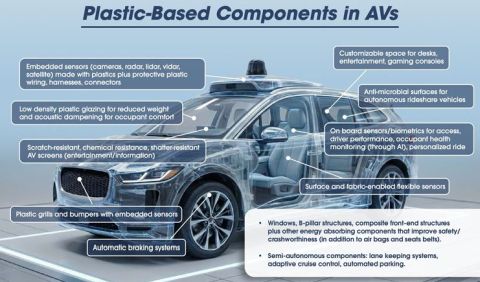
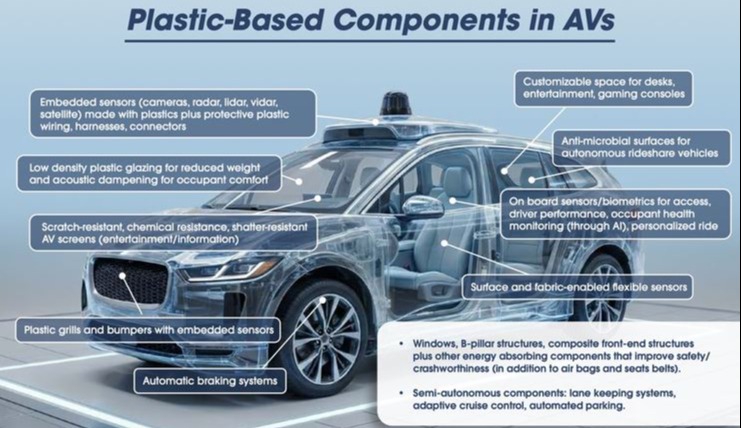
Plastics used in a vehicle. (Source: American Chemistry Council)
Plastics are also used to in components that prevent accidents and protect occupants in an accident. Seat belts, airbags, sensors, cameras and radars enabling automated collision avoidance and driver assistance, as well as structural components that absorb greater crash energy are all made with plastics.
More end-of-life vehicle waste unlocks potential for advanced recycling
The growing use of plastics highlights the need to recover and recycle more end-of-life automotive plastics. Greater investments in the infrastructure to dismantle, sort and recycle automotive plastics are needed in the U.S.
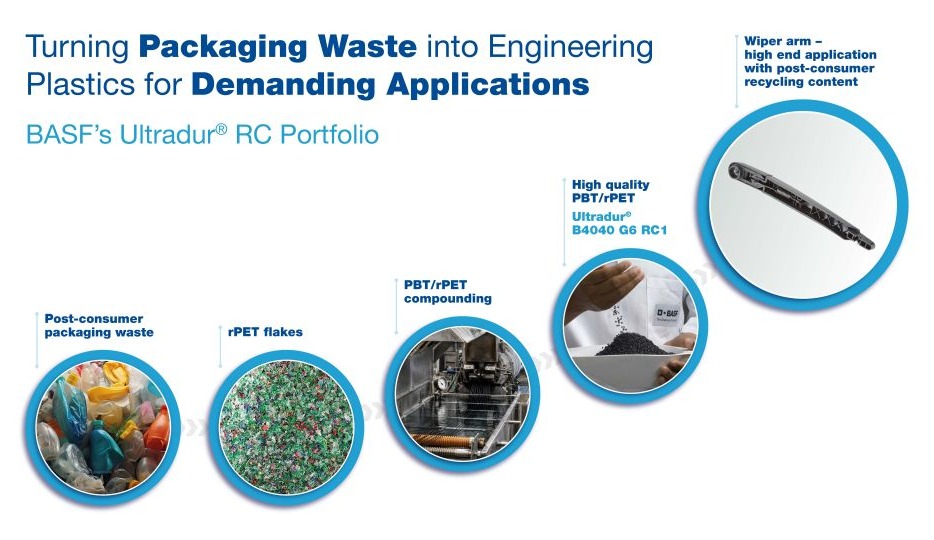
With advanced recycling technologies now capable of processing many specialized automotive plastics which mechanical recycling cannot easily process, such as foam seat cushions, bumpers, and battery housings, there is tremendous potential to a closed-loop recycling in automotive industry.
“Our ability to recover and recycle these materials is not only important for driving sustainability, but it's also increasingly central to global competitiveness. If we don’t recover more of those plastics from vehicles soon, we jeopardize our ability to sell American autos, parts and components in markets such as the European Union and Japan, where recycled-content requirements and targets are advancing,” said Ross Eisenberg, president of America’s Plastic Makers.
Collaboration across value chain is needed
Expanding automotive plastics recycling will require collaboration across automakers, parts suppliers, dismantlers, recyclers and plastic producers.
Federal policy that provides regulatory certainty for advanced recycling facilities, clear standards for recycled-content claims, and helps align stakeholders across the auto recycling chain can accelerate this transition.
Pilot projects at Oak Ridge National Laboratory and the Global Impact Coalition demonstrate the feasibility of recovering plastics from automobiles and the potential for broader commercial deployment.