


















KraussMaffei advances ColorForm: Multi-color head for automated changes & 0.1 mm thin-layer coating

KraussMaffei advances the development of ColorForm technology with two innovations for the in-mold coating of thermoplastic components – multi-color mixing head and thin-layer coating technology.
These developments increase the cost-effectiveness and flexibility of the ColorForm process and open up new fields of application for high-quality visible surfaces.
Both innovations will be presented for the first time at Fakuma 2026 from October 12 to 16, 2026.
New mixing head technology: Automatic color changes maximize flexibility
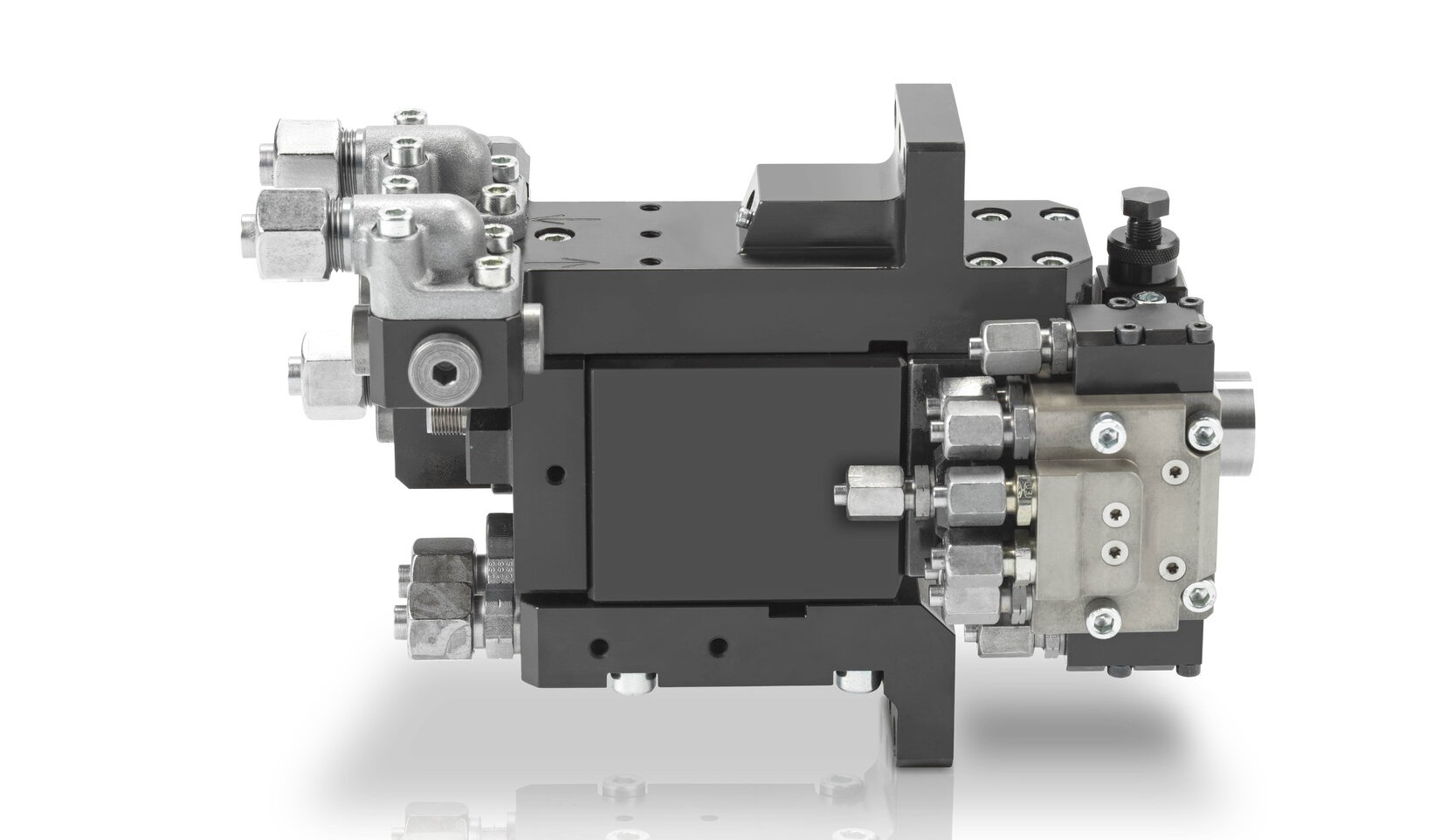
With a newly developed multi-color mixing head, color changes can now be carried out fully automatically and directly within the production process.
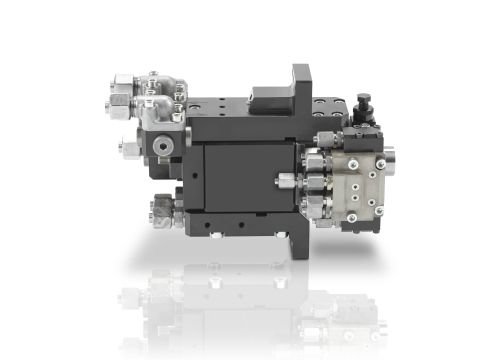
New multi-color mixing head for automated color changes.
Previously, a color change in ColorForm applications has required manual intervention at the mixing head. Color nozzles, color units, or color modules have to be changed. The new technology eliminates this step.
The system automatically selects the desired color while the other materials continue to circulate in the loop. The color change takes place directly within the process, quickly, reliably, and without mechanical retooling.
Multiple colors are available at the mixing head simultaneously and can be selected automatically during the production process without replacing color nozzles, changing color modules, or removing the mixing head.
This provides maximum flexibility, shortens setup times, and makes the production of variants significantly more cost-effective.
New thin-layer coating technology: Reducing material use
Together with its long-standing development partner Siegfried Hofmann GmbH, KraussMaffei has also succeeded in reducing the polyurethane (PU) coating thickness. The two companies have succeeded in coating thermoplastic components directly in the injection mold with a PU layer of only 0.1 millimeters.
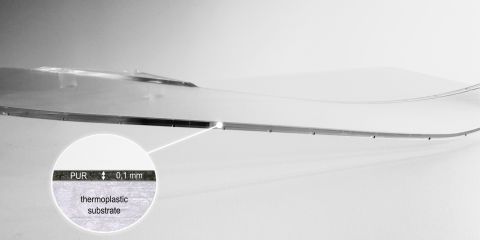
New thin-layer technology for a 0.1 mm PU layer thickness.
ColorForm has previously produced high-quality, scratch-resistant surfaces with layer thicknesses of up to 0.5 millimeters, the new development enables significantly more resource-efficient production while maintaining the same high surface quality.
As a result, the resulting material savings of up to 80% significantly reduce the material costs for each individual component.
The reduction of the PU layer thickness to 0.1 millimeters was made possible by optimizing the component fixation, the sealing system, the preform, and the mixing head.
The joint development by KraussMaffei and Hofmann thus demonstrates that ultra-thin PU layers can be produced directly in the injection mold with reliable processing and high quality.
“The design and dimensions of the tool are based on current exterior automotive components such as trim panels or diffuser lenses. At the same time, we found that the surface quality can be improved and the scrap rate reduced,” explained Stefan Hofmann, Managing Director and Owner of Siegfried Hofmann GmbH.
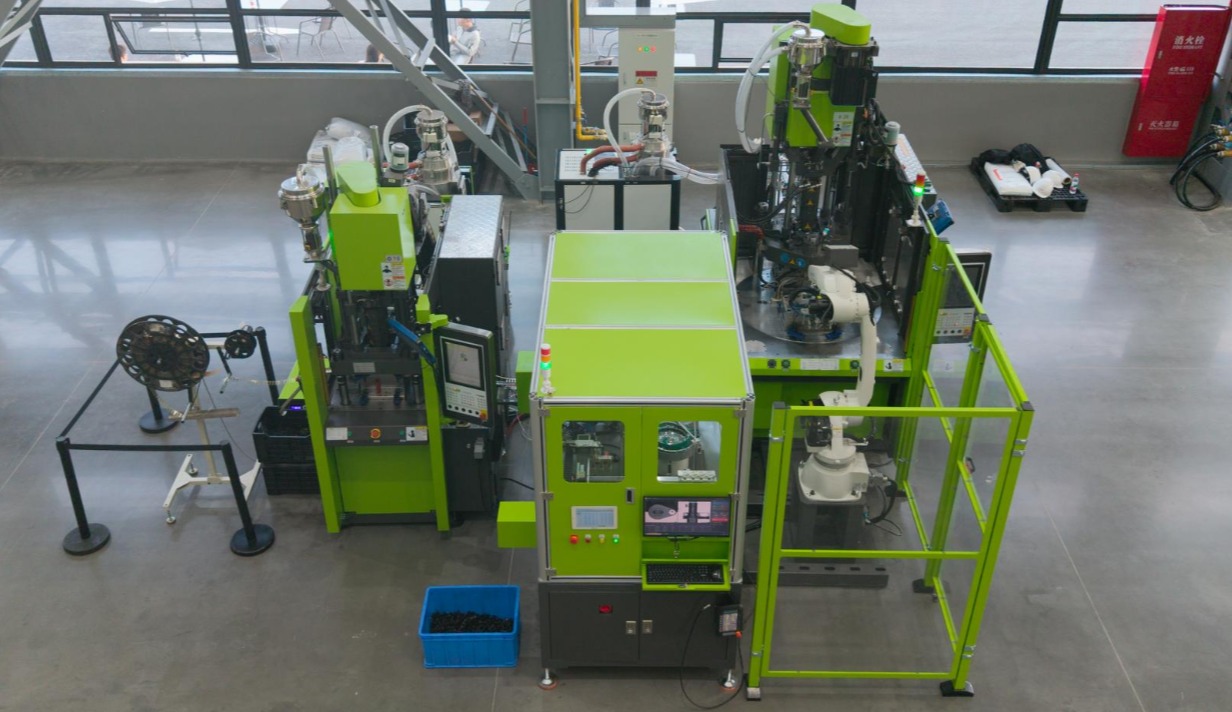
The new thin-layer process can be experienced live at the KraussMaffei TechCenter on a GX 650 with a spin-platen unit in combination with a mobile RimStar Compact 8/8.
KraussMaffei and Hofmann will continue to jointly develop and market the technology in order to further expand the potential of in-mold coating for new applications and markets.