










MD of Gneuss on recycling landscape: Design for recycling is key

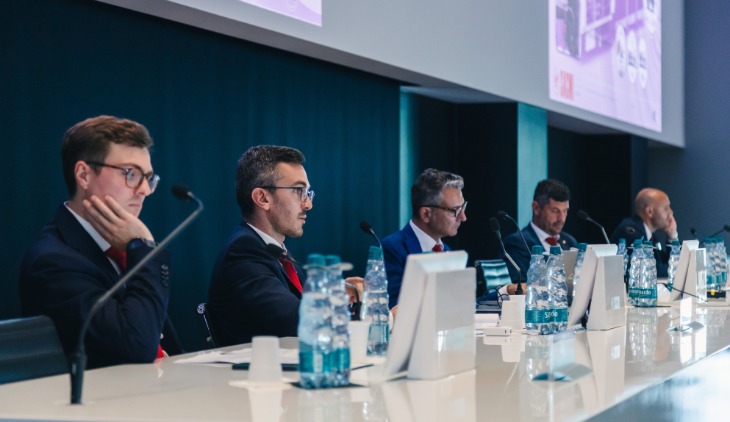
In the VDMA interview on the road to K 2025, Dr Stephan Gneuss, Managing Director of Gneuss Kunststofftechnik GmbH, discussed the recent development in plastic recycling, including opportunities and challenges in the industry and in different countries.
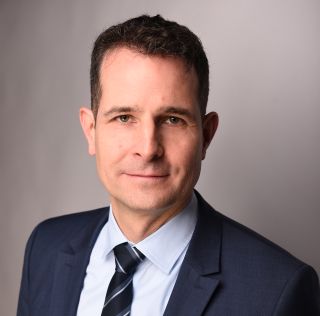
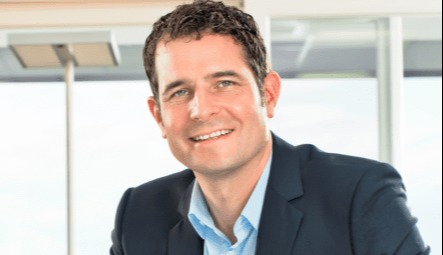
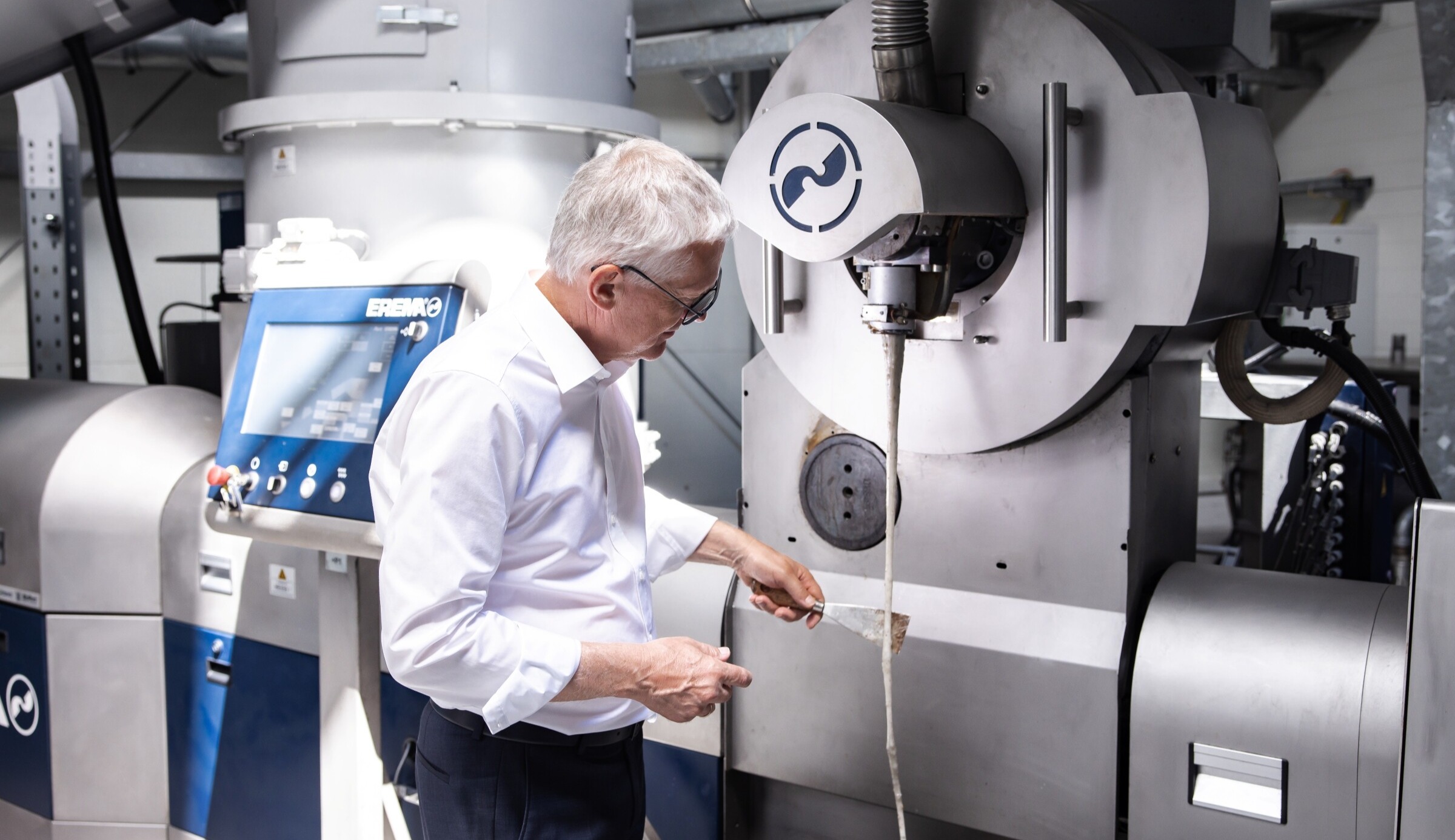
Dr Stephan Gneuss, Managing Director of Gneuss.
Dr. Gneuss, how has recycling developed in recent years?
Gneuss: Many distributors of plastic products have now recognized that they also need to identify recycling routes for products. For this reason, recycling processes have been developed in recent years that did not previously exist. The aim is to show that products can be recycled or at least made recyclable in the first place.
Many new applications have been supplemented with recycling concepts that at least work on a technical level. Whether they will work in practice remains to be seen. The collection channels need to be improved, as they are still far from perfect.
Has food suitability of recycled material already been achieved?
Gneuss: There have been some successes here, driven by the Americans. The admission board FDA in that nation is much more flexible in its approach than its EU counterpart, EFSA. In the US, the range of authorized plastic materials has now grown significantly. A lot has also happened in Europe; however, the solutions have so far been very unsatisfactory. In principle, food suitability can be realized for the vast majority of recycled plastic materials.
Has the use of recyclates meanwhile become economical?
Gneuss: Virgin material is very cheap at present, and this is putting recyclates under extreme pressure. This is because their production costs are very high due to high energy costs and high costs for collecting, sorting and cleaning.
This situation is particularly worrying for recyclers, and naturally also reduces the incentive for companies to use recyclates in the first place. Basically, those parties who use recyclates today do so because they have to, either because there are legal requirements, or because their customers demand it, but if you don't have to do it for one of these reasons, nobody will, as it is simply more expensive.
What would have to happen for this situation to change?
Gneuss: There has long been talk of introducing binding quotas in Europe. Of course, these only make sense if the legal framework is in place. There are still a lot of problems to overcome. The quota provisions are expected to come into force very soon, but the legal framework has not materialized.
What is the situation of recycling elsewhere in the world?
Gneuss: We see some promising regions such as India, for example. There are already statutory quotas and corresponding regulations. This is currently triggering a boom in demand for recycling machines in the plastics sector. If other Asian countries take India as a model, the market can become huge.
North and South America are also fueling demand. There is still little legal pressure in the US, but in principle, we believe that the recycling segment has not yet exhausted its full potential in the US.
By contrast, the economic situation in Europe is not good, and is particularly bad in Germany.
Are there nevertheless new competitors for Gneuss?
Gneuss: Yes, there are, and most of them come from China. It's a large, dynamic market. China has also taken a few regulatory measures to support recycling, which is why there are many new machine manufacturers in this area. Sooner or later, they will also want to serve other markets; initially perhaps the Asian markets, but eventually also those in Europe and the USA. However, we will find solutions that will allow us to continue to set ourselves apart technologically.
Do you still see location advantages in Germany?
Gneuss: Germany traditionally has a competitive advantage in the area of vocational training. Thanks to the dual system, which does not exist in a comparable form in many countries, we still have relatively well-trained skilled workers.
The US, for example, is a more attractive location from a tax perspective, but the shortage of skilled labor there is much worse than here. Here in Germany however, the situation is also getting worse, due to demographic changes, as well as a growing hostility towards technology.