












EREMA revenue falls 28%; steps into textile recycling

The EREMA Group defied the difficult market conditions in the 2025/26 financial year to post a positive result. In the financial year of 2025, the Group posted revenue of EUR 235 million – a drop of 28% compared to the previous year.
Since 1983, the Group has sold around 9,200 systems and components with an annual global capacity for recycling over 26 million tons of plastic waste.
To increase the percentage of recyclates in plastic products, the family-owned business continues to invest in research and development. Global demand for plastic is rising fast. As a result, the Group’s management expects a sharp increase in demand for high-performance recycling technologies too. In addition, recycled plastic is also gaining importance around the world as a secondary raw material.
Sharp rise in global demand for plastic
As the EREMA Group operates internationally, it can compensate for the lower demand in Europe to some extent with orders from other parts of the world. Europe remains the company’s biggest market.
That said, other regions are catching up. “Asia is making great strides and America is also gaining ground, chiefly with the recycling of production waste. Africa is some way behind in fourth place, but it is here that we will see the sharpest rise in the demand for plastic, and therefore for recycling solutions, in the coming years,” explained Manfred Hackl, CEO of the EREMA Group.
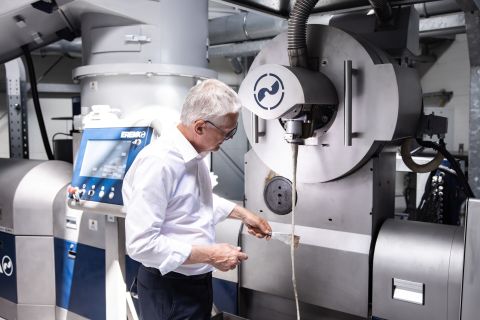
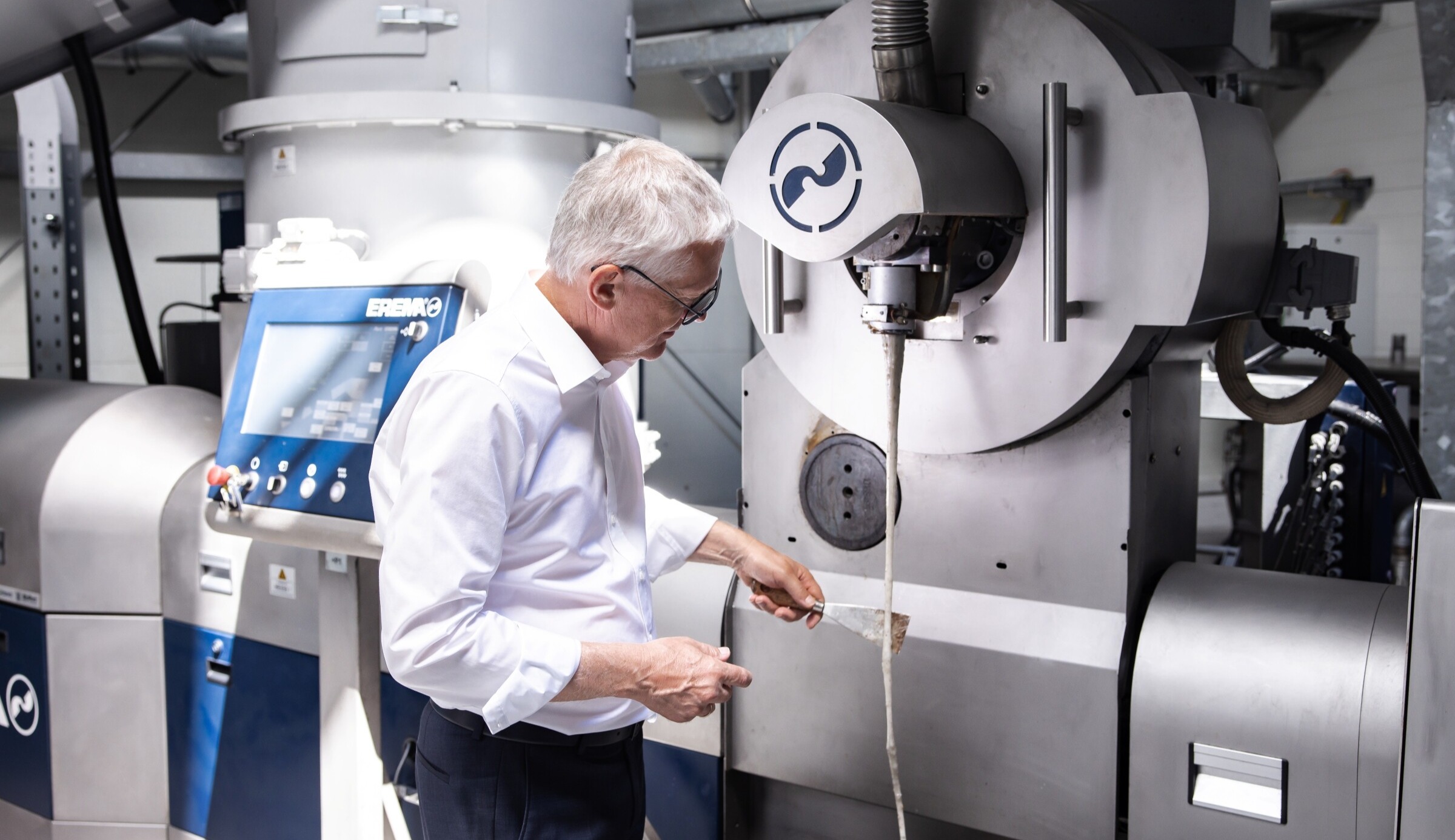
Manfred Hackl, EREMA Group CEO, checks the discharge of the melt filter on an INTAREMA system.
According to the OECD, the global demand for plastic will triple, from 460 million tons in 2019 to 1.2 billion tons in 2060. If a greater percentage of this demand is to be met by recyclates, expansion of recycling infrastructure will be necessary, as will investment in high-performance recycling technology. Currently, the OECD estimates that in 2060 only 17% of plastics will be recycled.
Technology is ready for plastics recycling
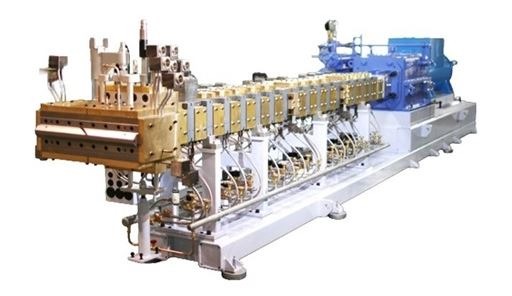
When input materials vary enormously, robust systems are essential. Filtration, degassing and a thorough understanding of the process are central.
“Our recycling systems’ excellent decontamination performance guarantees the quality while their robustness ensures a consistent output. In addition, energy-efficient solutions keep our customers’ operating costs to a minimum,” Manfred Hackl said.
Ultimately, the circular economy is achieved when the material’s design, collection, sorting, washing and extrusion are compatible and the recyclate is subsequently used in new products of equal quality.
Thanks to the engineering partnership between EREMA and Lindner Washtech, customers receive a complete solution that is fully integrated, from the secondary feedstock to the resulting recyclate. The perfect dovetailing of the processes improves the quality, throughput and cost-efficiency of the entire system.
The EREMA Group is also beginning to focus on new lines of business. In October 2025, the company made an investment in BlockTexx. The Australian pioneer has developed a process for extracting polyester and cellulose from blended fabrics – an important step towards recycling textiles. The PET fibre industry is three times as big as the PET bottle industry. Currently, only around 1% of polyester is recycled.
Plastics recycling as part of a modern raw materials strategy
To increase the role of recycling in meeting the rising demand for plastic in future, a set of reliable rules is required that makes investment possible. Regulations such as those for packaging (PPWR) and end-of-life vehicles (ELV) in the European Union are important milestones.
Important growth regions like China and India are also beginning to recognize the importance of the circular economy for supplying raw materials and staying competitive. Both countries are expanding their recycling industry with their own regulations and initiatives.
The EREMA Group has been active in these markets for around three decades, founding a facility in Shanghai in 2001 and opening EREMA India together with Lindner Washtech in February 2026. The company also has sites in North America, South Africa and Thailand.
With its presence on the international stage and ongoing investments, the EREMA Group is well placed to profit from this growth.