





Top 10 Technology Trends: Recycled plastics and bioplastics

The global plastics and rubber industries are currently embarking on a significant phase of transformation. Technological innovation has become a vital force for boosting competitiveness and navigating through economic cycles.
Energy changes and trade barriers are heightening uncertainty, while the “dual carbon” goals are driving a green transition. Intelligent manufacturing, digitalization, and advanced materials are rapidly converging. Together, these factors are propelling the industry towards higher value-added and sustainable development.
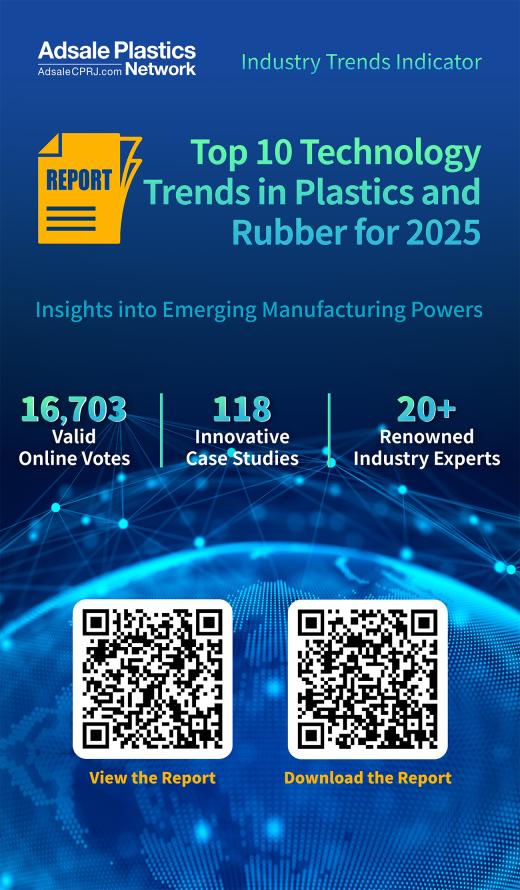
Drawing on extensive case studies and professional evaluations, Adsale Plastics Network has published the report “Top 10 Technology Trends in Plastics and Rubber in 2025”, which sets out the innovation roadmap and future direction for the plastics processing industry in 2025.
The top ten technology trends are:
1. High-Value Recycled Plastics and Rubber
2. Bioplastics
3. Lightweight, Functional Materials and Additives
4. Skin-Friendly Soft Materials
5. Low-Carbon Recycling
6. Functional Films and Surface Treatment
7. Intelligent Injection Molding and Auxiliary Technologies
8. Energy-Efficient Extrusion and Auxiliary Technologies
9. Multi-Layer, Multi-Cavity Blow Molding Technologies
10. Automation and Smart Manufacturing Technologies
High-value applications and functional innovations
Recycled plastics and bioplastics, as pivotal materials underpinning the circular transformation of the plastics industry, have emerged as key strategic priorities and investment focuses for global chemical and material enterprises.
Case studies reveal that recycled plastics are swiftly making inroads into high-value application fields. Meanwhile, bioplastics are increasingly being developed using non-food feedstocks and are expanding their range of applications through advancements in functional modification and degradation technologies.
Case studies - Recycled plastics
LyondellBasell | Circulen Project
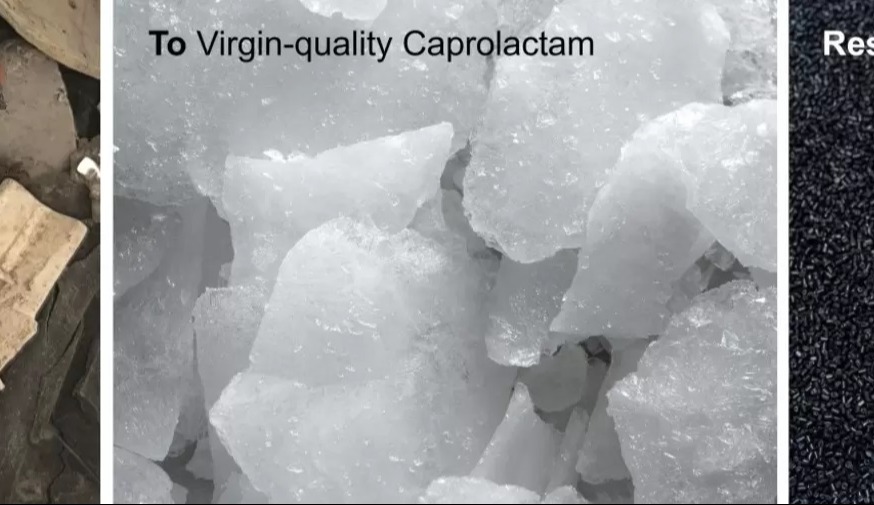
The Circulen project establishes a dual-track recycling system combining mechanical recycling and molecular recycling, effectively addressing key challenges such as impurity control and performance degradation in recycled plastics. It meets diverse raw material requirements, ranging from industrial products to consumer goods, while fostering a closed-loop supply chain.
ExxonMobil Chemical | High-Performance Recycled Resin for Lubricant Packaging
By leveraging the Vistamaxx polymer modification solution, it enables the incorporation of high ratios of recycled materials in packaging structural components without compromising aesthetics, structural stability, or climate durability.
Re-Mall | R-PP Food-Grade Recycled Polypropylene Materials
A systematic optimization across nine performance dimensions – such as transparency, odor, and impurity control – together with a proprietary carbon footprint tracking system, ensures high-ratio substitution of recycled materials in premium applications.
POLYMAXTPE | Green Thermoplastic Elastomer Solution
This high-performance TPE material, developed with 20-70% post-consumer recycled (PCR) content, directly adheres to various substrates (e.g., PP, PC, ABS), addressing the challenge of elastomer recyclability in the industry.
Dawn | PE/PP Circular Solution
By integrating cutting-edge technologies, including an automated sorting system (achieving recognition efficiency of up to 95%), chemical depolymerization, and nano-modification, this solution raises resource utilization to over 90%, effectively overcoming performance and cost bottlenecks in plastic waste recycling.
Yuantian Biotechnology | PET Enzymatic Closed-Loop Recycling
Using advanced enzyme engineering and genetic engineering technologies, the solution achieves highly efficient PET degradation under ambient temperature and pressure conditions. This process produces high-purity rPTA and rEG, enabling the transition of PET materials from traditional linear consumption patterns to infinite circular utilization.
Covestro | Recycled Plastic CMF Design Innovation
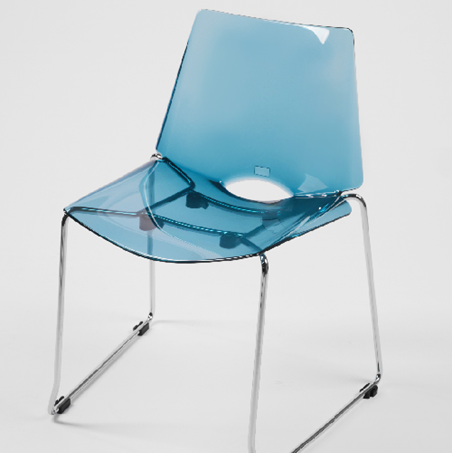
By leveraging consumer behavior insights and CMF (Color, Material, Finish) strategies, this solution transforms the sustainability of recycled materials into tangible visual and tactile product advantages, lowering design barriers and enhancing market appeal.
Case studies - Bioplastics
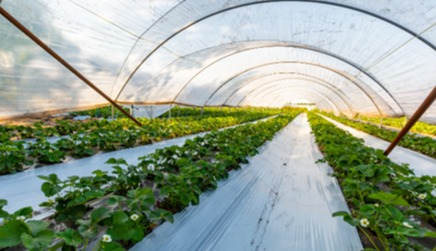
Zhuhai Kingfa | PBAT Biodegradable Mulch Film Solution
Achieving critical advancements in precise PBAT molecular structure modulation, functional enhancement, and application adaptability, this solution supports large-scale adoption of agricultural films. The establishment of the world’s largest PBAT production base, with an annual capacity of 200,000 tons, positions China as a global leader in PBAT export and application.
Cabot | BIOPLASBLAK XP5650A/B Black Masterbatch
Through advanced carbon black dispersion technology, this solution offers exceptional opacity and weather resistance, ensuring both visual quality and enhanced performance stability of biodegradable mulch films.

Arkema | Rilsan PA11 (Bio-Based Nylon 11)
Derived from renewable castor beans, this material combines cryogenic resistance, lightweight properties, and excellent processability. It is widely used in outdoor apparel, electric vehicle (EV) cooling systems, hydrogen vehicle storage tanks, and other applications, achieving reductions in carbon footprints while extending product lifecycles.
Covation Biomaterials | CovationBio bioPTMEG Innovation Project
This innovative technology utilizes corncob-derived furfural to establish the world’s first non-food bio-based polytetrahydrofuran industrial process. It marks a breakthrough in high-value furfural conversion, with Phase I investment reaching RMB 10 billion and 50,000-ton mass production planned for Q1 2026.
LG Chem | Bio-Acrylic Acid
Leveraging 3HP fermentation technology, this material offers both biodegradability and high flexibility. It is widely applicable in cosmetic containers, superabsorbent polymers (SAP), coatings, and adhesives, with a planned production capacity reaching a million tons by 2025.
Green Fill Material Technology | Multifunctional Degradable Starch Foam Board
By polymerizing two distinct biomass-derived monomers, this bio-based polyester material achieves 20-65% bio-carbon content while outperforming PBAT. It can fully replace PBAT in applications such as shopping bags, food waste bags, agricultural mulch films, express packaging, laminates, and disposable tableware.
Star Plastics | Oyster Shell Antibacterial Materials
This project focuses on the development of natural bio-based materials, integrating post-consumer recycling concepts. Featuring naturally harmless antibacterial properties that improve health outcomes, it complies with PFAS-free standards and plays a pivotal role in advancing the sustainable economy.
To download the report “Top 10 Technology Trends in Plastics and Rubber in 2025”, please click here.