




















CHINAPLAS 2026: Griffin New Energy: Carbon nanotubes to gain edge in transformation

The global economy continues to face multiple challenges, including geopolitical conflicts and the restructuring of supply chains. As a high-tech enterprise specializing in the research, production, and sales of carbon nanomaterials, Foshan Griffin New Energy Co., Ltd. holds a cautiously optimistic outlook for the development of the plastics and rubber industries in 2026.
Luo Weizhao, Sales Manager at Griffin New Energy, notes that the industry is currently experiencing opportunities for green transformation and technological advancement. Carbon nanotubes (CNTs), as a new type of high-end material, are injecting new momentum into the high-quality development of various sectors.

Luo Weizhao, Sales Manager, Foshan Griffin New Energy Co., Ltd.
Growth drivers: Empowerment from policies and demand
Luo believes that the transformation of the plastics and rubber industries is driven by both policy guidance and end-market demand.
On the demand side, the need for better material performance and higher environmental standards is growing, particularly in sectors like lightweight electric vehicles, biodegradable alternatives, and high-end medical packaging. This shift is moving the industry from focusing on “quantity increase" to prioritizing "quality enhancement". He is convinced that companies with integrated capabilities across the entire supply chain will have a strategic edge in the upcoming industry transformation.
On the policy front, global goals for carbon neutrality and the implementation of the European Union's Carbon Border Adjustment Mechanism (CBAM) are pushing the industries to speed up its transition to bio-based, biodegradable, and recycled materials. Likewise, China's policies strongly support the industrialization of low-carbon materials, providing significant backing for the promotion and use of CNTs.
Moreover, smart manufacturing technologies like AI-based quality inspection, digital factories, and multi-material composite molding are quickly evolving. They are transforming from simple tools for cost reduction and efficiency into essential core competencies for businesses.
Technology trends: Carbon nanotubes support transformation
Griffin New Energy prioritizes innovation and sustainability as its core competitive strengths. Leveraging the unique properties of CNTs, the company offers solutions for industrial transformation, anchored in three key aspects.
First, supporting green sustainability. CNTs have exceptional electrical conductivity, requiring only 1/5 to 1/15 the amount of traditional conductive carbon black. This lower dosage effectively preserves the original properties of bioplastics and mono-material substrates, without impacting their recyclability. This aligns perfectly with the design concepts of "mono-material" and "high performance".
Second, empowering smart manufacturing. The low addition level of CNTs ensures that materials exhibit excellent impact performance and processing fluidity. This makes it easier for materials to fill molds during injection molding, allowing them to meet the high precision and aesthetic quality requirements of smart manufacturing.
Third, achieving maximum efficiency. CNTs provide long-lasting stable conductivity and antistatic properties in plastics, suitable for applications like automotive fuel systems and electronic component packaging. They also enhance material toughness, wear resistance, and thermal stability, enabling multifunctional composite integration and helping downstream customers create more competitive high-end products.
Luo states, "We are collaborating with leading modified plastic companies to explore how to leverage the superior properties of CNTs to tackle industry challenges. We welcome industry peers to engage in collaboration; we can offer targeted solutions and sample testing services."

More companies are adopting carbon nanotubes as an alternative for traditional carbon black.
Scalable development and application expansion
In 2026, Griffin New Energy will focus on expanding production of single-walled carbon nanotubes (SWCNTs) while reducing costs for multi-walled carbon nanotubes (MWCNTs).
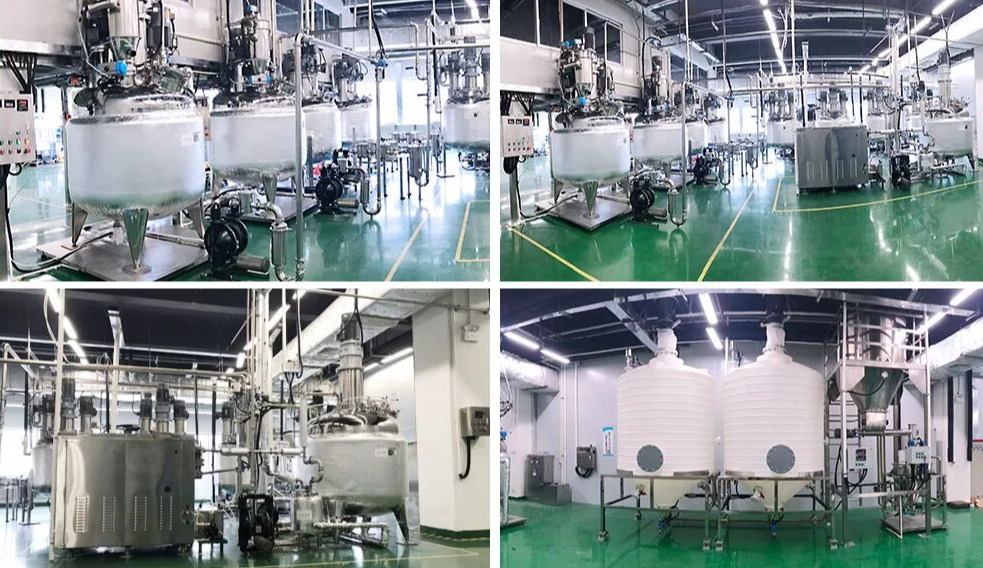
The company currently has stable production capacity and is capable of mass-producing SWCNTs. Monthly output of SWCNTs has reached the ton scale, and ongoing expansion projects aim to increase this to 10 tons per month by the end of the year. For MWCNTs, the monthly production target of over 100 tons has already been achieved.
The core applications for CNTs are currently concentrated in the field of conductive additives for lithium batteries. Technology is evolving toward higher specific surface area, greater aspect ratios, and improved dispersion, making their use in the plastics industry as a substitute for traditional carbon black increasingly prevalent.
"Our future goals are to continuously enhance product quality, scale up production, and accelerate the expansion of application scenarios. We want more companies to recognize and utilize CNTs, fully leveraging the unique advantages of these materials to improve product performance and quality," emphasizes Luo.
He concludes, "CNTs have always been a hot topic in research and have a wide range of applications. In every industry, the first to effectively use this new high-end material will seize developmental opportunities and gain a market advantage. Currently, we are also actively promoting the development and application of CNTs in conductive plastics, rubber, coatings, and other fields to help more industries achieve transformative upgrades."
Booth: 8.2K61