








In pursuit of sustainability with advanced additives

The global plastic additives market is projected to reach US$36.24 billion by 2030, up from US$29.06 billion in 2025, representing a CAGR of 4.66% during the forecast period, according to Mordor Intelligence.
Polymer processing aid is the fastest-growing type of additive, benefiting from the shift toward PFAS-free chemistries. In particular, producers are adjusting their portfolios to include PFAS-free grades to comply with new restrictions. Besides, consumer goods applications are outpacing all other uses as brands prioritize safer ingredients.
Additionally, the growth of the plastic additives market indicates a significant shift towards sustainable plastics. A notable trend within this shift is the use of specialty additives that enhance the properties and performance of recycled plastics, thereby increasing their broader application.
PFAS-free additives gain momentum
Per- and polyfluoroalkyl substances (PFAS), also known as "forever chemicals", are an ultra-stable group of chemical compounds that are highly resistant to breakdown. Since they are almost non-degradable, they accumulate in the environment and living organisms, including humans.
Despite featuring benefits such as high strength and resistance to stain, oil, heat and water, PFAS pose risks to the ecosystem and human health, including water and soil contamination, cancers, reduced fertility, developmental issues, immunity impairments and metabolism disruptions such as high cholesterol and diabetes.
For this reason, some countries are restricting and phasing out PFAS with the ultimate goal of banning them. As transitioning to eco-friendly materials and prioritizing health is a global trend, producers develop innovative PFAS-free additives without compromising performance.
BYK-MAX P 4110 is PFAS-free polymer processing aid (PPA) developed by BYK. It facilitates faster production speed, prevents melt fracture and reduces build-up on dies, resulting in reduced cleaning efforts and, consequently, shorter downtimes. The additive is developed for use in polyolefins with the aim of optimizing the production of films and fibers, as well as other extrusion applications.

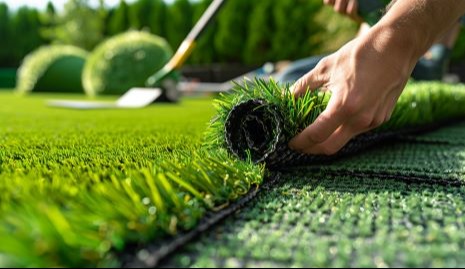
Artificial grass application with the PFAS-free BYK additive BYK-MAX P 4110. (Photo: Adobe Stock)
AddWorks PPA product line, launched by Clariant, is a new generation of PFAS-free polymer PPAs designed specifically for polyolefin extrusion applications. It offers enhanced extrusion efficiency, effective elimination of melt fracture also known as shark skin defects, and superior film surface smoothness to polyolefin extrusion.
The products also maintain neutral behavior regarding optical and mechanical properties, with no negative impact on dyne level, sealability, or coefficient of friction – critical factors for downstream converting operations.
The product line is ideal for a wide range of applications, including polyethylene (PE) blown and cast film extrusion processes commonly used in packaging, agriculture, and building and construction industries. Film converters will benefit from the improved surface quality and processing efficiency these additives provide. The composition is also compliant to food contact and food packaging applications.
Likewise, Chengdu Silike Techonology has also launched the SILIMER series PFAS-free PPA and PPA masterbatch, suitable for a range of application including film, pipes and wires.
Specialty additives empower circular economy
Recycled plastics often contain impurities and polymer contaminants that accelerate degradation and alter material properties. Increasing the recycled content presents significant challenges, including issues with color, odor, processability, and various performance characteristics.
As a result, recyclers and plastic converters encounter quality and performance issues when processing recycled polymer materials. Formulated additive packages that enhance the properties of these recycled plastics can provide a solution to these challenges.
BASF launched IrgaCycle additive solutions specifically designed for mechanical recycling. With these products, manufacturers can increase the percentage of recycled content in end-use applications such as packaging, automotive and mobility, and building and construction.
These solutions tackle specific quality issues associated with recycled resins, including limited processability, poor long-term thermal stability, and inadequate protection against outdoor weathering. A key advantage is their ready-to-use product forms, which are easy to apply during the recycling process.
Producing film with post-consumer recyclate (PCR) poses several challenges in achieving sufficient technical properties, good visual appearance, and consistent production. Often, PCR must be blended with virgin resin to compensate for its inferior properties.
Baerlocher's Baeropol T-Blend is a multifunctional stabilizer blend designed for direct addition during film recycling, significantly expanding the possibilities for using PCR in film production.
When introduced during the recycling process, Baeropol T-Blend helps create a recyclate that offers substantial benefits to the film converter, including fewer gels, improved mechanical performance, and a more stable production process with a lower scrap rate. This enables film producers to utilize more recyclate in place of virgin resin, allowing for the creation of higher-value products.
Milliken launched DeltaFlow Viscosity Modifiers, a solid concentrate specifically designed to assist polypropylene (PP) recyclers. Recyclers use DeltaFlow to increase the melt flow rate of recycled polypropylene (rPP) during extrusion and injection molding processes. DeltaFlow-optimized resins allow for lower processing temperatures, enabling converters to reduce cycle times, boost productivity, and enhance processability.
Brand owners also benefit from DeltaFlow, as it makes it feasible for rPP to replace virgin resin in many end-use applications. This enables brands to incorporate more rPP into their products, helping them achieve their sustainability goals.
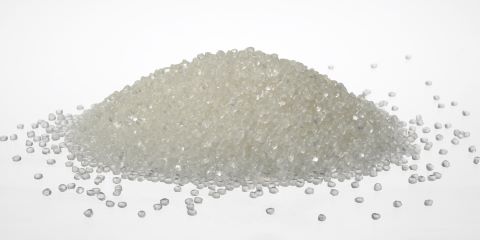
Milliken's viscosity modifier concentrates offer added value for rPP.
Innovations in additives go beyond simply overcoming technical challenges; they also demonstrate a commitment to protecting health and fostering a sustainable future. For both companies and consumers, this creates a win-win situation for all involved.