










PAGEV as the gateway to Turkey’s US$40 billion plastics market

Turkey's thriving plastics ecosystem is poised to welcome deeper collaboration with China through joint investments, technology transfer, and integrated production. CHINAPLAS 2026 serves as a strategic platform to further these objectives, with Turkish Plastics Industry Foundation (PAGEV) acting as a gateway.
Turkey is a major global hub for plastics processing, boasting approximately 11,000 mostly small and medium-sized enterprises (SMEs) that process over 10 million tons annually. This industry generates an impressive US$40 billion in annual turnover and contributes more than US$16 billion in added value to the national economy. It directly employs over 350,000 people and invests more than US$900 million each year in machinery.
In 2025, Turkey's plastics production surpassed 10 million tons, with packaging leading the way at around 4 million tons, followed by construction materials at 2.2 million tons. Total direct and indirect exports from the industry exceeded US$12 billion.
According to Yavuz Eroğlu, President of PAGEV, Turkey's plastics industry is not an emerging market; it ranks 6th worldwide in plastics processing capacity, representing 2.8% of global production.
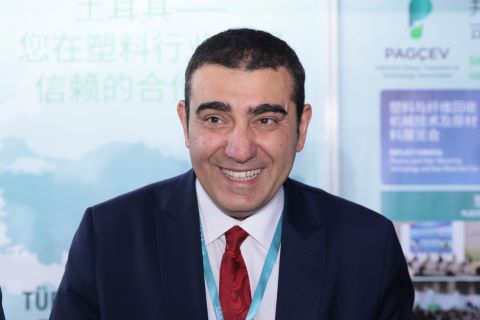
Yavuz Eroğlu, President, Turkish Plastics Industry Foundation
Developing deeper Sino-Turkish collaboration
In 2025, Turkey imported 814,000 tons of raw plastic materials from China, with China enjoying a significant trade surplus of over 810,000 tons in this segment. Regarding plastic products, China accounted for 30.6% of Turkey's total imports by quantity in 2025. In fact, 43.5% of Turkey's total product imports originated from China, resulting in a trade surplus favoring China of approximately 220,000 tons.
Moreover, 43.5% of Turkey's imports of plastic processing machinery came from China, amounting to US$323 million, with a trade surplus in China's favor of nearly US$320 million. "In other words, nearly half of our machinery imports come from China, making Turkey a key market for Chinese machinery manufacturers," Eroğlu explains.
He notes that while the relationship is currently import-driven, it is set to evolve toward joint investments, local production, and technology partnerships. This shift positions Turkey as a strategic production and cooperation base for China, rather than merely a destination for sales.
For instance, more than 200 Chinese companies are already operating in Turkey, investing over US$7 billion. Major investments, such as BYD's US$1 billion automotive factory, along with plans from Chery and SWM Motor, underscore that Chinese companies increasingly view Turkey as a production base—especially for accessing European markets.
Political leadership from both nations is actively supporting long-term industrial cooperation. A significant initiative is Turkey's recent decision to allow visa-free entry for Chinese citizens. This practical step greatly facilitates business mobility, investment dialogue, and industrial engagement.
"These initiatives are not mere symbolic gestures; they represent a clear strategic intention to deepen cooperation," Eroğlu says. "When political leadership, institutional structure, and private sector dynamism align, sustainable industrial corridors can emerge."
Emphasizing that long-term industrial cooperation cannot develop without political vision, he adds, "President Recep Tayyip Erdoğan and President Xi Jinping have both highlighted the importance of strategic economic cooperation between both countries. Their leadership provides direction, stability, and confidence for the private sector."
PAGEV as the gateway to Turkey and Europe
PAGEV, representing over 88% of Turkey's plastics value chain, acts as a strategic bridge connecting Chinese and Turkish industries through trade events, official delegations, and structured B2B meetings.
"For Chinese companies entering Turkey in a structured, secure, and long-term manner, PAGEV is not just a representative institution—it is the institutional gateway to strategic partnerships," Eroğlu states.
PAGEV connects Chinese plastics producers, machinery manufacturers, and raw material suppliers directly with their Turkish counterparts, fostering industrial engagement and technology exchange. This includes leading an official delegation of over 100 Turkish companies to CHINAPLAS and hosting Chinese delegations at Plast Eurasia, organized by the foundation.
PAGEV also supports companies in overcoming regulatory and operational challenges. When mutually requested, it has facilitated solutions to commercial disputes to protect long-term cooperation.
"Turkey not only boasts a well-developed industrial infrastructure and strong domestic demand, but it also offers significant advantages such as access to the EU, a logistics hub connecting Europe, the Middle East, and Africa, and a diversified manufacturing ecosystem," he points out.
As the EU grants tax advantages for products containing certified recycled plastic content, PAGEV actively promotes EU market access and sustainability through certification programs for recycled plastics and microplastic prevention.
For instance, in cooperation with CertiLoop, PAGEV operates the world's second EU-accredited certification program for recycled plastic content. Additionally, the foundation is the only authorized institution in its region to issue Operation Clean Sweep (OCS) certification, which aims to prevent microplastic leakage.
Engaging at CHINAPLAS 2026
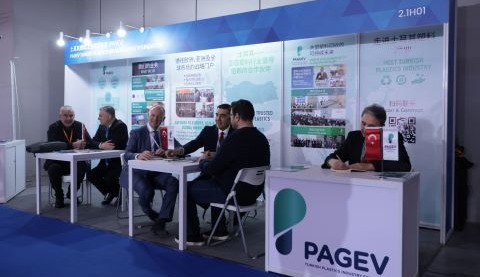
At CHINAPLAS 2026, PAGEV organizes a dedicated booth (2.1H01) to showcase the potential of the Turkish plastics industry. This presence aims to foster connections and facilitate collaborations between Turkish and Chinese stakeholders.
Visitors to PAGEV's booth at CHINAPLAS can expect a wealth of valuable resources, including structured and analytical data on the Turkish plastics and machinery market, investment frameworks and cooperation models, guidance on EU certification, direct B2B matchmaking opportunities, and institutional support for long-term projects.
"If a Chinese plastics company wants to enter the Turkish market, establish partnerships, or use Turkey as a gateway to Europe, PAGEV is the right place to begin," Eroğlu remarks.
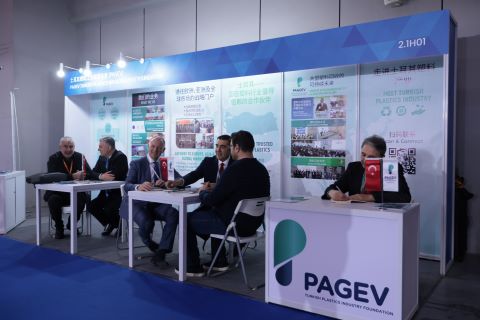
PAGEV's booth highlights the potential of the Turkish plastics industry and showcases opportunities for Sino-Turkish collaboration.