











PFAS-free materials and additives gain momentum

Per- and polyfluoroalkyl substances (PFAS), also known as “forever chemicals”, are an ultra-stable group of chemical compounds that are highly resistant to breakdown. Since they are almost non-degradable, they accumulate in the environment and living organisms, including humans.
PFAS include PFOA, PFOS, GenX and over 10,000 substances. They are widely used in household and industrial products, from everyday items such as raincoat, non-stick cookware and food packaging to paint, fire-fighting foam, medical instruments and construction materials.
Despite featuring benefits such as high strength and resistance to stain, oil, heat and water, they pose risks to the ecosystem and human health, including water and soil contamination, cancers, reduced fertility, developmental issues, immunity impairments and metabolism disruptions such as high cholesterol and diabetes.
For this reason, some countries are restricting and phasing out PFAS with the ultimate goal of banning them. For example, France passed a new law in February 2025 that will ban PFAS in several products including clothing and cosmetics. In the US, New York and California have imposed sweeping prohibitions on the sale of apparel containing PFAS, effective as of January 1, 2025. In the EU, five member nations (Denmark, Germany, the Netherlands, Norway and Sweden) proposed a PFAS “universal restriction” under the EU chemical regulation REACH in February 2023.
Transitioning to eco-friendly materials and prioritizing health is a global trend as companies develop innovative non-PFAS alternatives without compromising performance.
PFAS-free materials as alternatives
Here are some examples of new PFAS-free materials developed by companies worldwide.
PFAS-free low-friction LEONA polyamide is under development by Asahi Kasei. It utilizes the company’s proprietary sliding technology to achieve sliding properties equivalent to those of fluororesin, enabling compliance with PFAS regulations in a wide range of applications, including automotive, aerospace, robot parts, building materials and sporting goods.
The PC/ABS material developed by LG Chem is a PFAS-free flame-retardant, made from recycled plastics and has received the V-0 rating in the standard flame-retardant test UL 94 for UL certification in the US, which represents the highest level of flame-retardant performance in the industry that requires the material to extinguish within 10 seconds when a flame is applied vertically.
LG Chem’s PC/ABS is a plastic that combines polycarbonate (PC) and Acrylonitrile-Butadiene-Styrene (ABS) to significantly enhance heat and abrasion resistance. Over half of the material composition is made from recycled plastics, resulting in a 46% reduction in carbon emissions compared to using standard PC/ABS materials.
It can be used in a variety of industrial applications, including electronic devices such as laptops and tablets, and equipment (e.g. inverters, electric vehicle chargers), which are in close contact with the body and can generate heat.
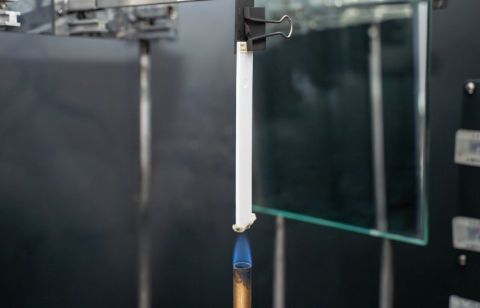
LG Chem developed PC/ABS flame-retardant material by removing PFAS and adding recycled plastics.
EcoLube is a line of PFAS-free internally lubricated compounds launched by Americhem. EcoLube pre-lubricated engineered compounds and alloys are designed to reduce the wear and friction of moving plastic parts, reduce noise during use, and decrease coefficient of friction for plastic-on-plastic and plastic-on-metal applications. They are suitable for healthcare, industrial, transportation, construction and more.
EcoLube features solid state, non-migrating lubricants that stand up to extreme pressures, reducing frictional wear and “slip-stick” behavior in nylon bearings. It can reduce the coefficient of friction and wear rate by providing immediate lubrication at start-up and high speeds. It also offers shear reinforcement and abrasion resistance between moving, mating parts, and low friction, non-migratory additives that are designed to offset PTFE in various applications and thermoplastics.
Orion engineering resins line and reNova recycled resins are new PFAS-free polycarbonate compounds developed by Star Plastics. They feature flame retardancy, outdoor weatherability and availability in custom colors. In particular, the reNova line is made with 50% ULE-validated recycled polycarbonate material.
To address PFAS restrictions, TPX material, developed by Mitsui Chemicals, offers similar properties to fluoropolymers, including heat resistance, releasability, chemical resistance and dielectric properties, making them ideal for applications in tubes, film and cables for the pharmaceutical, food and beverage, semiconductor and other industries.
Innovative PFAS-free additives
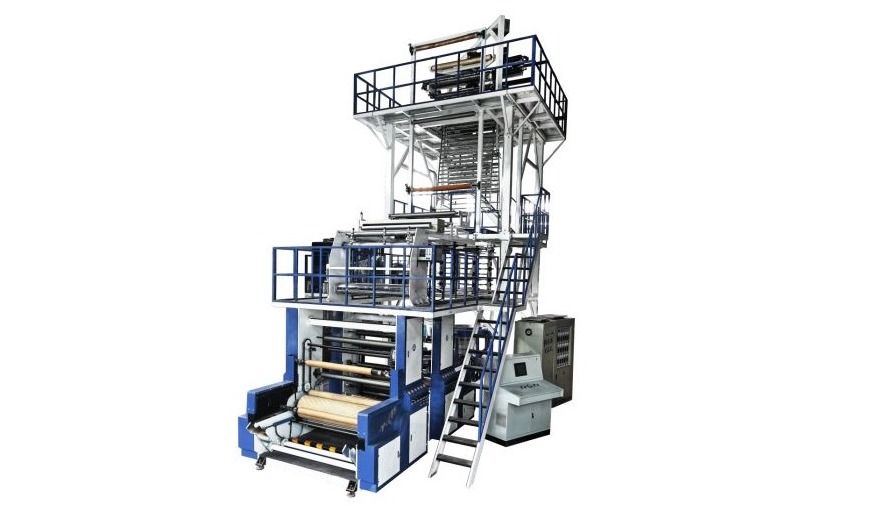
BYK-MAX P 4110 is PFAS-free polymer processing aid (PPA) developed by BYK. It facilitates faster production speed, prevents melt fracture and reduces build-up on dies, resulting in reduced cleaning efforts and, consequently, shorter downtimes. The additive is developed for use in polyolefins with the aim of optimizing the production of films and fibers, as well as other extrusion applications.
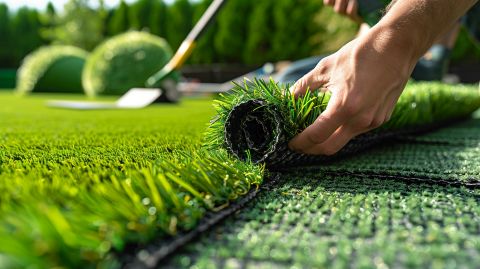
Artificial grass application with the PFAS-free BYK additive BYK-MAX P 4110. (Photo: Adobe Stock)
AddWorks PPA product line, launched by Clariant, is a new generation of PFAS-free polymer PPAs designed specifically for polyolefin extrusion applications. It offers enhanced extrusion efficiency, effective elimination of melt fracture also known as shark skin defects, and superior film surface smoothness to polyolefin extrusion.
The products also maintain neutral behavior regarding optical and mechanical properties, with no negative impact on dyne level, sealability, or coefficient of friction – critical factors for downstream converting operations.
The product line is ideal for a wide range of applications, including polyethylene (PE) blown and cast film extrusion processes commonly used in packaging, agriculture, and building and construction industries. Film converters will benefit from the improved surface quality and processing efficiency these additives provide. The composition is also compliant to food contact and food packaging applications.
Cesa Non-PFAS Process Aid, for use in polyolefin extrusion and film applications, is developed by Avient. It reduces friction between the polymer and the metal, allowing the polymer to be more easily extruded. It can be used in polypropylene (PP) and PE and films for flexible packaging, as well as cast PP films and PE tubing for various food packaging applications, such as stand-up pouches, labeling tubes and laminated tubes.
It helps reduce sharkskin, eliminate die build-up, and lower torque for higher throughput, thus improving optical properties, leading to a higher-quality product appearance.
Tosaf has developed PPAs for the extrusion of polyolefins that do not contain fluoroelastomers. The series include AP9709PE EU, which provides enhanced rheological properties, and AP9711PE EU, suitable for applications that require optical properties such as clarity and haze. They can be used without restriction in place of conventional products containing the PFAS, are suitable for a wide range of film applications, and they meet the requirements of the FDA and EFSA for use in contact with food.
Likewise, Chengdu Silike Technology has also launched the SILIMER series PFAS-free PPA and PPA masterbatch, suitable for a range of application including film, pipes and wires.
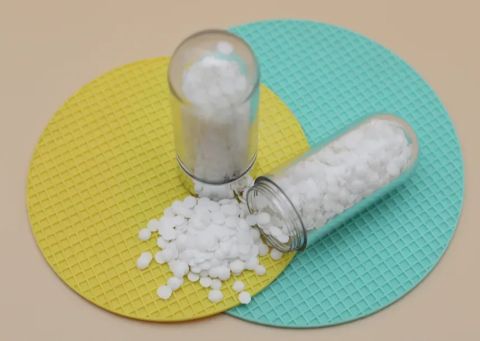
The SILIMER series PFAS-free PPA masterbatch, developed by Chengdu Silike Technology, boasts a wide range of applications.
Innovations that are PFAS-free represent far more than overcoming technical challenges; they also reflect an awareness towards shaping a sustainable future and protecting health. To consumers, companies, researchers and policymakers, this is a win-win situation for all.