









Log in
onclick="gourl('https://www.adsalecprj.com/en/auth/register.html')" v-if="!userInfo.id"> Register
Contact
{{userInfo.company_name_english||userInfo.truename_english}}
{{userInfo.phone||userInfo.email}}

Home Page

Member Center

Data Settings

Log out

 
Recycling

ENDFOULING project to turn port organic waste into bio-based additive

Jul 13, 2026

The Plastics Technology Centre AIMPLAS, BiotechVana, Fundación Valenciaport, and Seroil Valencia have launched the ENDFOULING project to transform organic waste generated in port environments into new bio-based additives that can protect vessels and improve the efficiency of maritime transport.
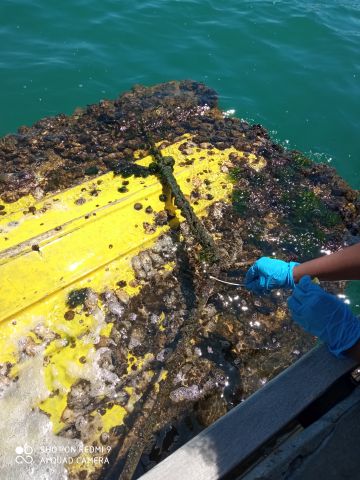

AIMPLAS_ENDFOULING project_biofouling - 複製.jpg


Biofouling, the accumulation of marine organisms on ship hulls, is a common problem for maritime transport.


According to data from the International Maritime Organization (IMO), around 9% of the fuel consumed by ships is related to the effect of marine biofouling. In addition, this increase in energy consumption may generate between 80 and 90 million tons of CO2 emissions per year.


The project is working on the development of solutions based on enzymes and microorganisms capable of hindering the formation of marine encrustations from their earliest stages. Artificial intelligence and bioinformatics tools are also being used to optimize the behavior and effectiveness of these compounds.


Another area of work focuses on developing protection systems that enable these biological additives to be incorporated into plastic materials intended for the maritime sector without losing their activity. In this field, AIMPLAS contributes its expertise in materials and advanced manufacturing processes.


The project also includes the design of prototypes and testing under real conditions to evaluate the performance of the developed solutions on vessels and marine structures.


Reducing the appearance of biofouling on vessels can not only decrease fuel consumption and pollutant emissions but also improve the maintenance and service life of marine structures.



AIMPLAS
Bioplastic
Additive
Comments
3D printing
eSUN commercially launched its PLA-Coffee, an innovative bio-based filament for 3D printing integrating repurposed coffee grounds. The PLA-Coffee is now officially available for global market.
Aug 4, 2026
Market News
Growing demand for lightweighting, cost reduction and sustainable materials pushes microfoaming technology forward in plastics processing. Focusing on eco-friendly chemical foaming agents and functional masterbatches, Guangdong Benqi Environmental New Materials offers Bearocell™ foaming masterbatch solutions for injection molding, extrusion and 3D printing to boost material efficiency and product performance.
Aug 3, 2026
Recycling
To provide an effective alternative for recycling marine waste, OCEANZYME project is investigating new enzymatic recycling solutions for marine litter.
Jul 29, 2026
Automotive
Coordinated by SOFITEC with the participation of AIMPLAS and I2CON, the project is developing supercapacitors and structural batteries based on recycled carbon fiber.
Jul 28, 2026
Chemicals
Cesa Solvent Barrier Technology for high-density polyethylene (HDPE) bottles is a non-PFAS additive that helps manufacturers to meet tightening fluorochemical regulations without retooling extrusion blow molding lines.
Jul 24, 2026
Market News
Targeting slow color changes, stubborn carbon deposits, and recurring black specks in injection molding and extrusion, Benqi Eco-New Materials introduces the Jing Su Jie DeepPurge screw purge compound. Featuring rapid color change, deep carbon removal, and no-disassembly cleaning, it serves injection molding machines, extruders, blown film machines, and cast film machines, helping manufacturers enhance efficiency, quality, and equipment upkeep.
Jul 17, 2026
Share Your Choice
Facebook
X
Email