




COMY: Path to industrializing chemical recycling

When it comes to plastic recycling, the bottleneck has never been just collection.
For mixed, low-value plastics that defy traditional recycling methods, the real question is: Can we convert this waste back into high-value chemical feedstocks and reintegrate them into the plastic production chain?
This is the exact challenge that Zhejiang Comy Environmental Technology Co., Ltd. (COMY) has been tackling. Since launching its R&D in 2009, COMY has developed three distinct technological pathways. Its goal is not just to process a specific type of plastic waste, but to enable a broader range of low-value plastics to re-enter the petrochemical and plastics supply chain through chemical recycling.
For the chemical recycling industry, the ultimate test has shifted from "Is the technology viable?" to "How do we build the facilities, commercialize the products, and close the loop on the supply chain?".
Chemical Recycling: Proving the Technological Pathway First
Traditional mechanical recycling requires highly sorted and clean plastic waste.
However, post-consumer plastics are rarely that pristine. They are often highly commingled and contaminated with impurities, making it incredibly difficult to achieve high-quality regeneration through traditional methods. Chemical recycling offers a viable alternative.
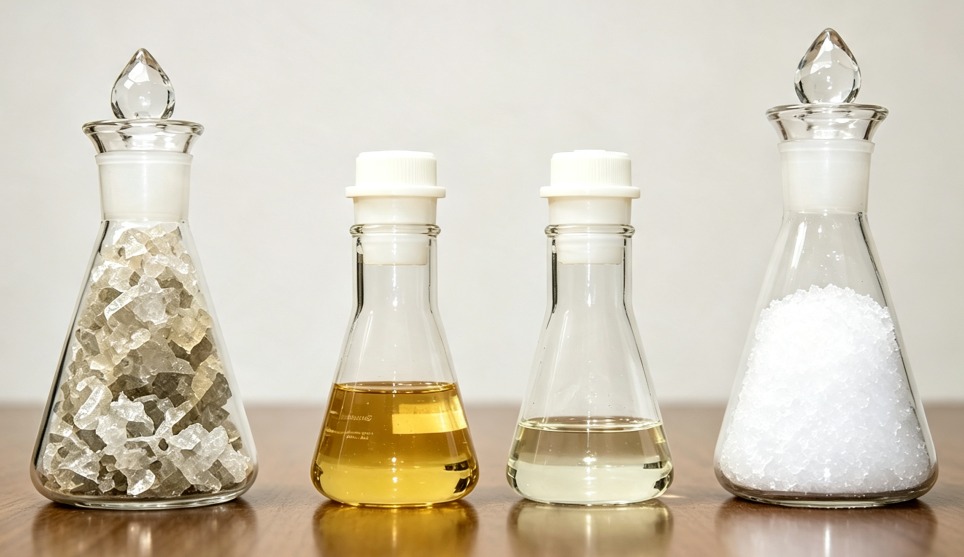
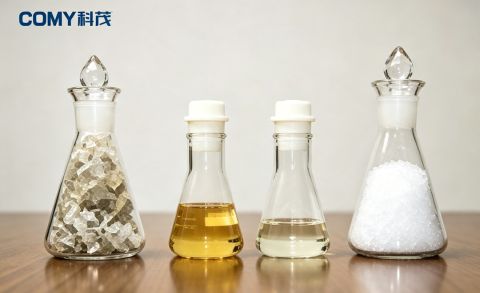
COMY’s core technology uses chemical recycling to convert plastic waste into foundational chemicals, such as pyrolysis oil. This plastic pyrolysis oil is a high-quality hydrocarbon mixture derived from plastic waste through chemical recycling. It consists primarily of C5–C22 hydrocarbons, with a density ranging from 0.75 to 0.85 g/cm³.
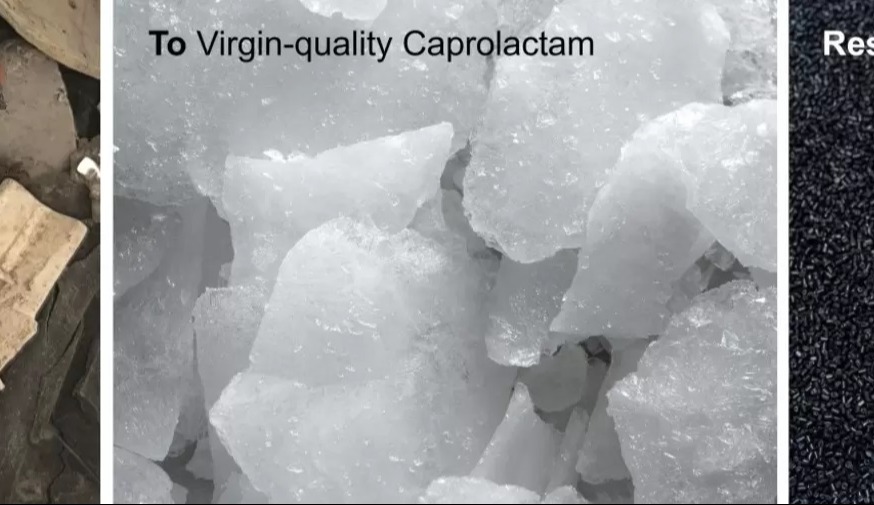
Once purified and decontaminated, its properties closely resemble naphtha. This allows it to serve as a fossil-fuel alternative in downstream processes like steam cracking, where it can be used to produce ethylene and propylene, and ultimately repolymerized into virgin-quality plastics.
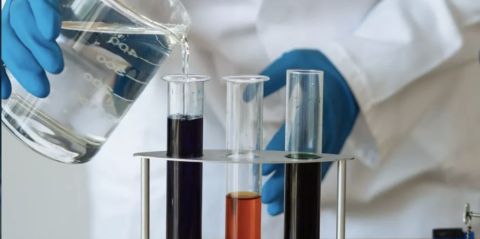
In other words, plastic waste that has reached the end of its traditional life cycle is given a second life at the very front of the plastics production chain.
Plastic Waste → Pyrolysis Oil → Ethylene/Propylene → New Plastics
This process highlights the core value of chemical recycling compared to traditional methods: instead of simply downcycling plastic waste into lower-grade recycled materials, it breaks the waste down to its foundational chemical building blocks.
However, making this pathway commercially viable requires significant technological expertise. Through 17 years of continuous R&D, COMY has expanded its technical capabilities from a single process into a comprehensive ecosystem of process packages, proprietary catalysts, and integrated equipment systems.
From a Single Technology to a Turnkey Facility Solution
As chemical recycling moves into commercial scale, companies face challenges that extend far beyond whether the pyrolysis reaction itself works.
From feedstock pretreatment and process design to catalyst matching, equipment integration, and ensuring a stable product supply for downstream markets—a bottleneck in any single stage can jeopardize the financial viability of the entire project.
Today, COMY has developed a comprehensive ecosystem combining process packages, proprietary catalysts, and integrated equipment, giving the company turnkey plant construction capabilities. This ecosystem serves as the foundation for the company's recent project expansion.
In 2017, COMY built China’s first chemical recycling plant for plastic waste, securing the country’s first environmental impact assessment (EIA) approval for such a facility. Today, project development is scaling across multiple regions, with construction and planning initiatives underway in several cities nationwide.
For an industry still in its rapid growth phase, sheer project volume is not the ultimate end goal. However, it proves one critical milestone: chemical recycling is successfully transitioning from laboratories and pilot lines into mainstream industrial applications.
Three Client Segments, Three Sets of Solutions
COMY’s client base extends far beyond traditional plastic recyclers. The company actively bridges different links of the supply chain—connecting municipal solid waste (MSW) operators, petrochemical giants, and consumer brand packagers.
Each customer segment approaches chemical recycling with a distinct set of priorities.
1. For waste management & environmental service providers: Transforming low-value plastic waste into resources
Solution: Converts low-value plastic waste into high-value chemical products through chemical recycling. Boosts waste reduction and resource recovery rates by over 40%, while cutting carbon emissions by more than 50%.
2. For petrochemical enterprises: Supplying high-quality pyrolysis oil and monomers
Solution: Supplies high-quality chemical recycling pyrolysis oil and foundational chemicals to serve as feedstocks for producing new plastics and materials. Delivers low-carbon, circular outputs that comply with EU regulations and meet the stringent procurement standards of top-tier consumer brands and packaging companies.
3. For consumer brands & packaging companies: Providing virgin-grade PCR resin
Solution: Provides virgin-grade PCR resin derived from chemical recycling to manufacture brand-new plastic packaging and products. Achieves a 50% carbon reduction compared to using conventional virgin plastics.
17 Years of Technology R&D Drives Industrialization
The chemical recycling sector is never short on concepts. The genuine challenge lies in translating that technology into a stably operating facility, and then turning that facility into a replicable project blueprint.
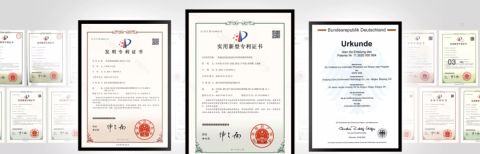
COMY currently holds over 100 intellectual property rights, including international PCT patents in countries such as Germany, Saudi Arabia, and South Korea, establishing a comprehensive IP barrier around its core technologies.
Concurrently, COMY is an active member of the chemical recycling working group under the China Petroleum and Chemical Industry Federation (CPCIF). Founded in 2021, this group brings together 19 pioneering global enterprises to continuously drive the development of industry regulations and standards.
By bridging technology R&D, intellectual property, facility construction, industry standards, and project scaling, COMY is systematically connecting the critical links required to industrialize chemical recycling.
This alignment speaks directly to the next major test facing the industry: developing the technology is only the first step. True success depends on how effectively we can close the loop between feedstocks, refining facilities, products, and downstream markets to determine how far this pathway can ultimately go.
From Waste Management to a Closed-Loop Supply Chain
When viewing COMY’s business through a macroeconomic lens, its role in the supply chain is highly strategic and clear.
On one end, it plugs into low-value plastic waste and municipal solid waste systems. In the middle, it drives the core transformation through chemical recycling, producing pyrolysis oil and foundational chemicals. On the other end, it feeds directly into petrochemical companies, plastics manufacturers, and consumer brand packagers.
Plastic waste, which was historically treated as a costly disposal liability, reclaims its value as a premium feedstock within this interconnected loop. This is precisely why chemical recycling commands industry attention. It is far more than just another waste management technology; it is a pioneering attempt to institutionalize a permanent loop.
Admittedly, scaling chemical recycling globally hinges on surmounting multi-layered hurdles, including feedstock securing, project economics, product certifications, carbon footprint audits, and downstream market adoption rates. Yet, COMY’s current operations demonstrate that this pathway has successfully transitioned from "proof of concept" to "proof of industrial scale".
This shift marks the most critical evolution for the next phase of the industry: the debate is no longer about whether chemical recycling is technically viable, but rather about who can successfully transform it into a commercially sustainable, highly replicable business.
Join Us at the CRRE
From pioneering chemical recycling technologies to project deployment and supply chain synergy, COMY is continuously driving the transition of chemical recycling from lab-scale R&D to commercial-scale application.
As a premier platform for the resource recycling industry, the Circular Resources and Recycling Expo (CRRE) brings together cutting-edge technologies, innovative equipment, and real-world industrial practices, offering an unparalleled hub for technical exchange and business matchmaking.
Booth: B1-A39
About COMY
COMY is headquartered in the high-tech zone of Ningbo, Zhejiang Province, and is a member of the chemical recycling working group under the China Petroleum and Chemical Industry Federation (CPCIF).
Powered by its two pioneering, proprietary chemical recycling technologies—Low-Temperature Low-Pressure Catalytic Pyrolysis & Recombination (PTO) and High-Selectivity Catalytic Cracking & Olefin Recombination (PTP)—COMY achieves molecular-level recycling of plastic waste that would otherwise be destined for landfills or incineration.
This advanced process converts waste into food-grade circular plastics while cutting carbon emissions by approximately 2 metric tons per ton of plastic waste processed, delivering exceptional economic returns and environmental benefits.
About CRRE
CRRE is positioned as a national-level platform, with deep integration across the whole chain and broad international collaboration. It adopts a “summit forum + physical exhibition” dual-engine model. It is committed to building the first five-in-one super hub for resource-circulation in the Asia-Pacific region, covering: recycling – reprocessing – high-value applications – green finance – international rules.
Preregistration:
https://reg.crre-expo.com/CRRE/visitor-registration/eng?Regsource=RAZ23777