
















Deke: Complete pelletizing lines for variable recycled feedstock

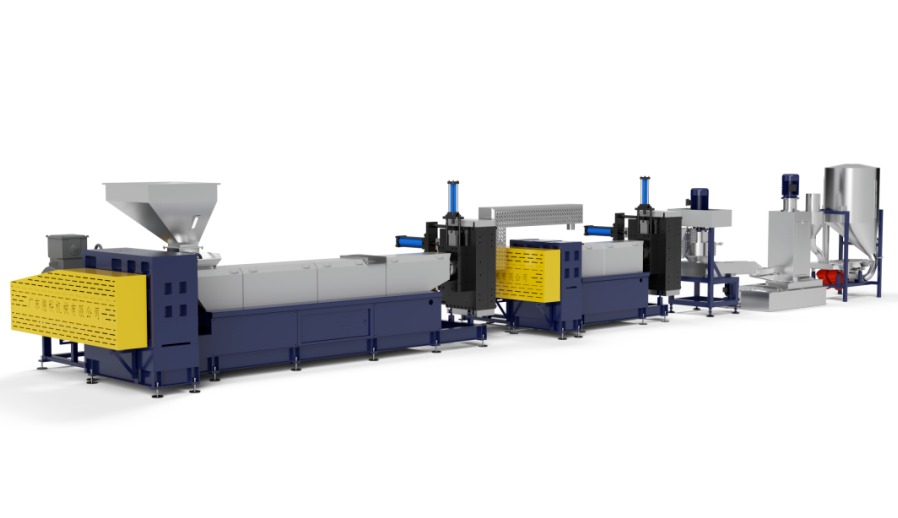
A pelletizing line's output depends on more than its extruder. Feeding, strand cutting, dewatering, and drying interact, and a weak link in any stage shows up in pellet quality and line stability.
Recycled feedstock makes this harder: material type, contamination, and end application vary from batch to batch, so one configuration rarely serves every stream. Equipment is often specified around the main machine alone, with the auxiliary stages matched after installation — which is where mismatch becomes visible, in moisture content, density, and appearance.
Guangdong Deke Plastics Machinery Co., Ltd. (德科机械) focuses on plastic recycling and compounding pelletizing, building complete equipment solutions that cover extrusion, cutting, dewatering, and drying, matched to feedstock characteristics and production requirements.
Four pelletizing configurations
1. Two-stage single-screw strand pelletizer: the company's classic model, for ABS, PP, PS, and PE recycling. A dedicated venting structure removes internal moisture and volatiles; a dedicated gear reducer, variable-frequency motor, double-screen die head, and hydraulic continuous-strand screen changer support stable running and continuous production.
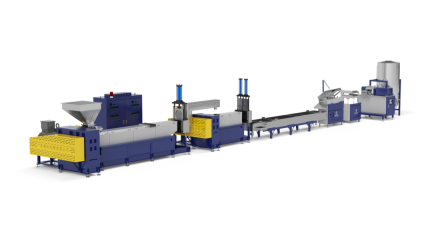
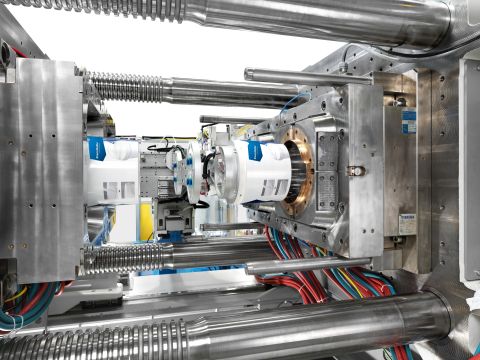
2. Two-stage single-screw water-ring pelletizer: for HDPE jerrycans, oil bottles, shampoo and milk bottles, and pipe material. Melt cutting completes the cut in the molten state, followed by water cooling and dewatering, which raises pellet density and lowers finished moisture content.
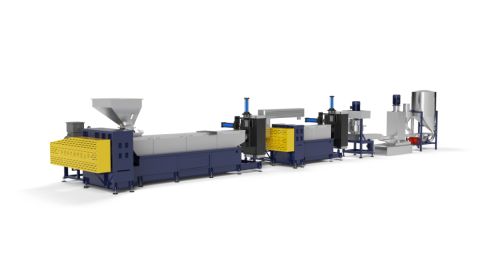
3. Single- and twin-screw strand pelletizer: combines both machine types, with the single screw performing coarse melting and filtration and the twin screw handling plasticizing and compounding. Applied to ABS, HIPS, PP, PC+ABS, PA, and PBT recycling and compounding.
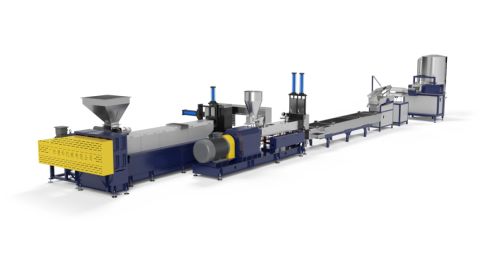
4. Twin-screw strand pelletizer: co-rotating parallel twin-screw extrusion for filling, blending, and reinforcement of thermoplastics, with venting and devolatilization, coloring, and material homogenization.
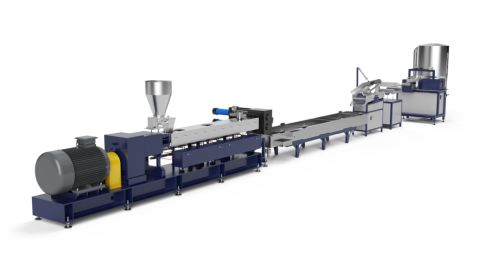
Beyond the main machine
Stable feeding before melting, effective removal of impurities and volatiles after melting, and fast dewatering, homogenization, and drying after cutting all affect appearance, moisture content, and processing performance. Deke develops these stages in-house rather than sourcing them: U-shaped vibrating feeders, plastic pellet dewatering machines, pellet homogenizing-tank dryers, and rolling mixers, covered by multiple utility patents.
Pellet quality
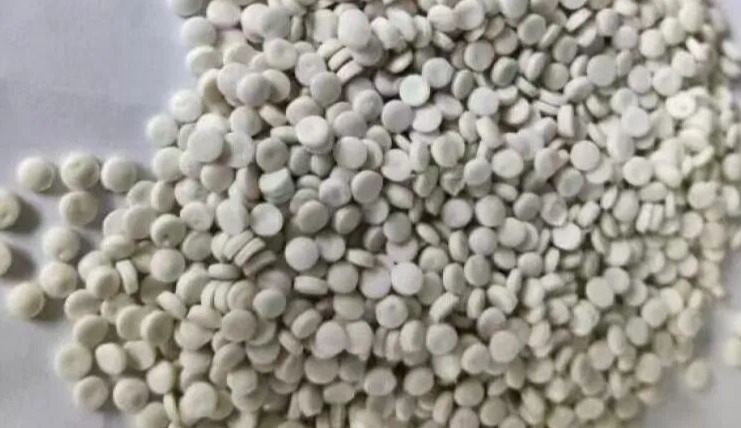
Design work targets pellet density, moisture content, and finished appearance rather than machine parameters alone. Melt cutting in the water-ring process produces a more regular pellet shape and reduces loss of physical properties; venting and filtration modules are strengthened for variable contamination; and equipment is optimized to reduce dust and noise on the production floor.
Manufacturing and delivery
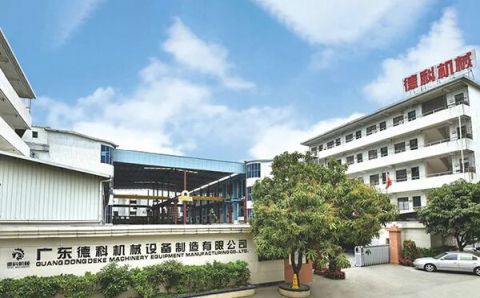
Two plants total about 50,000 m². Deke is a national-level high-tech enterprise with in-house R&D, manufacturing, sales, and after-sales teams, and maintains long-term technical exchange and cooperation with research institutions.
About the CRRE exhibitor
Founded in 2009 and based in Dongguan, Guangdong Deke Plastics Machinery Co., Ltd. is a national-level high-tech enterprise engaged in the R&D, design, manufacturing, sales, and service of machinery for the plastics recycling industry. It operates two plants covering about 50,000 m², with an ERP system and a points-based management model.
Booth: B1A59
About CRRE
CRRE is positioned as a national-level platform, with deep integration across the whole chain and broad international collaboration. It adopts a “summit forum + physical exhibition” dual-engine model. It is committed to building the first five-in-one super hub for resource-circulation in the Asia-Pacific region, covering: recycling – reprocessing – high-value applications – green finance – international rules.
Preregistration:
https://reg.crre-expo.com/CRRE/visitor-registration/eng?Regsource=RAZ23777